How to Grow Zoysiagrass
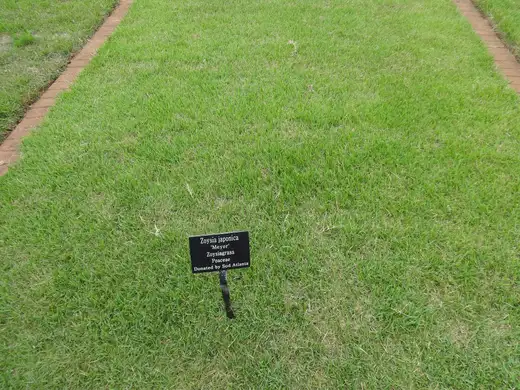
Zoysiagrass makes a dense, weed-resistant warm-season lawn and is one of the most cold-tolerant of its kind, but it is slow: plugs can take one to several seasons to cover, and seed is limited to a few Japanese lawngrass varieties. Lay sod or set plugs in late spring to early summer once the soil is warm, mow medium-textured types at about 1.75-2.5 inches with a rotary mower, and fertilize only after the lawn is fully green.

Your dates for zoysiagrass
Set your ZIP code at the top of the page and we will work out when to plant zoysiagrass where you live, from the frost records of the nearest NOAA weather station. Your ZIP code is remembered on this device only.
Zoysiagrass at a glance
- Botanical name
- Zoysia spp. (mainly Zoysia japonica and Zoysia matrella)
- Light
- full sun to partial shade; light to moderate shade tolerance depending on cultivar, thins in dense shade
- Frost tolerance
- Tender: killed by frost
- Soil temperature to plant
- At least 65°F (best 65–70°F)
- Germination
- 14–21 days
- Planting depth
- 0 inches
- Spacing
- 6–12 inches apart, rows 6–12 inches apart
When to plant zoysiagrass
| Zone | Sow outdoors |
|---|---|
| Zone 2a | Jun 23 to Jul 28 |
| Zone 3a | Jul 9 to Aug 13 |
| Zone 3b | Jun 29 to Aug 3 |
| Zone 4a | Jun 19 to Jul 24 |
| Zone 4b | Jun 12 to Jul 17 |
| Zone 5a | Jun 7 to Jul 12 |
| Zone 5b | Jun 6 to Jul 11 |
| Zone 6a | Jun 4 to Jul 9 |
| Zone 6b | May 30 to Jul 4 |
| Zone 7a | May 24 to Jun 28 |
| Zone 7b | May 14 to Jun 18 |
| Zone 8a | May 3 to Jun 7 |
| Zone 8b | Apr 21 to May 26 |
| Zone 9a | Apr 6 to May 11 |
| Zone 9b | Mar 30 to May 4 |
Zoysiagrass is a warm-season grass for the South and the transition zone. In colder zones most varieties do not survive the winter, so the dates there apply only to the most cold-tolerant varieties.
Where zoysiagrass fits
Zoysiagrass came to the United States from Asia, and Texas A&M says it is adapted to about the same area as bermudagrass. It stands out for cold tolerance. Clemson calls zoysias some of the most cold-tolerant warm-season grasses and adapted throughout South Carolina. NC State puts it in the piedmont and coastal plain of North Carolina. In Tennessee, Meyer and Palisades are more cold tolerant than bermudagrass. It browns with the first fall frost and stays dormant through winter, and in the transition zone that means a long brown season.
Two species cover most lawns:
- Zoysia japonica (Japanese or Korean lawngrass) is coarser, faster growing and very cold tolerant, and it mows easily with a rotary mower. It is the only zoysia sold as seed.
- Zoysia matrella (Manilagrass) is finer, denser and slower, with better shade tolerance but less winter hardiness. It needs closer, more frequent mowing.
Regional advice on varieties differs. UF/IFAS calls Empire the most common zoysiagrass in Florida, performing well throughout the state, and it does not recommend Meyer or seeded Zenith for Florida lawns. Clemson discourages Meyer where nematodes are a problem, usually on sandy soils. It notes that Compadre, a seeded type, is popular on the coast for its tolerance of salt spray, and it warns that Emerald is prone to winter injury north of Columbia.
Sod, plugs, sprigs or seed
Sod is the surest start. Clemson prefers it because it covers the ground at once and keeps weeds out. Lay it on bare, moist soil in a staggered brick pattern, roll it, and keep it watered until it roots, usually two to three weeks.
Plugs are how Maryland gardeners usually buy zoysia. Spacing varies by source: Clemson sets 2-inch plugs on 6-inch centers, UF/IFAS uses 8-12 inches, and NC State 6 or 12 inches. Closer spacing covers faster but takes more sod. Coverage takes time. UF/IFAS expects at least one full season, Clemson two seasons or less with good care, and NC State typically two to four years. Weeds will take the bare soil between plugs, so pull them regularly until the zoysia closes in.
Sprigs take more labor. UF/IFAS plants sprigs with at least two to four nodes in rows 6 inches apart, set end to end or no more than 6 inches apart. Cover them 1-2 inches deep but leave part of each sprig exposed to light.
Seed is limited to Z. japonica varieties such as Zenith and Compadre. UF/IFAS and Clemson both say seeded lawns are lower in quality than vegetative ones. Maryland does not recommend seeding zoysia at all. If you do seed, Clemson sows Zenith at 1-2 lb per 1,000 sq ft. UF/IFAS says the seed needs light to germinate, so don’t bury it; protect it with erosion cloth instead. Clemson’s Zenith directions call for only a very light raking and a wheat-straw mulch. Either way, water lightly three or four times a day. UF/IFAS expects up to two to three weeks to germinate and another six to eight weeks to establish.
When to plant zoysiagrass
Plant while the grass is actively growing. The dates for your zone above start roughly five to ten weeks after your average last spring frost, once the soil holds about 65-70°F. Tennessee plants zoysia seed, plugs and sprigs from May 1 to June 30. Kentucky plants in late May or June, once nights stay above 60°F. UF/IFAS seeds from April through July so the lawn has a full season before winter. In California, UC IPM lays warm-season sod in mid to late spring and sets plugs in late spring to early summer. Avoid fall seeding where winters turn cold: UF/IFAS warns that young north Florida seedlings may not establish well enough to survive winter cold.
Mowing
Zoysia is tough to mow because its leaves contain more lignin and silica than other lawn grasses (UF/IFAS). Keep the blade sharp. UF/IFAS mows medium- and coarse-textured zoysias at 1.75-2.5 inches with a rotary mower, weekly or whenever the grass reaches 3-4 inches. Clemson says most varieties do well around 2 inches. Fine Z. matrella types are kept at 1 inch or less and need more frequent mowing (Texas A&M, UF/IFAS).
Fertilizing and watering
Wait until the lawn is fully green in spring before feeding. UF/IFAS explains that early nitrogen pushes premature green-up that frost can injure, and both early-spring and late-fall nitrogen raise the risk of large patch. Clemson makes the last nitrogen application at least six weeks before the first expected frost. NC State starts with ½ lb of nitrogen per 1,000 sq ft about three weeks after green-up and caps the year at 4 lb. UF/IFAS prefers several small applications to a few large ones, with potassium applied at the same rate as nitrogen. Excess nitrogen builds thatch.
Zoysia goes brown and dormant quickly in drought, within about a week, and greens up again when water returns (UF/IFAS). Texas A&M notes it browns sooner than bermudagrass in a long drought. To keep it green, water when leaves fold or wilt or footprints stay visible. UF/IFAS applies ½-¾ inch per watering, Clemson ¾-1 inch, letting the turf dry out between waterings. NC State figures 0.5-1 inch a week.
Shade and traffic
Zoysia grows in full sun to partial shade and thins in dense shade (Clemson). It forms a dense, wear-resistant turf, but NC State notes it is slow to recover from injury. Texas A&M recommends it for lawns with moderate traffic. Its density is also its best weed defense, and UF/IFAS notes it tolerates many lawn herbicides that St. Augustinegrass and centipedegrass do not.
Common problems
- Large patch. This is the most troubling zoysia disease, according to UF/IFAS. It becomes active in fall when the soil 4 inches down is 65-75°F and can carry into spring. Because zoysia is the first lawn grass to brown in fall and the last to green up in spring, damage can stay visible into summer. Mow at the proper height, mow when dry, control thatch and avoid excess nitrogen.
- Hunting billbugs. These root feeders kill turf in irregular patches in spring and fall, and the damage is often mistaken for dormancy. UF/IFAS suggests control at 10-12 billbugs per square foot.
- White grubs and mole crickets. Both feed on roots and draw digging raccoons, skunks and armadillos.
- Sod webworms, dollar spot and rust. These are occasional pests. Nematodes can be a serious problem for Meyer, especially on sandy soils (UF/IFAS, Clemson).
- Thatch. Over-fed, over-watered or rarely mowed zoysia gets puffy. UF/IFAS dethatches every year or two, while NC State says every three to five years and to go carefully, because recovery is slow. Do it after full green-up.
Questions
Is it better to plant zoysia sod, plugs or seed?
Sod. Clemson calls it the preferred method because it gives an instant lawn and keeps weeds out of the bare soil left between plugs. Plugs are cheaper but slow, and Maryland does not recommend starting zoysia from seed because of cost, availability and unreliable germination.
How long do zoysia plugs take to fill in?
Estimates vary with spacing and care. Clemson says 2-inch plugs on 6-inch centers can cover in two growing seasons or less, and UF/IFAS expects at least one full season for plugs on 8-12 inch centers. NC State says plug lawns typically take two to four years.
Should zoysia seed be covered?
UF/IFAS says zoysia seed needs light to germinate and should not be covered with soil; protect it with erosion cloth instead. Clemson's directions for Zenith call for covering it only very lightly by raking and mulching with wheat straw.
How short should I mow zoysiagrass?
UF/IFAS mows medium- and coarse-textured zoysias at 1.75-2.5 inches with a rotary mower, and Clemson says most varieties do well around 2 inches. Fine-textured Z. matrella types are kept at 1 inch or less.
Does zoysia grow in shade?
It handles light to moderate shade, better than bermudagrass but not as well as St. Augustinegrass (Texas A&M). Clemson notes it thins in dense shade. Fine-textured Z. matrella types are generally more shade tolerant.
Can I overseed zoysiagrass with ryegrass for winter color?
Tennessee and Clemson both advise against it. Zoysia is slow and dense, and the competition from ryegrass sets it back in spring.
Sources
- Starting a New Lawn · University of Maryland Extension
- Overseeding With Ryegrass (HGIC 1206) · Clemson Cooperative Extension Home & Garden Information Center
- AGR-50 Lawn Establishment in Kentucky · University of Kentucky Cooperative Extension Service
- Zoysiagrass for Florida Lawns (ENH11/LH011) · University of Florida IFAS Extension (EDIS)
- Zoysiagrass (HGIC 1212) · Clemson Cooperative Extension Home & Garden Information Center
- Lawn Establishment (HGIC 1203) · Clemson Cooperative Extension Home & Garden Information Center
- Zoysiagrass Lawn Maintenance Calendar · NC State Extension
- Planting Summer Grass · NC State Extension, Pender County Center
- Turfgrass Selection for Texas (L-5519) · Texas A&M AgriLife Extension
- Turfgrass: Sod · UC Statewide IPM Program, UC ANR
- Turfgrass: Plugs and sprigs · UC Statewide IPM Program, UC ANR
- Turf Management in Hawaii (2017) · University of Hawaii CTAHR Master Gardeners
- Bermudagrass · K-State Research and Extension, Ford County
- Chapter 10: Turfgrass Management in Tennessee (Master Gardener Handbook) · University of Tennessee Extension
- Chapter 11: Lawns (Virginia Cooperative Extension Master Gardener Handbook) · Virginia Cooperative Extension / Virginia Tech