How to Grow Ginger
Ginger grows from pieces of rhizome, not seed, and it needs a long warm season: 8-10 months for mature, tan rhizomes. North of zone 9, pre-sprout the pieces indoors at 70-80°F for 6-8 weeks before your last frost, set them out in partial shade once the soil reaches at least 55°F, and dig tender pink baby ginger before the first frost.

Your dates for ginger
Set your ZIP code at the top of the page and we will work out when to plant ginger where you live, from the frost records of the nearest NOAA weather station. Your ZIP code is remembered on this device only.
Ginger at a glance
- Botanical name
- Zingiber officinale
- Light
- Partial shade (about 2-6 hours of direct sun). It tolerates shade, though NC State notes yields can be higher in more sun.
- Frost tolerance
- Tender: killed by frost
- Hardiness zones
- 9-12 (NC State Plant Toolbox). In colder zones it is grown as an annual or in containers. NC State says baby ginger can be grown in zone 7 or warmer.
- Soil temperature to plant
- At least 55°F (best 72–80°F)
- Planting depth
- 1 inch
- Spacing
- 15 inches apart
- Containers
- Yes, at least 5 gallons
When to plant ginger
| Zone | Start indoors | Plant out |
|---|---|---|
| Zone 2a | Apr 1 to 15 | Jun 3 to 17 |
| Zone 3a | Mar 31 to Apr 14 | Jun 2 to 16 |
| Zone 3b | Mar 22 to Apr 5 | May 24 to Jun 7 |
| Zone 4a | Mar 18 to Apr 1 | May 20 to Jun 3 |
| Zone 4b | Mar 13 to 27 | May 15 to 29 |
| Zone 5a | Mar 9 to 23 | May 11 to 25 |
| Zone 5b | Mar 8 to 22 | May 10 to 24 |
| Zone 6a | Mar 4 to 18 | May 6 to 20 |
| Zone 6b | Feb 26 to Mar 12 | Apr 30 to May 14 |
| Zone 7a | Feb 19 to Mar 5 | Apr 23 to May 7 |
| Zone 7b | Feb 8 to 22 | Apr 12 to 26 |
| Zone 8a | Feb 1 to 15 | Apr 5 to 19 |
| Zone 8b | Jan 20 to Feb 3 | Mar 24 to Apr 7 |
| Zone 9a | Jan 5 to 19 | Mar 9 to 23 |
| Zone 9b | Dec 26 to Jan 9 | Feb 27 to Mar 13 |
How ginger grows
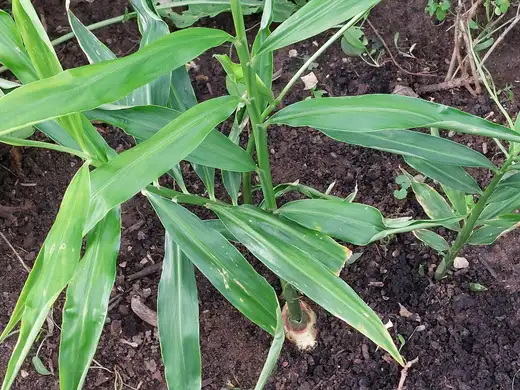
Culinary ginger (Zingiber officinale) is a tropical perennial from Asia. The part you eat is the rhizome, a swollen underground stem that branches into “hands” and “fingers.” The leafy shoots are stems that reach 2-3 feet tall by UF/IFAS’s account and up to about 4 feet by NC State’s. Newly planted clumps rarely flower before their second year, and container plants rarely flower at all, so you are growing for the rhizome.
Two traits shape everything else. Ginger is damaged once temperatures drop below about 50°F. And it needs 8-10 months to make full-sized, fibrous mature rhizomes. In zones 9-12 it can stay in the ground year-round. Everywhere else it is grown as a long-season annual, started indoors and dug before frost, and the harvest is usually baby ginger: young rhizomes with pink or cream skin thin enough that they need no peeling.
University of Maryland Extension reports ginger growing as far west as Garrett County, and New Hampshire growers harvest it from high tunnels. A warm head start indoors makes that possible.
Buying seed ginger
Plant pieces of healthy rhizome. UF/IFAS says supermarket ginger is fine for small plantings. University of Maryland Extension warns that some grocery ginger has been treated with a growth inhibitor, so choose plump, firm pieces with swelling buds (nodules) and avoid shriveled ones.
For a bigger planting, seed quality comes first. University of Kentucky notes that most growers in the continental US buy seed rhizomes from Hawaii, and that buying tissue-cultured, disease-free stock avoids many soilborne diseases. Good seed pieces are shiny and clean with obvious buds. Kentucky’s crop profile names ‘Bubba Blue’ as one popular selection, and UNH used it in its New Hampshire trials. Its flesh takes on a blue tint as it ages.
Cut and cure the pieces
Sources differ on size. Illinois Extension cuts rhizomes into pieces averaging 1-3 ounces, Kentucky prefers 1-2 ounces, and UF/IFAS describes pieces 1-1.5 inches long. Every piece needs at least one or two growing buds.
Let the cut surfaces dry before planting. Illinois cures pieces in a ventilated spot for at least 48 hours, NC State says a day or two, and UF suggests a few days indoors. Curing seals the wound, which helps keep rot out of the moist sprouting mix.
Pre-sprout indoors
Ginger sprouts slowly. A pre-sprouted piece can go into warm soil already rooted and weeks ahead of an unsprouted one, so this step is not optional north of zone 9. Start about 6-8 weeks before your last frost (see the dates for your zone above). University of Maryland finds that starting even earlier under a grow light gives a faster-maturing plant.
The method, combined from the sources:
- Optionally soak the pieces overnight (University of Maryland).
- Fill a shallow flat with drainage holes halfway with moist coconut coir, seed-starting mix or loose potting soil. Lay the pieces flat, about 2 inches apart, and cover them with 1-2 inches of moist media. Illinois warns against crowding, because roots that tangle tear when you separate them, which stunts or kills the piece.
- Keep the media warm. Ranges run 70-80°F (University of Maryland), 72-80°F (NC State) and 70-85°F (Kentucky). Illinois sets heat mats to 76°F under humidity domes. Warmer, closer to 85°F, means faster sprouting.
- Keep it moist but not soaked. Illinois mists the flats every 24-48 hours and lets the surface dry about every three days, which keeps rot down.
Bottom heat pays. In UNH’s trial, flats on 80°F heat mats sprouted while unheated flats in a 60°F greenhouse had no sprouts at all by late May, and the heated plants gave higher yields at every harvest date. Even on heat, the first shoots took nearly six weeks to show. UNH notes that any warm, insulated spot would likely work as well as a heat mat, because sprouting pieces do not need light yet.
Illinois sees roots in 3-4 weeks. When about half the pieces have green shoots a few inches tall (Kentucky waits for 1-2 inches), harden the flat off outdoors for 7-10 days and plant it. Don’t hold sprouted pieces in flats for weeks past this point. Illinois finds that many die.
When and where to plant out
Ginger goes outside after frost danger has passed, and soil temperature matters more than the calendar. Sources set the soil threshold differently:
- Illinois Extension: soil at least 55°F, with no nights below 45°F in the two-week forecast.
- Kentucky (high tunnels): above 40°F at minimum, ideally near 55°F.
- NC State (Growing Small Farms): consistently above 50°F and warming.
- UNH (New Hampshire high tunnels): consistently above 65°F.
For an open garden, aim for at least 55°F and rising. Cold, wet soil is the main cause of rhizome rot. The transplant dates for your zone above are timed to that soil warmth.
Light. Ginger is an understory plant. UF/IFAS recommends partial shade with only a couple of hours of direct sun. More than that browns the leaf tips and slows growth, and NC State’s plant database lists full sun as a cause of brown-tipped foliage. NC State Extension adds that rhizome yields may be higher in more sun. So the extra sun is worth trying in mild northern summers if you keep the soil moist. In Florida and other hot regions, follow UF and give shade.
Soil. Ginger needs loose, well-drained soil rich in organic matter. UF suggests an even mix of sand and cow manure or similar organic material, and a raised bed at least 8 inches deep on South Florida’s rocky soils. Kentucky calls ginger a heavy feeder and a poor nutrient scavenger, so work compost in before planting and feed close to the plants.
Depth and spacing. UF plants pieces about 1 inch deep and 15 inches apart, leaving room for the clump to spread. Kentucky’s high-tunnel growers plant closer in the row, 5-6 inches apart, but leave rows at least 42 inches apart so there is soil to hill up.
Growing ginger in pots
Containers are the easiest way to grow ginger in cold climates. You can move pots outside late, bring them in early on cool fall nights, and tip out the whole crop at harvest. University of Maryland uses 5-10 gallon grow bags at least 12 inches deep, and notes that width matters more than depth because rhizomes spread sideways. Kentucky suggests bags or a 3-gallon or larger nursery pot where soilborne disease is a worry. NC State advises bringing potted ginger indoors before temperatures drop below 50°F.
Water, feeding and hilling
Water sparingly until shoots are growing well, then keep the soil evenly moist but never soggy. NC State links overwatering of unsprouted pieces to root rot. University of Maryland feeds monthly with a balanced fertilizer, one with roughly equal nitrogen, phosphorus and potassium.
Hilling raises yields. It keeps expanding rhizomes covered and gives them more loose soil to grow into. NC State growers hill and fertilize about three times a season. Kentucky’s schedule: hill first when the base of the stem turns from white to bright pink (you may need to brush soil aside to see it), again 4-6 weeks later, and a third time about two weeks after that. Kentucky advises hand weeding and careful hilling, because tools easily damage the rhizomes.
Ginger grows slowly through summer. NC State notes that rhizomes put on more growth late in the season as the days shorten, which is why an early harvest costs so much yield.
Harvesting baby and mature ginger
Mature ginger is ready about 8-10 months after planting, when the leaves yellow and the tops die back (UF/IFAS). Only frost-free or nearly frost-free areas get there outdoors. Let the rhizomes dry in the shade before storing them.
Baby ginger can be dug whenever the rhizomes are plump. UF says young, mild ginger can be taken just before flower spikes appear. NC State growers dig baby ginger about six months after planting, and Kentucky gives 6-10 months. In cool climates, wait as long as frost allows. NC State recommends growing until nearly frost, and University of Maryland usually harvests in late October. UNH’s numbers show why waiting pays. High-tunnel plants dug September 1 averaged 7.8 ounces of trimmed rhizome each, while plants dug November 1 averaged 16.4 ounces, and the later rhizomes were larger and better looking. Kentucky says plants can stay in the ground as long as an inch of green stem remains above the rhizome.
Loosen the soil with a digging fork and lift the clump gently, because baby ginger bruises easily. For pots, turn the pot over and hose off the soil. Trim the tops. Kentucky notes the leaves can be dried for tea. Kentucky reports a typical harvest of 5-6 pounds for every pound planted, and up to 10-12 pounds under ideal conditions.
Storage. Unpeeled ginger keeps a month or more in the refrigerator (University of Maryland), and it can be frozen whole, sliced or minced, or dried. Baby ginger is perishable, so refrigerate or process it soon after digging. Kentucky advises keeping it out of the sun.
Keeping ginger over winter
In zones 9-11, UF suggests thinning the clump rather than digging it all, and the remaining rhizomes resprout when the weather warms. Where hard freezes happen, mulch the bed or grow in containers.
Farther north, potted ginger can winter indoors. University of Maryland lets plants go dormant, keeps the soil lightly moist at about 70°F, cuts the leaves back if they drop, and moves the pot outside again after the last frost.
Regional notes
Cold North (zones 3-6). The season is far shorter than ginger’s 8-10 months. Start early on heat, grow in pots or a high tunnel, and dig just before frost. UNH found a high tunnel gave more than twice the yield of low tunnels in its one-year trial, though it cautions that the comparison was not definitive.
Mid-Atlantic and upper South (zones 7-8). NC State says baby ginger grows well in zone 7 and warmer. NC State profiles a Chatham County farm that pre-sprouts in February, plants in March under high tunnels, and digs baby ginger in fall, about six months later. Open-garden plantings go in after the last frost.
Humid South and Gulf Coast (zones 8-9). Heat and humidity suit ginger, but heavy rain on poorly drained soil invites rot. Plant in raised beds rich in organic matter, give afternoon shade, and mulch over winter where freezes are light. UF says North Florida plants in March.
Arid West and desert Southwest. Ginger needs warmth and humidity, so dry air and strong sun are the hurdles. None of these sources covers desert growing directly. The shade and steady moisture that UF stresses matter even more here, and pots in a shaded, sheltered spot are easier to keep evenly moist.
Warm-winter zones 10-11. Ginger is a true perennial here. UF plants as early as February in Central and South Florida, before summer heat builds, and digs mature rhizomes 8-10 months later, when the tops die back.
Problems and fixes
- Pieces rot before sprouting. The media is too cold or too wet, or the cut surfaces were not cured. Keep media at 70-85°F, let the surface dry between mistings, and cure cuts for at least 48 hours.
- No sprouts after a month. This is often normal, since the first shoots can take six weeks even on a heat mat. Check for roots. Store ginger treated with a growth inhibitor may never sprout.
- Brown leaf tips, stunted plants. The plant gets too much hot, direct sun or the soil is drying out. Move pots or add shade, and water evenly.
- Rhizome rot in the garden. Cold or waterlogged soil, or soilborne bacterial soft rot or Pythium. Plant later into warm, well-drained or raised beds.
- Sudden wilting. Bacterial wilt can devastate ginger. Kentucky advises buying disease-free seed and not planting ginger next to or after tomatoes, peppers or eggplant.
- Leaves browning after cold nights. This is chilling injury, which starts below about 50°F. Harvest, or bring pots indoors.
- Small harvest. Usually the season was too short or the crop was dug too early. Start earlier on heat, hill two or three times, and harvest as late as frost allows.
UF/IFAS reports few pest problems in home gardens. Kentucky lists nematodes as a risk in soil with a history of them.
Questions
Can I grow ginger from grocery store ginger root?
Often, yes. UF/IFAS says supermarket ginger works for small plantings, but University of Maryland Extension warns that some store ginger is treated with a growth inhibitor. Choose plump pieces with visible buds, or buy seed rhizomes from a nursery.
How long does ginger take to grow?
Fully developed rhizomes take about 8-10 months. Baby ginger can be dug after about six months, but UNH trials found yields doubled when harvest waited from September 1 to November 1.
Does ginger need full sun?
No. UF/IFAS recommends partial shade with only a couple of hours of direct sun, because more sun browns the leaf tips. NC State notes rhizome yields can be higher with more sun.
Can ginger survive winter outdoors?
Only where frost is rare. NC State lists it as hardy in zones 9-12, and UF suggests mulching the bed where hard freezes occur. Elsewhere, dig it in fall or bring potted plants indoors before nights drop below 50°F.
What size pot does ginger need?
University of Maryland Extension has good results with 5-10 gallon grow bags at least 12 inches deep. Choose width over depth, since rhizomes spread sideways.
What is baby ginger?
Young rhizomes dug before they mature, usually in fall in cooler states. They are pink or cream with skin thin enough to skip peeling, but they are perishable and need refrigeration or processing soon after harvest.
Sources
- Ginger and Turmeric Crop Profile (CCD-CP-138) · University of Kentucky Center for Crop Diversification
- Research Report: Effects of early season heating, low tunnels, and harvest time on ginger yields in NH, 2017 · UNH Cooperative Extension
- Ginger and Turmeric a High Value Crop for Local Growers · NC State Extension (Growing Small Farms)
- Zingiber officinale (Ginger) · NC State Extension Gardener Plant Toolbox
- Edible Baby Ginger: A Spicy, Super Addition to Home Gardens · NC State Extension
- Fresh ginger rhizome cultivation in Illinois · University of Illinois Extension
- Growing Ginger... Really! · University of Maryland Extension (Maryland Grows)
- Edible Ginger · UF/IFAS Gardening Solutions