How to Grow Cosmos
Cosmos is one of the easiest annuals to grow from seed. Scatter it in full sun after frost, once the soil is at least 65°F, and rake it in about 1/8 inch deep. Lean soil, little water and no fertilizer are what keep it blooming. Rich ground and heavy watering give tall, floppy plants with few flowers.

Your dates for cosmos
Set your ZIP code at the top of the page and we will work out when to plant cosmos where you live, from the frost records of the nearest NOAA weather station. Your ZIP code is remembered on this device only.
Cosmos at a glance
- Botanical name
- Cosmos bipinnatus (also Cosmos sulphureus)
- Light
- full sun (6-8+ hours); tolerates part sun
- Frost tolerance
- Tender: killed by frost
- Soil temperature to plant
- At least 65°F (best 70–75°F)
- Germination
- 7–14 days
- Days to harvest
- 60–90 days from seed
- Planting depth
- 0.125 inches
- Spacing
- 10–24 inches apart
When to plant cosmos
| Zone | Start indoors | Plant out | Sow outdoors |
|---|---|---|---|
| Zone 2a | Apr 7 to 21 | May 19 to Jun 2 | May 19 to Jun 2 |
| Zone 3a | May 28 to Jun 11 | Jul 9 to 23 | Jul 9 to 23 |
| Zone 3b | May 18 to Jun 1 | Jun 29 to Jul 13 | Jun 29 to Jul 13 |
| Zone 4a | May 8 to 22 | Jun 19 to Jul 3 | Jun 19 to Jul 3 |
| Zone 4b | May 1 to 15 | Jun 12 to 26 | Jun 12 to 26 |
| Zone 5a | Apr 26 to May 10 | Jun 7 to 21 | Jun 7 to 21 |
| Zone 5b | Apr 25 to May 9 | Jun 6 to 20 | Jun 6 to 20 |
| Zone 6a | Apr 23 to May 7 | Jun 4 to 18 | Jun 4 to 18 |
| Zone 6b | Apr 18 to May 2 | May 30 to Jun 13 | May 30 to Jun 13 |
| Zone 7a | Apr 12 to 26 | May 24 to Jun 7 | May 24 to Jun 7 |
| Zone 7b | Apr 2 to 16 | May 14 to 28 | May 14 to 28 |
| Zone 8a | Mar 20 to Apr 3 | May 1 to 15 | May 1 to 15 |
| Zone 8b | Mar 10 to 24 | Apr 21 to May 5 | Apr 21 to May 5 |
| Zone 9a | Feb 23 to Mar 9 | Apr 6 to 20 | Apr 6 to 20 |
| Zone 9b | Feb 16 to Mar 2 | Mar 30 to Apr 13 | Mar 30 to Apr 13 |
Two kinds of cosmos
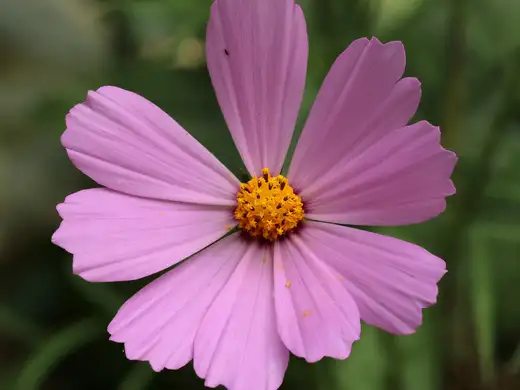
Garden cosmos (Cosmos bipinnatus) is the familiar one, with fine, threadlike leaves and pink, white, lavender, red or maroon flowers. It grows anywhere from 1 to 6 feet tall depending on variety and soil.
Orange or yellow cosmos (C. sulphureus) has orange, red or yellow flowers and handles heat better. UF/IFAS expects more summer bloom from it in Florida. Its height varies by strain: UF/IFAS describes it as usually 1 to 3 feet, while Utah State lists the species at 4 to 7 feet. Dwarf strains stay short.
For smaller gardens, look at the dwarf garden cosmos. NC State suggests ‘Sea Shells’, ‘Picotee’, ‘Candy Stripe’, ‘Day Dream’ and ‘Dwarf Sensation Mix’ for North Carolina. Cornell describes the Sonata series as 1 to 2 feet tall and recommends the wiry-stemmed Versailles series for cutting. Utah State says ‘Candy Stripe Mix’, ‘Daydream’ and ‘Gazebo Mix’ grow well in Utah.
Site and soil
Plant cosmos in full sun. Utah State calls for at least 8 hours of light, though NC State says half a day of direct sun is enough, and Cornell lists part shade as tolerated. Expect fewer flowers as shade increases.
Soil is where most people go wrong. Cosmos wants average to poor, well-drained soil and does fine with a neutral to slightly alkaline pH. Skip the compost and fertilizer. Utah State notes that rich soil produces weak, floppy, late plants with sparse flowers. To prepare a bed, just loosen the surface with a rake and clear out weeds.
Sowing
Sow outdoors after frost danger has passed and the soil has reached at least 65°F. Germination is best at 70 to 75°F and drops off in soil below 60°F or above 80°F. The dates for your zone above show the window.
Scatter the seed on the surface and rake it in lightly, no deeper than about 1/8 inch. Buried seed germinates poorly. Keep the bed moist until seedlings appear, which takes about 7 to 14 days. NC State allows up to 21.
For earlier flowers in short-season areas, Cornell suggests starting seed indoors 4 to 6 weeks before the last frost and planting out after frost.
Thinning isn’t strictly necessary, but plants are bigger with room. Utah State recommends 1 to 2 feet between plants, or closer if you want them to hold each other up as a screen or backdrop.
Water and care
Once seedlings emerge, cut watering back to a deep soak about once a week. Cosmos thrives in the drier parts of a garden, and overwatering reduces bloom.
Pinch young plants to make them branch and fill out. Tall varieties in windy or storm-prone spots may need stakes. Planting them close together also helps them prop each other up.
Deadhead to keep flowers coming. When a spring planting is covered in dry seed heads, NC State suggests cutting the plants back to 12 to 18 inches rather than pulling them. They rebloom in about a month.
Cosmos is day-length sensitive and blooms most heavily in late summer as the days shorten. In northern gardens, Cornell expects flowers from July until frost.
Warm-winter regions
Where frost is rare, cosmos shifts toward the cooler months. UF/IFAS lists it for planting from fall through spring in South Florida (September to May) and in spring and early summer in North Florida. In the Arizona low desert, the University of Arizona chart has garden cosmos planted from March through June and blooming from July into November. Yellow cosmos goes in from May to July there and blooms from September to November. Around San Antonio, Texas A&M AgriLife suggests a July sowing for late-summer and early-fall color.
Problems
- Floppy stems: the result of rich soil, fertilizer or overwatering. Stake what you have now and plant in leaner ground next time.
- Too many volunteers: cosmos self-sows heavily. Deadhead before seed ripens, or plant it where reseeding is welcome.
- Aphids: occasional. Check new growth.
- Powdery mildew, gray mold and stem canker: NC State recommends good air flow to prevent them. NC State also lists southern blight.
- Bacterial wilt and leaf spots: occasional problems in Florida, according to UF/IFAS.
Cosmos draws butterflies and bees, and Utah State notes it attracts beneficial insects such as lacewings, hoverflies, tachinid flies and parasitic wasps. Finches eat the seed.
Cutting and drying
Cut stems when the flowers are fully open. Regular cutting also encourages more blooms. To dry flowers, hang them in a well-ventilated place out of sunlight. Utah State says they dry in 1 to 5 days, after which you can store them in a moisture-tight container somewhere cool and dark.
Questions
Should I fertilize cosmos?
No. Utah State and UF/IFAS both advise against it. Fertile soil gives weak, floppy stems, later bloom and fewer flowers, and average to poor, well-drained soil suits cosmos best.
Why is my cosmos tall but not flowering?
Rich soil, fertilizer or too much water is the usual cause. Cosmos is also day-length sensitive and blooms most heavily in late summer as days shorten, so a slow start in early summer is normal.
Does cosmos come back every year?
Garden cosmos is an annual, but it self-sows so heavily that new plants usually appear the next year. Deadhead if you don't want volunteers.
How do I get cosmos to bloom again after it goes to seed?
Cut the plants back to 12 to 18 inches. NC State and Utah State both report they rebloom in about a month, and the dropped seed may sprout to thicken the planting.
How long does cosmos take to bloom from seed?
UF/IFAS says usually 2 to 3 months after planting. The University of Arizona's low-desert chart lists 120 days.
Sources
- Cosmos Brings Beauty to Your Universe (Extension Gardener) · NC State Extension
- Cosmos spp. (Plant Toolbox) · NC State Extension
- Cosmos in the Garden · Utah State University Extension
- Cosmos (Cosmos bipinnatus) Growing Guide · Cornell University Home Gardening (Cornell Cooperative Extension)
- Cosmos · UF/IFAS Extension Gardening Solutions
- Flowers to Plant in Florida: Text (month-by-month calendar for North, Central and South Florida) · UF/IFAS Extension Gardening Solutions
- Flower Planting Guide for the Low Desert (AZ1100) · University of Arizona Cooperative Extension, Maricopa County
- Sowing Annual Seeds · Penn State Extension
- July 16, 2011 Timely Tips (Bexar County gardening calendar) · Texas A&M AgriLife Extension, Bexar County
- May 21, 2005 Timely Tips (Bexar County gardening calendar) · Texas A&M AgriLife Extension, Bexar County