How to Care for a Snake Plant
Snake plant needs very little: a well-drained mix, a heavy pot with a drainage hole, and water only after the soil has dried out. From spring to fall that means watering when the pot is dry; in winter, only every one to two months. Too much water, not too little light, is what kills most snake plants.
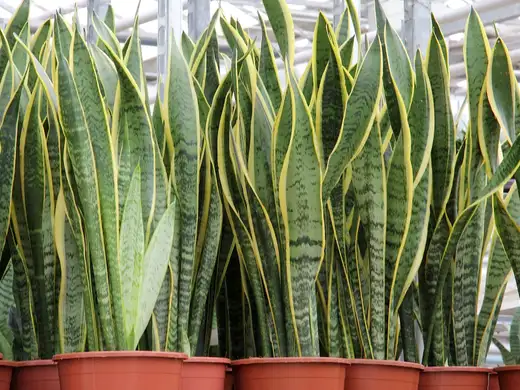

Snake Plants at a glance
- Botanical name
- Dracaena trifasciata (syn. Sansevieria trifasciata)
- Light
- part shade (2-6 hours of direct sun); tolerates very low light; avoid hot afternoon sun
- Hardiness zones
- 10-12
- Containers
- Yes
When to repot and propagate snake plants
Snake plant (now classified as Dracaena trifasciata, though most labels still say Sansevieria) is a stiff, upright succulent from tropical Africa. It stores water in thick leaves and a creeping rhizome, which is why it shrugs off dry air and neglect but rots when it is kept wet.
Light
Snake plant grows best in a warm, bright spot that gets direct sun for only part of the day, roughly 2 to 6 hours. An east or west window suits it well. Keep it out of hot afternoon sun pressed against the glass, which can scorch the leaves.
It is also one of the few houseplants that copes with a north window or a room lit mainly by lamps. In low light it simply grows very slowly. That matters for watering: a plant in a dim corner uses far less water than one in a bright window, so it must be watered even less often.
Watering
Overwatering is the main way people kill snake plants. The leaves grow from a thick rhizome, and both NC State and the Missouri Botanical Garden name root rot from too much water as the chief problem.
- Spring to fall: let the soil dry out between waterings. Push a finger into the mix; if it is still damp below the surface, wait. When you water, soak the pot until water runs out of the drainage hole, then let it drain completely. Running water through the pot also flushes out fertilizer salts.
- Winter: NC State Extension advises watering only once every one to two months. Growth nearly stops from fall to late winter, and the Missouri Botanical Garden also calls for sharply reduced watering then.
- Pour onto the soil, not into the plant. The Missouri Botanical Garden warns against pouring water into the center of the leaf rosette.
- Never leave the pot standing in water. Empty the saucer after watering.
A fixed schedule (“every Sunday”) is a bad idea for this plant. Check the soil, not the calendar.
Pot, Mix and Drainage
Use a well-draining potting mix and a pot with a drainage hole; NC State calls good drainage and careful watering a must. The plant grows in sandy or loamy soil that is neutral to alkaline, so it does not need an acid, peat-heavy mix.
The Missouri Botanical Garden recommends a clay pot that is wider than it is tall. Clay dries faster than plastic, and the broad, heavy base keeps the tall leaves from tipping the pot over.
Temperature and Humidity
Ordinary room temperatures are fine, and snake plant handles dry indoor air and low humidity without any misting or pebble trays. NC State says it tolerates cool temperatures of around 50°F. Keep it away from cold windows and doors in winter, and remember that a cool plant needs very little water.
Feeding
Snake plant needs little fertilizer. No extension source gives a schedule specific to it, so follow general houseplant advice from University of Illinois Extension: feed with a water-soluble fertilizer at the label rate only while the plant is actively growing, roughly March through September, and not at all in winter. Extra fertilizer does not make up for poor light and can damage the roots.
Repotting
Snake plants seldom need repotting, and they grow happily when somewhat crowded. Repot when roots grow out of the drainage hole or show at the surface, or when the pot is packed solid with roots and rhizomes. University of Illinois Extension recommends repotting houseplants while they are actively growing, typically in spring or early summer. Replant at the same depth as before in fresh mix.
Propagation
There are two ways to make new plants:
- Division. Slide the plant out of its pot, separate the clump or its offsets into pieces that each have leaves, rhizome and roots, and pot them up in fresh mix. Iowa State notes that bigger pieces recover faster, and recommends waiting a few weeks before fertilizing divisions.
- Leaf section cuttings. Iowa State’s method: cut a leaf into 3- to 4-inch sections, keep track of which end was nearer the base, and insert that end 1 to 2 inches deep in moist perlite or another rooting medium. Keep the cuttings warm (65 to 75°F) in bright, indirect light. New plantlets should appear at the base in about two months.
Cultivars with yellow-edged leaves, such as ‘Laurentii’, lose the yellow margin when grown from leaf cuttings, because the variegation is a chimera. Iowa State recommends division for those.
Pests and Problems
- Soft, mushy or collapsing leaves – root rot from overwatering or poor drainage. Stop watering and unpot the plant. Healthy roots are white and firm; Colorado State Extension advises cutting out any that are black and mushy. Replant the healthy pieces in fresh mix.
- White, cottony tufts at the leaf bases – mealybugs. Both NC State and the Missouri Botanical Garden list them as the pest to watch for. Check where the leaves join and treat early.
- Fine stippling or webbing on the leaves – spider mites, the other pest both sources name. Inspect leaf surfaces when you water.
- Pot tipping over – the plant is top-heavy for its container. Move it to a wider, heavier clay pot.
Toxicity
The ASPCA lists snake plant as toxic to dogs and cats. It contains saponins, which can cause nausea, vomiting and diarrhea. NC State rates the poison severity as low and notes that the sap can irritate skin, so keep plants away from pets and young children and wash your hands after dividing or cutting leaves.
Summering Outdoors and Growing It Outside
Indoor plants can spend summer in a shady spot outdoors, according to the Missouri Botanical Garden. Wait until nights stay reliably above 50°F (Iowa State’s threshold) and start in full shade. Iowa State warns that succulents moved straight into full sun can suffer permanent damage to their fleshy leaves, so add light over 10 to 14 days.
Snake plant is winter-hardy outdoors only in zones 10 to 12. In Florida, though, the UF/IFAS Assessment of Non-Native Plants rates it a high invasion risk in all parts of the state and does not recommend planting it. Gardeners in south Florida should keep it in containers rather than in the ground.
Questions
How often should I water a snake plant?
From spring through fall, water only when the soil has dried out completely. In winter, NC State Extension advises watering just once every one to two months.
Can a snake plant live in a room with no sun?
It tolerates very low light, such as a north window or ordinary room lighting, better than almost any houseplant. It grows slowly there, so it also needs even less water.
Is snake plant toxic to cats and dogs?
Yes. The ASPCA lists it as toxic to dogs and cats because it contains saponins, which can cause nausea, vomiting and diarrhea. NC State rates the poison severity as low.
Why are my snake plant leaves soft and falling over?
Soft, collapsing leaves usually mean the roots are rotting from too much water or a pot that does not drain. Let the soil dry, check the roots, and repot into fresh, fast-draining mix if they are mushy.
Why did my snake plant cutting lose its yellow edges?
Cultivars with yellow margins, such as 'Laurentii', do not come true from leaf cuttings, according to Iowa State. Divide the plant instead if you want to keep the yellow edge.
Sources
- How to Propagate Houseplants by Leaf Section Cuttings · Iowa State University Extension and Outreach
- How to Propagate Houseplants by Division and Offsets · Iowa State University Extension and Outreach
- Moving Indoor Plants Outside for the Summer · Iowa State University Extension and Outreach
- Repotting houseplants · University of Illinois Extension
- Houseplants - Repotting · Colorado State University Extension (PlantTalk Colorado)
- Dracaena trifasciata (Snake Plant, Mother-in-law's Tongue) · North Carolina State Extension Gardener Plant Toolbox
- Sansevieria trifasciata (snake plant) - Plant Finder · Missouri Botanical Garden
- Dependable & Durable Houseplants · University of Wisconsin-Madison Division of Extension
- Garden Tips: Houseplants (Knox County Master Gardeners) · University of Illinois Extension
- Sansevieria trifasciata - Assessment of Non-Native Plants in Florida's Natural Areas · University of Florida IFAS
- Toxic and Non-toxic Plants: Snake Plant · ASPCA Animal Poison Control