How to Grow Rosemary
Start rosemary from a nursery plant or a rooted cutting, set it out after your last spring frost in full sun and fast-draining soil, and water only when the soil has dried out. It lives for years as an evergreen shrub in zones 8-10, survives zone 7 in a good spot, and is grown in pots brought indoors for winter farther north. Wet soil, not cold or drought, kills more rosemary than anything else.

Your dates for rosemary
Set your ZIP code at the top of the page and we will work out when to plant rosemary where you live, from the frost records of the nearest NOAA weather station. Your ZIP code is remembered on this device only.
Rosemary at a glance
- Botanical name
- Salvia rosmarinus (formerly Rosmarinus officinalis)
- Light
- full sun (at least 6 hours)
- Frost tolerance
- Half-hardy: takes a light frost
- Hardiness zones
- 8-10
- Days to harvest
- 450–460 days from seed; 90 days from transplanting
- Spacing
- 12–24 inches apart, rows 18 inches apart
- Containers
- Yes
When to plant rosemary
| Zone | Start indoors | Plant out |
|---|---|---|
| Zone 2a * | Mar 10 to 24 | May 19 to Jun 2 |
| Zone 3a * | Mar 17 to 31 | May 26 to Jun 9 |
| Zone 3b * | Mar 8 to 22 | May 17 to 31 |
| Zone 4a * | Mar 4 to 18 | May 13 to 27 |
| Zone 4b * | Feb 27 to Mar 13 | May 8 to 22 |
| Zone 5a * | Feb 22 to Mar 8 | May 3 to 17 |
| Zone 5b * | Feb 20 to Mar 6 | May 1 to 15 |
| Zone 6a * | Feb 18 to Mar 4 | Apr 29 to May 13 |
| Zone 6b * | Feb 12 to 26 | Apr 23 to May 7 |
| Zone 7a * | Feb 5 to 19 | Apr 16 to 30 |
| Zone 7b * | Jan 25 to Feb 8 | Apr 5 to 19 |
| Zone 8a | Jan 18 to Feb 1 | Mar 29 to Apr 12 |
| Zone 8b | Jan 6 to 20 | Mar 17 to 31 |
| Zone 9a | Dec 22 to Jan 5 | Mar 2 to 16 |
| Zone 9b | Nov 22 to Dec 6 | Jan 31 to Feb 14 |
* Outside zones 8 to 10, the hardiness range our sources give for rosemary. Plants there may not survive the winter or get enough winter chill, and are usually grown as annuals or in pots.
Start with a plant, not a seed packet
Rosemary is one herb where seed is the slow, unreliable road. Texas A&M AgriLife reports germination of only about 15 percent, and Penn State adds that named cultivars do not stay true to type from seed, so a packet labeled with a variety name may not give you that variety. Texas A&M’s timeline makes the case plainly: about 3 months from a nursery plant to your first harvest, about a year from a cutting, and about 15 months from seed.
Buy a healthy potted plant, or root cuttings from a plant you already like. UF/IFAS recommends buying plants outright, noting that even cuttings can be tricky for beginners.
Choose a variety for your winters
Hardiness is the one decision that matters most, and the sources do not agree exactly. NC State and Penn State rate rosemary for zones 8-10. Texas A&M calls it perennial in zone 7 and warmer. Penn State lists hardier cultivars that can survive to zone 7, or zone 6b with protection: ‘Arp’, ‘Athens Blue Spire’, ‘Madalene Hill’ and ‘Miss Jessop’s Upright’. NC State describes ‘Arp’ as the hardiest, with bright blue flowers on plants up to 4 feet tall.
Growth habit is the second choice. Upright types make hedges, borders and the plants Texas A&M considers best for fresh and dried use. Prostrate types such as ‘Prostratus’, ‘Irene’ and ‘Blue Boy’ spill over walls, cover ground and suit hanging baskets and containers, according to Penn State.
For Texas, Texas A&M recommends ‘Albus’, ‘Arp’, ‘Blue Boy’, ‘Dancing Waters’, ‘Golden Rain’, ‘Pine Scented’, ‘Prostratus’, ‘Roseus’ and ‘Spice Islands’. It singles out ‘Pine Scented’ as the best for cooking because of its flavor and soft leaves, with ‘Blue Boy’ and ‘Spice Islands’ also used in the kitchen. ‘Arp’, ‘Dancing Waters’ and ‘Golden Rain’ are its picks for landscape use. For upright borders and hedges, Penn State suggests ‘Corsican Blue’, ‘Gorizia’, ‘Majorca Pink’, ‘Rexford’ and ‘Tuscan Blue’.
Sun and soil
Give rosemary at least 6 hours of direct sun; it grows best in full sun all day. The one exception is the low desert, covered below.
Drainage is the whole game. Rosemary comes from dry, rocky Mediterranean hillsides and coastal cliffs, and NC State notes it tolerates drought, salt, poor soil and most soil types except clay. Wet or heavy clay leads to root rot, which can kill a plant outright. Raised or slightly mounded beds give the best drainage, so build one if your soil holds water after rain.
On soil pH, Texas A&M recommends 6.0 to 7.0 and Penn State 6.5 to 7.0, so slightly acidic to neutral works. Texas A&M suggests a soil test and working about 4 inches of compost into the top 4 to 6 inches before planting; Penn State’s preference is for light, sandy or gravelly soil. Both aims are compatible: you want loose soil that drains quickly, not a rich, moisture-holding bed.
If you plan to keep rosemary for years, pick a spot that will not be tilled.
Planting
Set plants out after the danger of frost has passed; the dates for your zone above show when that is. In mild-winter areas, late summer and fall are also good planting times (see the regional notes).
Plant at the same depth the plant grew in its pot. Spacing depends on how big you will let it get. Texas A&M and Penn State space plants 24 inches apart, since an unpruned shrub can reach 4 to 6 feet tall and nearly as wide in the ground. UC Master Gardeners in Orange County use 12 inches in rows 18 inches apart for herb beds that will be cut regularly. Either way, leave room for air to move through the plants.
Skip the bark or straw mulch. Penn State recommends pea gravel or a sandy mulch because organic mulch holds moisture against the stems and crown.
Watering
Overwatering is the most common cause of decline and death, NC State says. The trouble is that rosemary does not warn you: its needle-like leaves do not wilt the way broad leaves do, so it is hard to tell when it actually needs water.
Texas A&M’s rule of thumb for established plants is to water about every 1 to 2 weeks, depending on plant size and weather, and to let the soil dry out thoroughly in between. New plants need more regular water until roots spread into the surrounding soil; after that, rosemary is drought tolerant.
In the ground, water deeply and less often. University of Arizona advises soaking the soil at least 12 inches down and warns that daily, shallow watering can stunt and kill in-ground herbs. Aim the water at the soil, not the foliage.
Fertilizer
Rosemary seldom needs any. Texas A&M recommends feeding only if growth is slow or the plant looks stunted or pale yellow, and then just once in early spring before new growth starts. Use any all-purpose fertilizer at label rates and keep it off the plant to avoid leaf burn. Overfeeding has a cost beyond wasted fertilizer: sap-sucking insects are more common on plants given too much nitrogen.
Pruning
Prune after flowering. Cutting back overgrown plants opens them up for air circulation, which reduces disease, and stimulates new shoots. NC State notes rosemary tolerates heavy pruning, and a hard cut after bloom is an option when you want dense foliage. Regular harvesting does much of the shaping for you.
Regional growing notes
Cold north (zones 7 and colder)
North of zone 7, treat rosemary as a container plant or an annual. Illinois Extension notes it grows well in central Illinois summers but will not overwinter outside there. In zone 7, and in zone 6b with luck, plant a hardy cultivar such as ‘Arp’ or ‘Madalene Hill’ in the warmest, best-drained spot you have.
Oregon State Extension recommends a sunny southern exposure, possibly in a rock garden, where soil drains well even in winter, because wet feet in winter are what kill rosemary. Older, established plants are noticeably hardier than young ones, so a plant that makes it through its first winter has better odds after that.
Humid South and Gulf Coast
Heat is not the problem here; humidity and wet soil are. NC State describes rosemary as having a low tolerance for wet, humid conditions and lists powdery mildew, botrytis and root rot as common diseases. Plant in raised beds, space plants generously, prune after flowering to keep the centers open, and never plant where water stands after storms.
Rosemary grows year-round in Florida, according to UF/IFAS, though it may need freeze protection in the colder north of the state. The UF/IFAS gardening calendars list it for late spring and late summer planting, from transplants rather than seed.
Arid West and desert Southwest
Rosemary handles dry air well, but desert sun and soil need adjusting for. University of Arizona notes that summer sun in Tucson is intense enough, with temperatures reaching 105°F, that “full sun” on a plant tag may translate to half sun there. An eastern exposure, with morning sun and afternoon shade, is ideal; 30 to 40 percent shade cloth or a wall or tree for afternoon shade also works.
Desert soils are often sandy and low in organic matter, and caliche, a layer cemented by calcium carbonate, can block drainage. Dig beds at least a foot deep, break up caliche where you can, or grow in raised beds or pots. University of Arizona recommends planting rosemary in October or November in Tucson, so roots establish during the cool season before summer heat.
Warm-winter zones 9-11
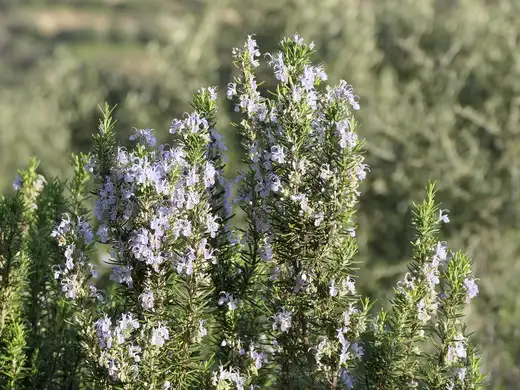
In frost-free and nearly frost-free areas, rosemary is a permanent, evergreen shrub and often your most carefree herb. Winter-hardy plants bloom from January to April, according to Penn State, and UF/IFAS describes winter and spring flowering in Florida. In South Florida, UF/IFAS calendars list May-June and August-September for planting. Pay more attention to drainage and air flow than to cold.
Growing rosemary in pots and overwintering indoors
Rosemary does well in containers, which is how most gardeners north of zone 7 keep it. Penn State recommends clay pots because they let the mix dry quickly. University of Arizona suggests pots at least 14 inches across in the desert, where smaller containers bake in summer sun and are very hard to keep evenly moist; in summer heat, pots there may need water twice a day.
Bring potted plants indoors 2 to 3 weeks before your first fall frost, Penn State advises, and move them back out in spring after frost danger passes.
Overwintering indoors is where many plants are lost. Penn State calls it difficult because of low light and because it is easy to give too little or too much water. What helps:
- Light: a south-facing window in full sun, or supplemental lighting. Illinois Extension says a south or west exposure is usually best.
- Temperature: Illinois Extension notes rosemary prefers around 63 to 65°F, so a cool, bright room beats a warm one.
- Air flow: good circulation reduces powdery mildew, which is common indoors.
- Water: this is the hardest part. Illinois Extension warns that potted rosemary dries out quickly and drops leaves when it does, yet waterlogged plants suffer and root rot is especially deadly in overwintered pots. Check the mix often, water thoroughly when it has dried somewhat, and empty the saucer.
Indoors, watch for spider mites, mealybugs, whiteflies, aphids, thrips and scale; outdoor plants in full sun rarely have them.
Propagating from cuttings
Cuttings are the best way to get more plants of a variety you like, and the two main extension methods differ.
Texas A&M’s simple windowsill method uses a 3-inch branch tip with the leaves stripped from the bottom 1½ inches. Set one or two cuttings in a 3-inch pot, water, and keep them in indirect light at 60 to 70°F. They should be rooted and ready to plant out in about 8 weeks.
Penn State’s faster method uses a 6-inch stem tip with the lower leaves stripped, dipped in rooting hormone and stuck in a sterile, well-aerated soilless mix with bottom heat of 70 to 75°F. Cuttings root in 10 to 20 days. Rosemary can also be propagated by layering a low branch into the soil, or by division.
Harvesting and storing
Once a plant is big enough to lose a few small branches without a setback, snip sprigs whenever you need them. You can harvest several times a season, but Texas A&M advises letting the plant replace its growth between cuttings. Take the young, tender tips for the best flavor; Illinois Extension notes the longer woody stems make good kabob skewers.
For drying, Penn State recommends harvesting before the plant blooms. An older Texas A&M herb guide instead suggests clipping the tops when rosemary is in full bloom, so either timing works for home use. University of Arizona recommends cutting herbs in early morning or evening, since leaves hold less oil in the heat of the day.
Fresh sprigs keep their best flavor for 2 to 7 days in the refrigerator. For longer storage, hang small bundles upside down in an open, airy spot to dry, or slice the leaves finely and freeze them in a freezer bag or in an ice cube tray with water.
Problems and how to fix them
- Browning tips, yellowing, sudden collapse: root rot from overwatering or poor drainage. Water less, move pots to a fast-draining mix and plant in raised beds.
- White powdery coating on leaves: powdery mildew, driven by humidity and poor air flow. Prune to open the plant, space plants farther apart and add air movement indoors.
- Sticky leaves, webbing, white cottony clusters or tiny bumps on stems: spider mites, mealybugs, whiteflies or scale, mostly on indoor plants. Rinse with water or use insecticidal soap; Texas A&M notes scale can simply be clipped off with the infested tips, since the insects do not move.
- Dead plant after a cold snap: winter kill. Choose a hardy cultivar, plant in well-drained soil in a sheltered southern spot, or overwinter in a pot.
- Leaf drop indoors: usually the pot dried out completely. Check moisture more often in winter, but do not swing to keeping it wet.
- Seedlings that never appear: low germination is normal for rosemary. Start from cuttings or nursery plants instead.
Texas A&M notes rosemary is often planted with thyme, oregano, sage and lavender because they share the same dry, sunny needs, which makes that grouping practical. Claims that it repels cabbage moths, bean beetles and carrot flies are garden tradition rather than tested results. The flowers do draw bees, butterflies and hummingbirds, and NC State notes American goldfinches eat the seeds and deer generally leave rosemary alone.
Questions
How often should I water rosemary?
Texas A&M suggests about every 1 to 2 weeks for established plants in the ground, letting the soil dry out thoroughly between waterings. Pots dry faster and may need water far more often in summer heat, but never keep the mix soggy.
Can rosemary survive winter outdoors?
In zones 8-10 it is a reliable evergreen shrub, and Texas A&M treats it as perennial in zone 7. Hardier cultivars such as 'Arp' and 'Madalene Hill' can survive to zone 7, or 6b with protection, according to Penn State. Colder than that, grow it in a pot and bring it in.
Why is my rosemary turning brown?
Browning tips are a common sign of root rot from too much water or poorly drained soil. Check whether the soil stays wet, move potted plants to a fast-draining mix in a pot with drainage holes, and water less often.
Can I grow rosemary from seed?
You can, but Texas A&M reports seed usually germinates at only about 15 percent and a seedling takes about 15 months to reach harvest size, and Penn State notes that named varieties do not come true from seed. A nursery plant is ready to harvest in about 3 months.
When should I prune rosemary?
Prune after it finishes flowering. That keeps the plant dense, opens it up for air flow, which reduces powdery mildew, and stimulates new shoots for harvest.
Does rosemary need fertilizer?
Rarely. Texas A&M advises feeding once in early spring, before new growth, only if the plant is slow, stunted or pale yellow. Extra nitrogen tends to bring on sap-sucking insects.
Sources
- Give Rosemary as a Sign of Love and Remembrance · University of Illinois Extension
- Easy Gardening: Rosemary (EHT-039) · Texas A&M AgriLife Extension
- Herb Garden Plants: Rosemary · Penn State Extension
- Salvia rosmarinus (Rosemary) · NC State Extension Gardener Plant Toolbox
- Rosemary · UF/IFAS Extension Gardening Solutions
- ENH1190/EP451: North Florida Gardening Calendar · UF/IFAS Extension (EDIS)
- ENH1189/EP450: Central Florida Gardening Calendar · UF/IFAS Extension (EDIS)
- ENH1191/EP452: South Florida Gardening Calendar · UF/IFAS Extension (EDIS)
- Growing Herbs in Tucson (AZ2061) · University of Arizona Cooperative Extension
- Growing Herbs (Bulletin #54) · University of Arizona Cooperative Extension, Yavapai County
- Growing Herbs in Texas · Texas A&M AgriLife Extension
- Culinary Use and Culture of Herbs · UC Master Gardeners of Orange County (UC ANR)
- Start herb seeds indoors · University of Illinois Extension
- Five Cold-Hardy Herbs to Grow · Oregon State University Extension