How to Grow Ranunculus
Ranunculus grow from claw-shaped corms that are soaked for 3 to 4 hours, then planted claws down about 2 inches deep in full sun and sharply drained soil. In zones 8 to 10, plant in fall for spring flowers; in colder areas, plant in late winter or spring, or pre-sprout indoors. Plants bloom about 90 days after planting and stop once days stay above about 70°F.

Your dates for ranunculus
Set your ZIP code at the top of the page and we will work out when to plant ranunculus where you live, from the frost records of the nearest NOAA weather station. Your ZIP code is remembered on this device only.
Ranunculus at a glance
- Botanical name
- Ranunculus asiaticus
- Light
- full sun (6-8 hours)
- Frost tolerance
- Half-hardy: takes a light frost
- Hardiness zones
- 8-10
- Planting depth
- 2 inches
- Spacing
- 3–8 inches apart
- Containers
- Yes
When to plant ranunculus
| Zone | Start indoors | Plant out | Sow outdoors |
|---|---|---|---|
| Zone 2a * | Feb 24 to May 5 | May 19 to 26 | Apr 21 to May 5 |
| Zone 3a * | Mar 3 to May 12 | May 26 to Jun 2 | Apr 28 to May 12 |
| Zone 3b * | Feb 22 to May 3 | May 17 to 24 | Apr 19 to May 3 |
| Zone 4a * | Feb 18 to Apr 29 | May 13 to 20 | Apr 15 to 29 |
| Zone 4b * | Feb 13 to Apr 24 | May 8 to 15 | Apr 10 to 24 |
| Zone 5a * | Feb 8 to Apr 19 | May 3 to 10 | Apr 5 to 19 |
| Zone 5b * | Feb 6 to Apr 17 | May 1 to 8 | Apr 3 to 17 |
| Zone 6a * | Feb 4 to Apr 15 | Apr 29 to May 6 | Apr 1 to 15 |
| Zone 6b * | Jan 29 to Apr 9 | Apr 23 to 30 | Mar 26 to Apr 9 |
| Zone 7a * | Jan 22 to Apr 2 | Apr 16 to 23 | Mar 19 to Apr 2 |
| Zone 7b * | Jan 11 to Mar 22 | Apr 5 to 12 | Mar 8 to 22 |
| Zone 8a | Jan 4 to Mar 15 | Mar 29 to Apr 5 | Mar 1 to 15 |
| Zone 8b | Dec 23 to Mar 3 | Mar 17 to 24 | Feb 17 to Mar 3 |
| Zone 9a | Dec 8 to Feb 16 | Mar 2 to 9 | Feb 2 to 16 |
| Zone 9b | Nov 8 to Jan 17 | Jan 31 to Feb 7 | Jan 3 to 17 |
* Outside zones 8 to 10, the hardiness range our sources give for ranunculus. Plants there may not survive the winter or get enough winter chill, and are usually grown as annuals or in pots.
What you are planting
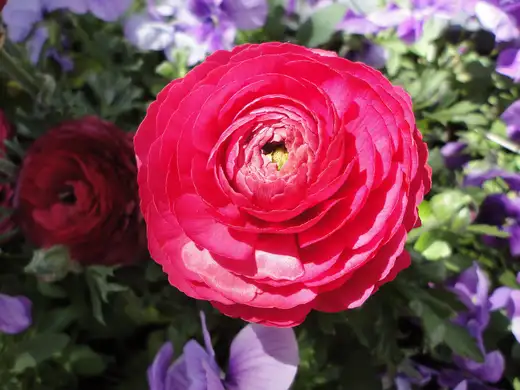
Garden ranunculus, also called Persian buttercup (Ranunculus asiaticus), comes from the eastern Mediterranean. It grows from a corm, a swollen storage stem that is sold dry and looks like a shriveled claw or a tiny octopus. Clemson notes it is sold with spring bulbs though it is not a true bulb. Size matters. Alaska Master Gardeners point out that bigger corms produce more flowers, so buy the largest you can find.
The plant is a cool-season perennial that is hardy only in about zones 8 to 10. Below about 28°F the plants are injured, according to NC State Extension. Below about 25°F the plant dies or the corm freezes and rots, according to Alaska Master Gardeners. That cold limit, together with the plant’s dislike of heat, decides when and how you plant.
Soak first
Soak the corms in room-temperature water for 3 to 4 hours before planting. They roughly double in size as they rehydrate. Alaska Master Gardeners leave the tap running slightly to keep the water fresh. Do not soak longer than 4 hours, because waterlogged corms rot. Clemson notes that soaked corms sprout quickly and flower more evenly.
Planting in mild-winter areas (zones 8 to 10)
Plant in fall so the plants root and grow through the cool months. Texas A&M AgriLife in Travis County (Austin) plants in October, and those plants bloom in April and May. Solano County Master Gardeners in California plant in fall but note that late-winter planting also works. In the Phoenix area, University of Arizona’s chart shows planting in October and November or from February into mid-March, with blooms from mid-February into May.
Plant the corms 2 inches deep with the claws facing down. Spacing advice varies: Clemson uses 3 to 6 inches, Texas A&M 4 to 6 inches and NC State 6 to 8 inches. Water them in once, then leave them alone. Texas A&M says no more water is needed until shoots appear, because the roots dislike disturbance. Mulch to hold moisture and buffer winter cold. If a freeze below about 25 to 28°F is forecast, cover the plants with frost cloth.
Planting in cold-winter areas (zones 3 to 7)
You have two options, and both aim for flowers before summer heat.
Plant outdoors directly. NC State Extension suggests planting corms several weeks before the last frost, once hard freezes are over. Clemson says to wait until the extreme hard-frost dates have passed. The dates for your zone above show the window.
Pre-sprout or pot up indoors for earlier, more reliable flowers:
- Alaska Master Gardeners soak the corms, set them in a tray of moist potting mix in a dark, cool spot at 40 to 50°F, and leave them 10 to 14 days until they have swollen and grown small white rootlets. They then plant them out on the safe date. Pre-sprouted plants flower about two weeks earlier than corms planted dry. One Anchorage planting bloomed 12 weeks after pre-sprouting began.
- Iowa State’s Reiman Gardens starts corms in pots about 12 weeks before the last frost: two or three corms 1 inch deep in a 6-inch pot, kept bright and cool, no more than 60°F by day and 45 to 50°F at night. The plants go outside just after the last frost.
The When to Plant Ranunculus page explains both schedules in more detail.
Site and soil
Choose full sun, at least 6 to 8 hours according to Clemson. Drainage is the deciding factor. NC State says ranunculus will not tolerate heavy clay and does best in sandy, well-drained soil. In wet ground the roots rot. On clay, plant in raised beds or containers.
In pots, use a free-draining mix and a container with drainage holes. Clemson says to choose a pot big enough for the full-grown plant.
Care while growing
Once shoots appear, keep the soil evenly moist but never soggy. Iowa State feeds potted and garden plants with a soluble fertilizer every two weeks while they grow. Deadhead spent flowers to keep new buds coming.
Ranunculus do best in cool spring weather. Solano County Master Gardeners note that bloom ends once days stay above about 70°F, so plan your planting date to put flowering in the cool part of the year.
Cutting for the vase
Ranunculus are excellent, long-lasting cut flowers if you cut them at the right stage. Cut when the buds show full color and feel soft and squishy, like a marshmallow, but have not opened. Cut the stem low, near its base, which encourages more blooms. Strip leaves that would sit below the waterline, recut the stems indoors and change the water every two to three days. Texas A&M reports stems lasting up to 10 days.
After flowering: keep or replace the corms
Let the foliage yellow and die back before removing it, because the plant is still feeding the corm. The plants go dormant in summer heat.
- Zones 8 to 10: corms can stay in the ground and may rebloom. Do not water dormant plantings, because wet summer soil rots the corms. Many gardeners, including Solano County Master Gardeners, still plant fresh corms each fall for a dependable display.
- Zones 3 to 7: dig the dormant corms, cut off the tops and store them in a cool, dry place until the next planting.
Common problems
- Root or corm rot: caused by heavy or poorly drained soil, overwatering dormant corms, or soaking longer than 4 hours. Plant in sandy soil or raised beds and limit the soak.
- Freeze injury: plants are damaged below about 28°F and corms die below about 25°F. Cover plants or delay planting.
- Flowering stops early: heat above about 70°F ends bloom. Plant early enough to flower in cool weather.
- Skin irritation: the sap can cause redness and blisters in sensitive people. Wear gloves when handling.
Questions
Which way up do ranunculus corms go?
Claws pointing down. The pointed, finger-like projections are roots; plant them facing the soil, about 2 inches deep (Clemson says 2 to 3 inches).
How long should I soak ranunculus corms?
Three to four hours in room-temperature water. Alaska Master Gardeners warn that soaking longer than 4 hours can make the corms rot. A Solano County Master Gardener notes having planted without soaking and seen little difference, but Clemson notes that soaked corms flower more uniformly.
Do ranunculus come back every year?
In zones 8 to 10 the corms can survive in the ground and rebloom, though many gardeners replant each fall for a reliable show. In zones 3 to 7, dig the corms after the foliage dies back and store them, or treat the plants as annuals.
When do ranunculus bloom?
About 90 days after planting, with flowering lasting up to 6 to 7 weeks. Fall-planted corms in Central Texas bloom in April and May; spring-planted corms in cold climates bloom in early to mid-summer.
Are ranunculus poisonous?
Yes. All parts contain compounds that irritate skin and the mouth, and NC State Extension lists the plant as a problem for cats, dogs and horses. Wear gloves if your skin is sensitive.
Sources
- Flower Planting Guide for the Low Desert (AZ1100) · University of Arizona Cooperative Extension, Maricopa County
- Ranunculus asiaticus (Persian Buttercup) · North Carolina State University Extension, Extension Gardener Plant Toolbox
- Add Ranunculus to Your Fall Planting To-do List · Clemson Cooperative Extension, Home & Garden Information Center
- Growing Ranunculus in Southcentral Alaska · University of Alaska Fairbanks, Alaska Master Gardener Blog
- Ranunculus Is a Beautiful Challenge · Iowa State University Extension
- Time to Plant Ranunculus · Texas A&M AgriLife Extension, Travis County
- Ranunculus RIzz (Under the Solano Sun, archived copy; live page returned 403) · UC Agriculture and Natural Resources, Solano County Master Gardeners