How to Care for a Prayer Plant
Prayer plant needs bright, indirect light, soil kept evenly moist but never soggy through spring and summer, and high humidity. Water the soil rather than the crown, let the surface dry between waterings in winter, and feed sparingly, since too much fertilizer and fluoride both burn the leaves.
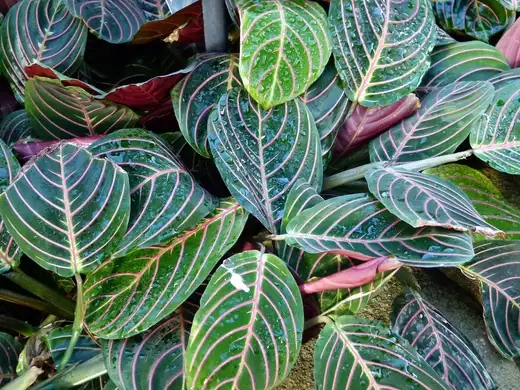

Prayer Plants at a glance
- Botanical name
- Maranta leuconeura
- Light
- bright, indirect or diffused light; tolerates low to medium light; direct sun bleaches the leaf colors
- Hardiness zones
- 11
- Containers
- Yes
When to repot and propagate prayer plants
Prayer plant (Maranta leuconeura) is a low, spreading member of the arrowroot family from Brazil. It is grown for its leaves: oval blades marked with dark blotches beside the midrib (the source of the nickname rabbit tracks) and, in the red-veined form, a fishbone pattern of red veins. Each evening the leaves lift and fold upward, then lie flat again by day. Flowers are small and seldom appear indoors.
It is not a hard plant, but it is fussier than a pothos. It wants steady moisture, humid air and protection from cold, and it shows its displeasure quickly in faded or browned leaves.
Light
Give it bright, indirect or diffused light, the conditions NC State, Illinois and UF/IFAS all recommend. NC State says it tolerates low to medium light but not direct sun, which bleaches the leaf colors. Very dim light causes the opposite problem: NC State notes that both sides of the leaf lose color in low light.
Watering
This is a plant that should not dry out in summer and should not stay wet in winter.
From spring through summer, keep the potting mix evenly moist but never soggy. UF/IFAS Extension in Nassau County puts it plainly: moist, not wet. In winter, when growth slows, NC State and University of Illinois Extension both advise letting the soil dry somewhat between waterings.
How you pour matters as much as how often. Illinois warns that the stems rot easily if water sits on the crown, and UF/IFAS says to water at the root area only. Aim the spout at the soil around the edge of the pot, water until it drains from the bottom, and empty the saucer.
Because the leaves burn from fluoride, NC State’s warning about high fluoride is worth heeding if your tap water is fluoridated and you see brown tips despite good watering.
Potting mix and pot
Use a regular, well-drained potting mix. NC State links root rot to poorly drained soil. UF/IFAS notes that the roots are shallow and recommends a shallow pot, which holds less soil that could stay wet below the roots. Prayer plant also does well in a hanging basket, where its stems spill over the edge.
Temperature and humidity
UF/IFAS gives 60 to 85°F as the usual range. NC State says the plant does not tolerate low temperatures or cold drafts, so keep it away from winter windows, exterior doors and heating and cooling vents.
Humidity is where most homes fall short. NC State says it requires high humidity and does not tolerate dry air. Stand the pot on a tray of wet pebbles, run a humidifier nearby, or grow it in a humid room. UF/IFAS adds that light misting helps in winter, when indoor air is driest.
Feeding
None of the extension sources give a set schedule, but they agree on the risks at both ends. NC State says over-fertilizing burns the leaves, and that low fertility dulls their color. Feed lightly and only while the plant is growing in spring and summer, and stop in fall and winter.
Repotting and dividing
Repot only when the clump has outgrown its container. UF/IFAS suggests doing it in February or March, before the main flush of growth. Move it into another shallow pot, only modestly larger, with fresh mix.
Repotting is also the time to propagate. NC State and UF/IFAS both say prayer plant is increased by dividing the rhizomes. Ease the plant out, separate the clump into pieces that each have roots and several leaves, and pot each one at the depth it grew before. Keep divisions evenly moist and humid while they settle in.
Trimming
UF/IFAS says prayer plant responds well to being trimmed at least twice a year, which keeps it growing vigorously as a compact clump. Skip this if you are growing it as a trailing basket plant. Cut off yellowed or damaged leaves at any time.
Pests and problems
- Faded or washed-out leaves: too much direct sun, or too little light and fertilizer. Adjust light first.
- Brown leaf tips or scorched edges: too much fertilizer, fluoride in the water, or dry air.
- Yellowing, collapsing stems and rot at the base: poorly drained soil or water left on the crown. Let the surface dry, water at the soil, and repot into fresh mix if the roots are soft.
- Damage after a cold night by a window: chilling. Move it away from cold glass and drafts.
- Spider mites and mealybugs: NC State calls them occasional pests. Check leaf undersides regularly and treat early.
Pets and toxicity
The ASPCA lists prayer plant as non-toxic to dogs, cats and horses. Its entry is filed under the closely related Calathea insignis but lists Maranta among the common names.
Outdoors
NC State rates prayer plant hardy only in zone 11, so outdoor planting is limited to the warmest frost-free spots. UF/IFAS Extension in Nassau County, in northeast Florida, says its climate is too cold and the plant is used indoors there. Where it can grow outside, UF/IFAS notes it forms low clumps suited to groundcover or containers, and its assessment does not consider it a problem species in Florida.
Elsewhere, a summer on a shaded porch is possible, but this plant dislikes cold. University of Maryland Extension’s general rule is to wait until nights stay above 60°F before moving houseplants out, and to bring them in as nights start dropping below 60°F. Keep it out of direct sun the whole time.
Questions
Why does my prayer plant fold its leaves at night?
It is normal. The leaves lie flat by day and rise to an upright position at night, which looks like hands folded in prayer and gives the plant its name.
Why are my prayer plant leaves losing their color?
Too much sun bleaches the pattern, while NC State says low light or low fertility also dulls both sides of the leaf. Move it to bright, indirect light and feed lightly during the growing season.
Why are the leaf tips and edges turning brown?
NC State lists over-fertilizing and high fluoride as causes of leaf burn. Dry air is the other usual suspect, since the plant does not tolerate low humidity.
Is prayer plant toxic to cats and dogs?
The ASPCA lists prayer plant as non-toxic to dogs, cats and horses. Its entry is filed under the related Calathea insignis but names Maranta as a common name.
How do I propagate a prayer plant?
Divide it. The plant spreads from rhizomes, so when you repot in late winter or early spring, pull or cut the clump into sections that each have roots and several leaves.
Sources
- Moving Indoor Plants Outside · University of Maryland Extension
- Maranta leuconeura (Prayer Plant) · North Carolina Extension Gardener Plant Toolbox, NC State University
- Prayer Plant · University of Illinois Extension
- Q: What is a prayer plant? · UF/IFAS Extension Nassau County
- Fact sheet: Prayer Plant · UF/IFAS Extension Nassau County
- Maranta leuconeura - UF/IFAS Assessment of Non-Native Plants in Florida's Natural Areas · UF/IFAS Center for Aquatic and Invasive Plants
- Prayer Plant - Toxic and Non-Toxic Plants · ASPCA Animal Poison Control Center