How to Care for a Pothos
Pothos does best in bright, filtered light, in a well-aerated mix that you water only once the surface has dried. Kept a little on the dry side and fed every other month outside winter, it will grow almost anywhere indoors. Soggy soil, not low light, is what usually kills it.
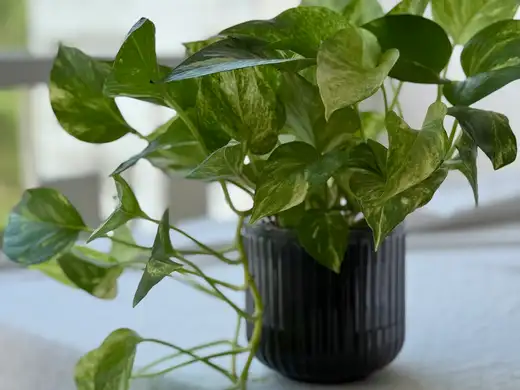

Pothos at a glance
- Botanical name
- Epipremnum aureum
- Light
- bright indirect or filtered light; tolerates low light; little direct sun
- Hardiness zones
- 10-12
- Containers
- Yes
Pothos (Epipremnum aureum), also sold as devil’s ivy or golden pothos, is a climbing vine from the tropical Pacific; NC State places its home in the Society Islands, while UF/IFAS says the Solomon Islands. Indoors it stays in its juvenile form, with heart-shaped leaves that seldom pass about 6 inches. That makes it easy to grow in a hanging basket, on a shelf or up a moss pole.
Light
Give pothos bright, filtered light. The University of Wisconsin and NC State both say it does not want much direct sun, and UF/IFAS lists burned patches confined to the pale, variegated parts of the leaf as a sign of too much light or heat.
Pothos can survive long stretches in low light. UF/IFAS research for interior plantings puts the floor at about 50 foot-candles, which is a dim room. At that level, though, new leaves come in small and variegated types such as ‘Marble Queen’ turn mostly green. About 150 foot-candles or more keeps leaf size and color. If you want a pothos for a dark corner, the University of Wisconsin notes that the solid green ‘Jade’ does well in low light.
Watering
Water when the surface of the mix feels dry, then water thoroughly and let the excess drain away. The University of Wisconsin says to let the mix dry slightly between waterings, and UF/IFAS adds that indoors pothos does better “a little on the dry side” than kept constantly moist.
A plant in a dim room uses far less water than one in bright light, so let the soil, not the calendar, tell you when to water. Overwatering shows up first as rotting roots, which turn brown or disappear, and as blackened leaf edges and yellowing leaves. Empty the saucer after watering so the pot never stands in water.
Pot and Mix
Use a well-aerated, well-drained potting mix and a pot with drainage holes. UF/IFAS lists peat, pine bark, vermiculite and perlite as the usual ingredients, blended so the mix holds moisture but still lets air reach the roots. For a full-looking pot, the University of Wisconsin recommends planting several rooted cuttings together rather than one.
If you want large leaves, give the vine a moss pole or other support. NC State notes that when pothos can climb and has enough light, it starts to produce bigger, more mature leaves.
Temperature and Humidity
Pothos likes warmth. UF/IFAS recommends 70 to 80°F indoors; the University of Wisconsin says it does best between 70 and 90°F. Keep it away from cold drafts, and in winter away from cold window glass. UF/IFAS found that a few hours at 33 to 40°F, or a sudden temperature swing, causes scattered brown patches in the middle of the leaves.
It prefers high humidity. In rooms dried out by winter heating, run a humidifier or set the pot on a tray of wet pebbles, keeping the pot base above the water line.
Feeding
Feed every other month while the plant is growing and stop in winter, when growth slows. A water-soluble houseplant fertilizer used according to the label is enough. UF/IFAS advises waiting about four weeks before feeding or repotting a newly bought plant, to avoid adding stress while it adjusts to your home. Too much fertilizer builds up salts in the mix, which the University of Wisconsin lists as another cause of blackened leaf tips.
Pruning
As the vines lengthen, older leaves yellow and drop, leaving bare stems with leaves only at the ends. This is normal. Prune long vines to keep the plant bushy and encourage new growth; the University of Wisconsin says plants can be cut back to 2 inches above the soil if needed. Wipe dust off the leaves with a soft, damp cloth now and then.
Propagation
Pothos is one of the easiest plants to propagate. UF/IFAS describes the standard method: take a short stem cutting with one node and its leaf. Root it in water, vermiculite or moist mix. UF/IFAS says buds break in 2 to 3 weeks (the University of Wisconsin says 1 to 2 under warm conditions), and roots form in 3 to 4 weeks. Longer tip cuttings work as well, and air layering is an option. The prunings from a leggy plant make good cuttings, and several rooted cuttings potted together fill out faster than one.
Pests and Problems
- Blackened leaf edges, brown or missing roots – overwatering. Let the surface dry before watering, and check that the pot drains.
- Yellowing older leaves – a few are normal; many at once mean the mix is being kept too wet or too dry.
- Small, all-green new leaves – too little light, or too little fertilizer. Move it to brighter, filtered light.
- Brown patches in the center of leaves – chilling (33 to 40°F for a few hours) or an abrupt temperature change.
- Sticky leaves, sooty mold, white cottony tufts or brown bumps – mealybugs or scale. The University of Wisconsin notes it is often better to discard a badly infested plant and restart from clean cuttings.
- Fine webbing and speckled leaves – spider mites. Clean the leaves thoroughly and spray with insecticidal soap repeatedly.
Toxicity
The ASPCA lists pothos as toxic to dogs and cats, and under its devil’s ivy entry also to horses. The plant contains insoluble calcium oxalates, which cause mouth irritation and pain, drooling, vomiting and trouble swallowing. NC State rates it medium severity for people, and the sap can irritate skin. Hang baskets out of reach of pets and children.
Growing Pothos Outdoors
In cold-winter areas the University of Wisconsin says pothos can be grown outdoors as a summer annual, for example in hanging baskets. It is hardy outdoors only in zones 10 to 12.
In Florida, keep it in the pot. Pothos is a Category II invasive exotic there, the UF/IFAS assessment rates it a high invasion risk statewide, and UF/IFAS Extension asks homeowners not to plant it in the landscape. Escaped vines climb trees and develop leaves up to 3 feet long on vines that can reach about 50 feet.
Questions
How often should I water a pothos?
Water when the surface of the mix has dried, then let the pot drain. UF/IFAS notes that indoors pothos does better kept a little on the dry side, so skip a watering if the soil is still damp.
Why is my pothos losing its variegation?
Too little light. Pothos survives in dim rooms, but UF/IFAS found new leaves come in smaller and lose their color below about 150 foot-candles. Move it to a brighter spot out of direct sun.
Can I root pothos cuttings in water?
Yes. A cutting with at least one node and leaf roots in water, vermiculite or potting mix, usually in 3 to 4 weeks in warm conditions. Pot several rooted cuttings together for a fuller plant.
Why are my pothos leaves turning yellow?
Older leaves yellow and drop naturally as the vine lengthens. If many leaves are yellowing, UF/IFAS points to mix kept too wet or too dry; check the soil before you water.
Is pothos poisonous to cats and dogs?
Yes. The ASPCA lists pothos as toxic to dogs and cats because of insoluble calcium oxalates, which cause mouth pain, drooling, vomiting and trouble swallowing.
Sources
- Garden Tips: Houseplants (Knox County Master Gardeners) · University of Illinois Extension
- Epipremnum aureum (Pothos, Devil's Ivy) · North Carolina State Extension Gardener Plant Toolbox
- Cultural Guidelines for Commercial Production of Interiorscape Epipremnum (ENH894/EP151) · University of Florida IFAS Extension (EDIS)
- Pothos, Epipremnum aureum · University of Wisconsin-Madison Division of Extension
- Keep it in the pot - control your pothos · UF/IFAS Extension Charlotte County
- Epipremnum aureum - Assessment of Non-Native Plants in Florida's Natural Areas · University of Florida IFAS
- Dependable & Durable Houseplants · University of Wisconsin-Madison Division of Extension
- Toxic and Non-toxic Plants: Golden Pothos · ASPCA Animal Poison Control
- Toxic and Non-toxic Plants: Devil's Ivy · ASPCA Animal Poison Control