How to Grow Poppies
Annual poppies are grown from seed scattered right where they will bloom, either in late fall or as early in spring as you can work the soil. The seed is dust-fine and needs only the barest covering, the seedlings resent being moved, and the plants want full sun, well-drained soil and cool weather to flower well.

Your dates for poppies
Set your ZIP code at the top of the page and we will work out when to plant poppies where you live, from the frost records of the nearest NOAA weather station. Your ZIP code is remembered on this device only.
Poppies at a glance
- Botanical name
- Papaver rhoeas (Shirley/corn/Flanders poppy); also Papaver somniferum (breadseed poppy) and Eschscholzia californica (California poppy)
- Light
- full sun
- Frost tolerance
- Hardy: takes a hard frost
- Germination
- 7–28 days
- Days to harvest
- 120–150 days from seed
- Planting depth
- 0.125 inches
- Spacing
- 6–12 inches apart, rows 12–24 inches apart
- Containers
- Yes
When to plant poppies
| Zone | Sow outdoors |
|---|---|
| Zone 2a | Apr 7 to 21 |
| Zone 3a | Apr 14 to 28 |
| Zone 3b | Apr 5 to 19 |
| Zone 4a | Apr 1 to 15 |
| Zone 4b | Mar 27 to Apr 10 |
| Zone 5a | Mar 22 to Apr 5 |
| Zone 5b | Mar 20 to Apr 3 |
| Zone 6a | Mar 18 to Apr 1 |
| Zone 6b | Mar 12 to 26 |
| Zone 7a | Mar 5 to 19 |
| Zone 7b | Feb 22 to Mar 8 |
| Zone 8a | Feb 15 to Mar 1 |
| Zone 8b | Feb 3 to 17 |
| Zone 9a | Jan 19 to Feb 2 |
| Zone 9b | Dec 20 to Jan 3 |
Spring dates before the last frost assume the soil has thawed and is dry enough to work. After a late or wet spring, wait for that even if the date has passed.
Which poppies this guide covers
These are the annual poppies sown from seed each year: the Shirley, corn or Flanders poppy (Papaver rhoeas), the breadseed or peony-flowered poppy (P. somniferum), the California poppy (Eschscholzia californica) and the Iceland poppy (P. nudicaule), which LSU AgCenter groups with them because it is handled the same way in the South. The perennial Oriental poppy is a different plant, planted and divided in fall like other perennials.
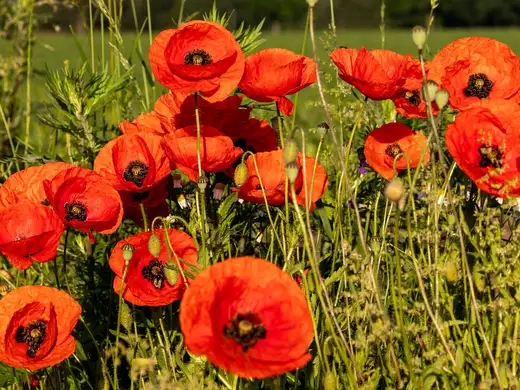
Shirley poppies grow 2 to 3 feet tall with papery 3-inch flowers in red, pink, orange, white and bicolors. UT Gardens in Tennessee describes breadseed poppies reaching 3 to 4 feet by May, topped later by big seed pods. California poppy is shorter, closes its flowers at night and on cloudy days, and thrives on little water once established.
Sow them where they will flower
Poppies resent having their roots disturbed, so Cornell, Utah State, LSU AgCenter and UT Gardens all recommend sowing seed directly in the bed. Transplanted seedlings often sulk or fail, which is a common reason for a poor stand.
Timing matters more than anything else. Utah State found that the seed germinates better after freezing and thawing, so sow in late fall or very early spring. In cold-winter regions, a late-fall sowing sits dormant and sprouts when the soil thaws. If you sow in spring instead, go as early as you can work the ground, roughly 4 to 6 weeks before the last frost; the dates for your zone above show that window. Poppies stop flowering when summer heat arrives, so a late sowing gives short plants and a brief show.
In mild-winter areas, poppies are a fall crop. LSU AgCenter tells Gulf South gardeners to sow in October or November because the plants need the winter to build strength. Spring sowings there rarely put on a good show. The When to Plant Poppies page covers timing region by region.
How to sow
Prepare a fine, weed-free seedbed in full sun. Utah State suggests preparing the soil the fall before a spring sowing, so you are not working wet ground in March.
- Mix the seed with a cup or so of dry sand. Breadseed poppy has more than 100,000 seeds per ounce, and the sand lets you see where you have sown and spreads the seed evenly.
- Scatter it over the bed or along shallow furrows and press it in. Cover with no more than 1/8 inch of soil.
- Keep the surface moist, with a fine spray that will not wash the seed away, until seedlings appear. Cornell gives 10 to 14 days to emergence for Shirley poppy at about 55°F. Utah State reports 7 to 28 days for breadseed poppy, about four weeks in cold soil and two weeks when it is warmer.
- Thin before the seedlings are 6 inches tall. Penn State lists 6 to 12 inches between poppy plants and 6 to 8 inches for California poppy. Crowded plants flower poorly and invite mildew.
Soil, water and feeding
Well-drained soil is not optional. Iowa State notes that wet soil in winter makes poppies decline, and the UC Statewide IPM Program lists root, stem and crown rots among their main problems. Raised or sloped beds help on clay.
Poppies do not need rich ground. The University of Georgia recommends California and Iceland poppies for poor soils. Utah State caps compost at about 1 inch per 100 square feet and suggests a soil test before adding fertilizer. Feed lightly until the plants are established, then stop.
After thinning, water needs are modest. Utah State puts it at about 1 inch a week depending on weather. In California’s Mediterranean climate, Napa County Master Gardeners rarely water fall-sown California poppies except in a very dry year.
Poppies compete poorly with weeds while young. Weed by hand or cultivate very shallowly, then mulch with leaves or grass clippings once the plants are up.
Deadheading, reseeding and cutting
Removing faded flowers before pods form keeps plants blooming longer. If you want poppies again next year without sowing, leave a few pods to ripen and shed seed. Self-sown seedlings will appear in fall in the South and in spring in the North. Different colors cross freely, so volunteers may not match their parents.
Poppies make good cut flowers if you seal the stems. Cornell’s method: cut in the garden, recut indoors, then dip the stem ends in boiling water for 20 to 30 seconds or sear them with a flame. California poppy is the exception. Its petals drop quickly, so leave it in the garden. The ripe pods of Shirley and breadseed poppies dry well for arrangements.
Saving breadseed poppy seed
Harvest in dry weather once the pods turn leathery and the seeds rattle. Tip the pods over a bag and shake out the seed, repeating every week or so as more pods ripen. Utah State expects 4 to 5 ounces of seed from a well-grown 10-foot row. Seed for baking keeps its flavor a long time, but viability drops fast, so replant saved seed within a year. To keep a variety pure, Utah State says to grow different varieties at least 250 feet apart or hand-pollinate and bag the flowers.
Varieties extension services recommend
For the Midwest, Iowa State suggests the Shirley poppies ‘Mother of Pearl’ (pastels) and ‘Red Legion’, the breadseed poppies ‘Danish Flag’ and ‘Black Peony’, and the Iceland poppies ‘Champagne Bubbles’, ‘Wonderland Mix’ and ‘Oregon Rainbow’. For Utah gardens grown for seed, Utah State lists ‘Hungarian Bread Seed’, ‘Elka’, ‘Ziar’ and ‘Heirloom Pepperbox’.
Common problems
- Aphids: black bean aphids cluster on buds just before bloom and can spread viruses. Knock them off with a strong spray of water or use insecticidal soap.
- Downy and powdery mildew: favored by crowding and wet foliage. Thin properly and avoid overhead watering.
- Slugs and snails: they eat seedlings in moist spring weather. Traps and baits work well.
- Root and crown rot: caused by soggy soil. Move the planting to a better-drained bed.
- Plants that collapse after transplanting: sow directly instead.
Questions
Can I start poppies indoors and transplant them?
You can, but it rarely pays. Cornell says seed can be started 4 to 6 weeks before the last frost yet advises against it because poppies dislike transplanting. If you try, grow each seedling in its own small pot and plant it out around the last frost date without disturbing the roots.
Should poppy seed be covered?
Only barely. Utah State says the seed needs light to germinate and should be covered with no more than 1/8 inch of soil. Cornell suggests a light dusting of mix. In practice, scatter the seed on raked soil and press it in or rake it in very lightly.
How long do poppies take to bloom?
University of Arizona's low-desert chart gives about 120 days from seed to bloom for Shirley poppy and 150 days for California poppy, both from fall sowings. Spring-sown plants in the North bloom in late spring and early summer.
Do poppies come back every year?
The annual poppies die after flowering, but they reseed readily if you leave some pods to ripen. Cornell warns that Shirley poppies can become a weedy nuisance if you never deadhead them.
Is it legal to grow breadseed poppies?
Yes. Utah State notes that breadseed poppy (Papaver somniferum) can be grown legally in the US for garden flowers and culinary seed; producing opium from it is illegal.
Sources
- Shirley Poppy (Papaver rhoeas) - Flower Growing Guide · Cornell University Home Gardening
- Seed Poppy in the Garden · Utah State University Extension
- Flowering Annuals for Georgia Gardens (Bulletin 954) · University of Georgia Cooperative Extension
- Poppies and Sweet Peas · LSU AgCenter
- Flower Planting Guide for the Low Desert (AZ1100) · University of Arizona Cooperative Extension, Maricopa County
- November Checklist · UF/IFAS Extension Nassau County
- Garden Tasks For the Fall · Texas A&M AgriLife Extension, Bexar County
- Remembrance Poppies - Papaver rhoeas · UC Agriculture and Natural Resources (The Backyard Gardener)
- Plentiful Poppies (California poppy) · UC ANR, UC Master Gardeners of Napa County
- Poppy: Spring's Dancing Beauty · UT Gardens, University of Tennessee
- Poppies: From Breads to Backyards · Iowa State University Extension and Outreach
- Poppy - Home and Landscape · UC Statewide IPM Program
- Poppy (reference desk) · University of Arkansas Cooperative Extension Service
- Annuals (HO-80-W) · Purdue University Cooperative Extension Service
- Sowing Annual Seeds · Penn State Extension