How to Grow Pineapple
Twist the leafy crown off a ripe pineapple, strip a few lower leaves, let it dry for a day or two and plant it 3 to 4 inches deep in fast-draining soil in full sun. It grows outdoors year-round only in frost-free areas such as South Florida and Hawaii. Everywhere else, grow it in a 3- to 7-gallon pot and bring it inside on cool nights. Expect one fruit about 18 to 32 months after planting.
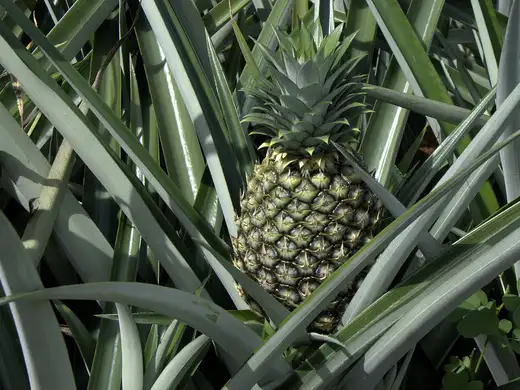

Pineapples at a glance
- Botanical name
- Ananas comosus
- Light
- full sun
- Frost tolerance
- Tender: killed by frost
- Planting depth
- 3 inches
- Spacing
- 12–36 inches apart
- Containers
- Yes, at least 3 gallons
Where pineapple grows
Pineapple is a tropical bromeliad, a relative of Spanish moss. Unlike most bromeliads it grows in soil. A mature plant is a rosette of sword-shaped leaves 3 to 6 feet high and wide. Temperatures below 28°F kill it, growth slows below 60°F or above 90°F, and it grows best between 68°F and 86°F (UF/IFAS).
Outdoors in the continental US, it does best along Florida’s southeast and southwest coasts. Floridians elsewhere in the state grow it in sheltered spots. In Hawaii it is planted in every month of the year. Everywhere else, pineapple is a container plant that summers outside and comes in for the cool months.
What to plant
Pineapple is grown from pieces of a mature plant, not from seed. Grocery fruit is usually seedless.
- Crown: the leafy top of the fruit, and the easiest to get.
- Slips: curved shoots that form on the stalk just below the fruit.
- Suckers: shoots that grow from the leaf bases on the main stem.
The bigger the piece, the sooner it fruits. University of Hawaii Extension gives a rough timeline: suckers fruit in about 17 to 18 months, slips in 21 to 22 months, and crowns can take 23 to 26 months.
To prepare a crown, twist it off a ripe fruit and cut away any flesh still attached. Pull off a few lower leaves to expose the root buds. Then let it dry in the shade before planting. UF/IFAS dries crowns for a day or two, and the older Hawaii guide waits a full week. Drying lets the wound seal so it doesn’t rot in the soil.
Planting in the ground
Choose the warmest, sunniest part of the yard that does not stay wet after summer rains. Keep plants at least 5 feet from trees and buildings so they aren’t shaded. In cooler parts of Florida, a spot near a wall gives some cold protection, at the cost of slower growth.
Pineapple wants well-drained, moderately fertile sandy loam. UF/IFAS suggests neutral to mildly acid soil, and Hawaii’s home guide puts the ideal pH at 5 to 6. Where the water table is high, UF/IFAS plants on a mound of native soil 2 to 3 feet high. Plant crowns 3 to 4 inches deep and firm the soil so they stand upright. Set nursery plants at the depth they grew in the pot. Space plants 12 to 36 inches apart; wider spacing gives bigger plants and bigger fruit.
Mulch 2 to 6 inches deep, keeping it 3 to 6 inches from the base of the plant. Keep grass and string trimmers well away. UF/IFAS recommends keeping a grass-free zone 2 to 5 feet out from the plant, because mower damage can stunt or kill the plant.
Growing in a pot
UF/IFAS recommends a 3- to 7-gallon pot with drainage holes, filled with a clean, fast-draining potting mix. A bigger pot grows a bigger plant and fruit. Keep the pot in full sun. Move it indoors, or at least under cover, whenever nights are forecast at 60°F or lower. Cold nights can make a small plant flower before it is big enough, and the fruit will be small. Indoors, put it in the sunniest window you have.
Water and fertilizer
Pineapple tolerates drought but grows faster with regular water. Its real enemy is soggy soil, which causes root rot. UF/IFAS waters during dry spells longer than six or seven days in hot weather, and every 10 to 14 days in winter. Very sandy soil may need watering once a week. Lawn sprinklers on a timer are a common cause of decline.
For the first 14 to 16 months, aim for steady growth, because a bigger plant at flowering gives a bigger fruit. UF/IFAS feeds small amounts every 6 to 8 weeks, using a mix with roughly 6 to 10 percent each of nitrogen, phosphate and potash plus magnesium. It adds iron where the soil is alkaline. Wilting, curling older leaves that fade from green to yellow or red are a sign of drought.
Flowering and fruit
A plant is mature when it has about 70 to 80 leaves, usually 14 to 18 months after planting. Cool weather and short days trigger flowering naturally. To force it, UF/IFAS suggests placing ripe apple slices in the center of the plant, where the ethylene they release starts the bloom. It advises against calcium carbide, an older method, because some sources contain toxic impurities. A red cone appears in the center, the small purple-blue flowers open over 20 to 40 days, and the fruit ripens 5 to 7 months later.
Tie the fruit stalk to a stake with cotton or other natural-fiber string so the weight doesn’t topple it. Wire or nylon can cut into the stalk. Remove most slips and suckers so the plant puts its energy into the fruit, but keep one sucker for the next crop.
Harvest
A pineapple is ready when the fruitlets, or “eyes”, flatten, the peel turns from green toward yellow starting at the base, and the fruit smells sweet. For best sweetness, UF/IFAS picks when a third to two-thirds of the peel has changed color. You can also cut a full-size green fruit and let it ripen at room temperature. Ripe fruit keeps about a week in the refrigerator. Don’t refrigerate green fruit, because chilling injures it and it won’t ripen properly. Raccoons, squirrels and opossums go after ripening fruit, and a paper bag over the fruit helps.
After harvest, keep one sucker on the plant to produce a second, ratoon fruit, and pot up the extra suckers and slips. Planting new pieces each year while ratoons ripen keeps fruit coming.
Common problems
- Root and heart rot: reddish, declining plants in waterlogged soil. Use clean planting material and improve drainage.
- Mealybugs and scales: check leaf bases before planting, and control ants, which protect these pests.
- Nematodes: stunted plants. Don’t bring in infested soil or planting pieces.
- Cold injury: scorched, flecked leaves and rotting fruit after near-freezing nights. Cover plants, or bring pots inside.
- Tiny fruit: usually early flowering triggered by cold or neglect before the plant reached full size.
Questions
How long does it take to grow a pineapple from a top?
UF/IFAS gives about 18 to 32 months from planting to harvest in Florida. Plants take 14 to 18 months to reach flowering size, and fruit ripens 5 to 7 months after flowering. Crowns are slower than suckers or slips.
How many pineapples does one plant produce?
One main fruit. If you keep a single sucker growing after harvest, it can give a second, ratoon fruit in the same spot.
How do I make my pineapple plant flower?
Once the plant is mature, with about 70 to 80 leaves, UF/IFAS suggests placing ripe apple slices in the center of the plant. The ethylene they release can trigger flowering.
How cold can a pineapple plant get?
Temperatures below 28°F kill it, and growth slows below 60°F. Chilly nights can also make a small plant flower early and produce a tiny fruit, so cover plants or bring pots in when nights drop to about 60°F.
Can I grow a pineapple indoors?
In a pot, yes, as long as it spends as much time as possible in full sun. Move the plant outdoors in warm weather and indoors whenever nights turn cool.
Sources
- To Grow Your Own Pineapples (Fruits and Nuts Series No. 1) · University of Hawaii CTAHR Cooperative Extension Service
- HS7/MG055: Pineapple Growing in the Florida Home Landscape · UF/IFAS Extension
- Pineapple · UF/IFAS Gardening Solutions
- Pineapple Cultivation in Hawaii (F&N-7) · University of Hawaii CTAHR Cooperative Extension