How to Care for a Philodendron
Grow a philodendron in bright, indirect or curtain-filtered light, water when the top inch of soil is dry, and keep it between about 65 and 85°F. Heartleaf philodendron, the common trailing type, copes with very low light and dry household air, and its cuttings root easily in any season. Yellow lower leaves almost always mean too much water or too little light.
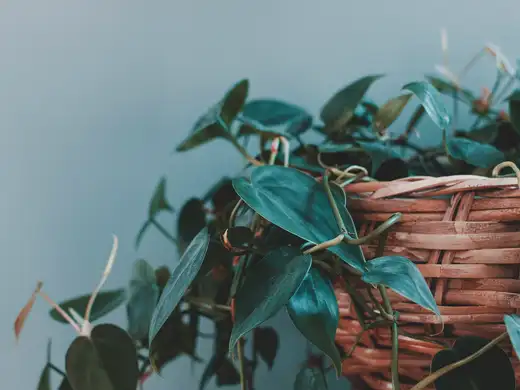

Philodendrons at a glance
- Botanical name
- Philodendron spp. (most common: heartleaf philodendron, P. hederaceum, syn. P. scandens)
- Light
- bright diffuse or indirect light; heartleaf types tolerate very low light; no direct sun
- Hardiness zones
- 10b-11
- Spacing
- 18–24 inches apart
- Containers
- Yes
Most care advice here applies to heartleaf philodendron (Philodendron hederaceum), the trailing plant with 2- to 4-inch heart-shaped leaves sold everywhere as a houseplant. Larger self-heading, or tree, philodendrons follow the same basics but need more light and floor space.
Light
Philodendrons do best in indirect or curtain-filtered light. Heartleaf philodendron tolerates very low light and even artificial light, and NC State notes it can survive long periods in extremely low light, though it grows faster with more. Self-heading types want more: Clemson recommends medium to bright light near an east, west or south window.
Keep all of them out of direct sun. UF/IFAS warns direct sunlight burns the leaves, and outdoors it discolors the foliage.
Watering
Water when the top inch of soil feels dry to the touch, as UF/IFAS recommends, and water thoroughly until it runs from the drainage holes. The aim, Clemson says, is soil that stays evenly moist but never soggy. Never let the pot stand in a saucer of water.
Overwatering is the most common way to lose a philodendron. Soil that drains slowly, or watering on a schedule rather than when the plant needs it, leads to root rot. Slow down in winter, when growth slows and the soil takes longer to dry.
Potting mix and pot
A general-purpose, lightweight potting mix that drains well suits philodendrons. Clemson and UF/IFAS both recommend it, and UF/IFAS notes a light, well-drained medium helps keep the plant from becoming waterlogged. Use a pot with drainage holes.
Heartleaf types look best in hanging baskets or on a shelf where the vines can trail. You can also train them up a trellis, a pole or a moss- or bark-covered board. Self-heading types have brittle leaf stalks, so put them where people and pets won’t brush past them.
Temperature and humidity
Heartleaf philodendron likes the same temperatures people do. Clemson gives 70 to 85°F during the day and 65 to 75°F at night. UF/IFAS says temperatures below 50°F are too cool. Keep plants away from cold winter windows and drafts.
Philodendrons prefer high humidity and appreciate misting, but they tolerate the dry air in most homes.
Feeding
Clemson recommends feeding regularly with a dilute water-soluble houseplant fertilizer, or using a time-release product. UF/IFAS suggests fertilizing every three to four months. Go easy: too much fertilizer causes leaf tips to curl and turn brown. Feed less in winter, when growth slows.
Repotting
Philodendrons can be repotted in any season when they become overcrowded. Move to a slightly larger pot with drainage holes, using the same well-drained general-purpose mix.
Propagation
Few houseplants are easier to propagate. Clemson says philodendrons can be propagated in any season from stem cuttings or by air layering, and some types produce offsets.
For heartleaf philodendron, UF/IFAS recommends planting short stem cuttings in clean potting media. Cut a piece of vine that includes at least one node, where a leaf joins the stem and aerial roots form, and insert the node into moist mix. Keep it in indirect light and lightly moist until new growth shows that roots have formed.
Pruning and grooming
Cut back long vines to control size. The trimmings are ready-made cuttings. Wipe dust from the leaves now and then, and remove yellowed leaves at the base.
Pests and problems
Philodendrons are generally trouble-free, but these are the problems to know:
- Yellow lower leaves, dying growing tips. Too little light or too much water, Clemson says. Move it to brighter indirect light and let the top inch dry between waterings.
- Brown, curled leaf tips. Too much fertilizer. Feed less often and at a dilute rate.
- Root rot. Soil that drains slowly or watering too often. Repot into a well-drained mix and water only when the top inch is dry.
- Insects. Aphids, mealybugs, scale and spider mites occasionally infest plants. Check stems and the undersides of leaves and treat early.
- Leaf spots. Occasional and not usually serious, according to NC State and UF/IFAS.
Toxicity
The ASPCA lists heartleaf philodendron as toxic to dogs, cats and horses. It contains insoluble calcium oxalate crystals; chewing it causes oral pain and irritation, swelling of the mouth, tongue and lips, drooling, vomiting and difficulty swallowing. Clemson says all parts of philodendrons are toxic if eaten. UF/IFAS adds that people can have mild allergic reactions to the sap, resulting in an itchy rash, so wear gloves if your skin is sensitive when you take cuttings.
Telling it apart from pothos and monstera
Heartleaf philodendron and pothos are often confused. Pothos leaf stalks are grooved; philodendron stalks are smooth. Each new philodendron leaf emerges from a protective sheath that later dries and falls off, while pothos leaves emerge folded along the midrib. Monstera, sometimes sold as split-leaf philodendron, belongs to a different genus.
Outdoors in frost-free areas
In zones 10b-11, UF/IFAS says heartleaf philodendron can be planted outdoors year-round in partial to deep shade on fertile, moist soil; NC State lists zones 11-12. It makes a fast groundcover spaced 18 to 24 inches apart, and when it climbs a tree trunk its leaves can reach 12 inches or more. Plant it outside only where there is no frost, and keep it out of direct sun.
Elsewhere, a potted philodendron can spend summer in a shaded spot outdoors. The University of Maryland Extension recommends moving houseplants out only once nights stay above 60°F, acclimating them in shade, and bringing them back as nights begin to fall below 60°F, after checking for insects. For heartleaf philodendron, UF/IFAS puts the hard limit at 50°F, so never leave it out on nights colder than that.
Questions
How often should I water a philodendron?
Water when the top inch of soil is dry to the touch, then let the pot drain. Keep the soil evenly moist but never soggy, never let it stand in water, and water less in winter.
Why are my philodendron's leaves turning yellow?
Yellowing lower leaves usually mean overwatering or too little light. Let the top inch of soil dry between waterings and move the plant to brighter indirect light.
How do I propagate a philodendron?
Root stem cuttings in clean potting mix, at any time of year. Air layering also works, and some self-heading types produce offsets that can be separated.
Is philodendron toxic to cats and dogs?
Yes. The ASPCA lists heartleaf philodendron as toxic to dogs, cats and horses because of insoluble calcium oxalate crystals, and UF/IFAS notes the sap can give people an itchy rash.
What is the difference between philodendron and pothos?
Pothos leaf stalks are grooved and philodendron stalks are smooth. New philodendron leaves also emerge from a protective sheath that later dries and falls off.
Sources
- Moving Indoor Plants Outside · University of Maryland Extension
- Philodendron hederaceum (Heartleaf Philodendron) · North Carolina State University Extension (Extension Gardener Plant Toolbox)
- Philodendron (HGIC factsheet) · Clemson Cooperative Extension Home & Garden Information Center
- Heartleaf Philodendron · University of Florida IFAS Extension (Gardening Solutions)
- FPS472/FP472: Philodendron scandens Heart Leaf Philodendron · University of Florida IFAS Extension (EDIS)
- Heartleaf Philodendron (Toxic and Non-toxic Plants) · ASPCA Animal Poison Control Center