How to Grow Perennial Ryegrass
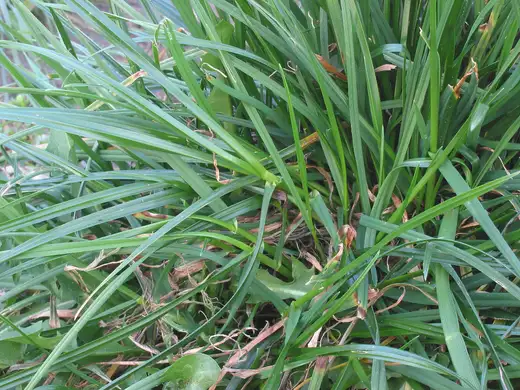
Perennial ryegrass sprouts in days and takes more wear than any other cool-season grass, but it dislikes heat and does not spread. In the North and coastal California it is seeded in fall, usually mixed with Kentucky bluegrass at 10-20% of the seed. In the South and Southwest it is mainly sown over dormant bermudagrass in October or November for a green winter lawn, then pushed out in spring.

Your dates for perennial ryegrass
Set your ZIP code at the top of the page and we will work out when to plant perennial ryegrass where you live, from the frost records of the nearest NOAA weather station. Your ZIP code is remembered on this device only.
Perennial Ryegrass at a glance
- Botanical name
- Lolium perenne
- Light
- full sun; tolerates partial shade
- Frost tolerance
- Hardy: takes a hard frost
- Soil temperature to plant
- At least 55°F (best 50–70°F)
- Germination
- 5–10 days
- Planting depth
- 0.25 inches
When to plant perennial ryegrass
| Zone | Sow outdoors | Fall planting |
|---|---|---|
| Zone 2a | Jun 3 to 17 | — |
| Zone 3a | May 28 to Jun 11 | — |
| Zone 3b | May 24 to Jun 7 | — |
| Zone 4a | May 19 to Jun 2 | — |
| Zone 4b | May 14 to 28 | — |
| Zone 5a | May 11 to 25 | — |
| Zone 5b | May 10 to 24 | — |
| Zone 6a | May 4 to 18 | — |
| Zone 6b | Apr 26 to May 10 | Sep 10 to 24 |
| Zone 7a | Apr 19 to May 3 | Sep 13 to 27 |
| Zone 7b | Apr 9 to 23 | Sep 20 to Oct 4 |
| Zone 8a | Mar 25 to Apr 8 | Sep 26 to Oct 10 |
| Zone 8b | Mar 11 to 25 | Oct 2 to 16 |
| Zone 9a | — | Oct 15 to 29 |
| Zone 9b | — | Oct 28 to Nov 11 |
Spring dates before the last frost assume the soil has thawed and is dry enough to work. After a late or wet spring, wait for that even if the date has passed.
When to plant perennial ryegrass
Two different jobs
Perennial ryegrass is a cool-season bunch grass with no rhizomes or stolons. UC IPM says it has the highest wear tolerance of any cool-season grass, and its seedlings grow so vigorously that they crowd out weeds. Its weak points are heat, drought and shade. UC IPM rates its tolerance of all three as moderately low.
That profile gives it two quite different roles. In the North and in mild coastal climates it is part of a permanent lawn. In the South and the desert Southwest it is a temporary winter grass sown over dormant bermudagrass.
Perennial ryegrass in a permanent lawn
UC IPM says it is best adapted to coastal regions with moderate temperatures year-round, such as much of coastal California. In the cool North it is mostly used in mixes. Penn State’s sunny-lawn mix is 80-90% Kentucky bluegrass and 10-20% perennial ryegrass, and UC IPM recommends at least 15% ryegrass by weight for a more disease-resistant lawn. On the High Plains of Texas, Texas A&M says it can serve as a permanent lawn if watered. In South Carolina, Clemson does not recommend it as a permanent lawn because of disease in hot weather.
Ryegrass alone has drawbacks. UC IPM notes it can become stemmy after a couple of years when grown on its own. It may also chemically suppress the germination of other grasses in a mix (allelopathy), so the mix ratio matters. Where it shines is speed. Penn State calls it the best species for renovating a worn lawn because it sprouts quickly and its roots can push into slightly compacted soil, and Kentucky Extension uses it to hold soil on slopes.
When to seed: fall is preferred (UC IPM). The dates for your zone above follow the cool-season rule: from about six weeks to four weeks before your average first fall frost, with early spring a weaker second choice.
Seeding rate: Penn State gives 4-5 lb per 1,000 sq ft for ryegrass alone and UC IPM 6-9 lb. Cover the seed lightly, about ¼ inch.
Mowing: UC IPM mows at 1.5-2.5 inches. Purdue gives 2.5-3.5 inches for northern lawns of bluegrass and ryegrass. UC IPM suggests about 4 lb of nitrogen per 1,000 sq ft a year, applied while it is actively growing.
Overseeding bermudagrass for winter color
Bermudagrass browns after frost. Sowing ryegrass into it in fall gives a green lawn until spring, when the ryegrass fades as the bermudagrass takes over. It is extra work: a winter lawn needs mowing, watering and feeding like any other.
Which lawns: bermudagrass only. Clemson says the extra irrigation, fertilizer and shade of an overseeding severely set back centipedegrass, zoysiagrass and St. Augustinegrass the following spring. Arizona advises against overseeding a bermudagrass lawn in its first winter after planting. Frost-free south Florida lawns usually stay green, so UF/IFAS considers overseeding unnecessary there.
Timing: wait for warm days and cool nights. Clemson aims for about 30 days before the first frost, with highs near 70°F and lows above 50°F, which means early October in the South Carolina Upstate and late October in the Midlands and on the coast. UF/IFAS says October to early November in north Florida and October to early December in central Florida. Arizona overseeds in October, when days run 80-85°F and nights about 55°F: September 25 to October 5 at Tucson’s higher elevation, October 10 to November 10 around Phoenix and Yuma. Texas A&M says late September and October. Too early and the still-active bermudagrass smothers the seedlings. Too late and frost can damage them.
Preparing the lawn: Arizona stops nitrogen on the bermudagrass 30 days ahead and mows it short just before seeding, without scalping it. Clemson dethatches heavily thatched lawns just before seeding. If you core-aerate, Clemson says to wait 30 days before overseeding so the holes heal. Use fungicide-treated seed, sow half in each direction, and brush or rake it down through the turf to reach the soil.
Rates: these vary widely. Clemson uses 5 lb per 1,000 sq ft into an established lawn so the stand is not so thick that spring transition suffers, and 10 lb on bare soil. LSU gives 5-7 lb of pure live seed, Arizona 12-15 lb and UF/IFAS 10-20 lb.
Watering and mowing: water lightly two or three times a day until the seed sprouts (Clemson). Arizona waters three or four times a day for the first 7-10 days. After that, water only enough to prevent wilting, because overwatering washes seed away and invites disease. Clemson mows the winter lawn to 1-1.5 inches whenever it reaches 2-2.5 inches, and LSU mows at 1-2 inches.
Getting the bermudagrass back in spring
A healthy ryegrass stand can hold on long enough to weaken the bermudagrass underneath. To tip the balance:
- Stop feeding the ryegrass. Clemson makes the last application by mid-to-late January in South Carolina. UF/IFAS stops in February in south Florida and March in north Florida.
- Keep the lawn on the dry side without letting the bermudagrass suffer (UF/IFAS). In the Arizona desert, though, keep irrigating, since Arizona warns that any drying slows the bermudagrass.
- Mow lower and more often. Clemson cuts to about 1 inch, without scalping. Arizona lowers the mower by about 35% once nights stay above 60°F for a week, usually in April or May.
- Once the bermudagrass is growing, start its normal care, including fertilizer.
Clemson warns that perennial ryegrass can survive for years in some spots and become a nuisance. Seed that did not sprout can also come up in weedy-looking clumps in later years. If you stop overseeding, Clemson recommends a fall preemergence herbicide to keep leftover ryegrass seed from sprouting.
Common problems
- Pythium blight. UF/IFAS says ryegrass is very susceptible, especially when overwatered and overfertilized in warm, humid weather. It can kill a winter lawn in 24-48 hours. Seeding in cooler weather and using treated seed help.
- Heat and drought stress. This is why it fails as a permanent lawn in much of the South.
- Lingering into summer. Overseeded perennial ryegrass can compete with bermudagrass well into early summer.
- Stemmy turf and suppressed mixes. Pure stands get stemmy, and too much ryegrass in a mix can hold back slower grasses.
Questions
How fast does perennial ryegrass germinate?
Very fast. UC IPM gives 5-10 days, or 3-5 days in moderate temperatures, with a usable cover in about 4-8 weeks. UF/IFAS expects overseeded ryegrass to sprout in 7-10 days.
When should I overseed bermudagrass with ryegrass?
When days have cooled but frost is still a month or so away. Clemson suggests about 30 days before the first frost, when highs are near 70°F and lows stay above 50°F. Arizona overseeds in October, and UF/IFAS waits for days consistently in the low to mid 70s. Too early favors the bermudagrass, and too late risks frost on the seedlings.
How much ryegrass seed do I need to overseed?
Recommendations vary widely. Clemson uses 5 lb per 1,000 sq ft over established bermudagrass (10 lb on bare soil), LSU 5-7 lb of pure live seed, Arizona 12-15 lb and UF/IFAS 10-20 lb. Lighter rates give fewer problems when the bermudagrass greens up in spring.
Can I overseed St. Augustinegrass, centipedegrass or zoysiagrass with ryegrass?
Clemson recommends overseeding only bermudagrass, because the extra water, fertilizer and shading from ryegrass damage centipedegrass, zoysiagrass and St. Augustinegrass the next spring. Arizona also calls St. Augustinegrass and zoysiagrass generally unsuited to overseeding.
What is the difference between annual and perennial ryegrass?
Annual ryegrass is cheaper but lighter green and coarser, and it dies out sooner in spring. Perennial ryegrass makes a better winter lawn with better disease resistance, but it can linger into early summer and compete with bermudagrass (Clemson, Arizona).
Sources
- Turfgrass Selection for Texas (L-5519) · Texas A&M AgriLife Extension
- A Turfgrass Maintenance Guide for Residential and Commercial Lawns in the Low Elevation Arizona Desert · University of Arizona Cooperative Extension
- AGR-50 Lawn Establishment in Kentucky · University of Kentucky Cooperative Extension Service
- Perennial ryegrass - Lolium perenne (UC Guide to Healthy Lawns) · UC Statewide IPM Program, University of California ANR
- Planting and management tips for perennial ryegrass · UC Statewide IPM Program, University of California ANR
- Grass seed germination rates · UC Statewide IPM Program, University of California ANR
- Turfgrass Species (Pest Management Guidelines) · UC Statewide IPM Program, University of California ANR
- Overseeding With Ryegrass (HGIC 1206) · Clemson Cooperative Extension Home & Garden Information Center
- AZ1683 Overseeding Winter Grasses into Bermudagrass Turf · University of Arizona Cooperative Extension
- ENH14 Overseeding Florida Lawns for Winter Color (2007 revision, archival) · University of Florida IFAS Extension (EDIS)
- Winter Ryegrass (Plant of the Week) · Texas A&M AgriLife Extension Service, Bexar County
- Louisiana Home Lawn Series: Perennial Ryegrass (Pub. 3624-RR) · LSU AgCenter
- Lawn Establishment · Penn State Extension
- AY-20 Seeding a Turf Area in the Spring · Purdue University Cooperative Extension Service
- Northern Utah Turfgrass Management Calendar · Utah State University Extension
- Choose the right grass seed for a thriving lawn · University of Illinois Extension
- Starting a New Lawn · University of Maryland Extension