How to Grow Peas
Peas are a cool-season crop: sow them straight into the garden as soon as the soil can be worked in spring and is at least 40°F, and get them to harvest before the weather turns hot. Above about 80°F the plants drop their flowers and the pods turn tough and stringy, so early planting matters more than anything else you do.

Your dates for peas
Set your ZIP code at the top of the page and we will work out when to plant peas where you live, from the frost records of the nearest NOAA weather station. Your ZIP code is remembered on this device only.
Peas at a glance
- Botanical name
- Pisum sativum
- Light
- full sun (6+ hours, 8-10 preferred)
- Frost tolerance
- Hardy: takes a hard frost
- Soil temperature to plant
- At least 40°F (best 65–75°F)
- Germination
- 7–10 days
- Days to harvest
- 60–70 days from seed
- Planting depth
- 1 inch
- Spacing
- 1–3 inches apart, rows 12–24 inches apart
- Succession sowing
- Every 2 weeks
- Containers
- Yes, at least 2 gallons
When to plant peas
| Zone | Sow outdoors | Fall planting |
|---|---|---|
| Zone 2a | Apr 7 to 21 | Jun 13 to 27 |
| Zone 3a | Apr 14 to 28 | Jun 22 to Jul 6 |
| Zone 3b | Apr 5 to 19 | Jul 2 to 16 |
| Zone 4a | Apr 1 to 15 | Jul 6 to 20 |
| Zone 4b | Mar 27 to Apr 10 | Jul 9 to 23 |
| Zone 5a | Mar 22 to Apr 5 | Jul 12 to 26 |
| Zone 5b | Mar 20 to Apr 3 | Jul 18 to Aug 1 |
| Zone 6a | Mar 18 to Apr 1 | Jul 25 to Aug 8 |
| Zone 6b | Mar 12 to 26 | Jul 30 to Aug 13 |
| Zone 7a | Mar 5 to 19 | Aug 2 to 16 |
| Zone 7b | Feb 22 to Mar 8 | Aug 9 to 23 |
| Zone 8a | Feb 15 to Mar 1 | Aug 15 to 29 |
| Zone 8b | Feb 3 to 17 | Aug 21 to Sep 4 |
| Zone 9a | Jan 19 to Feb 2 | Sep 3 to 17 |
| Zone 9b | Dec 20 to Jan 3 | Sep 16 to 30 |
Spring dates before the last frost assume the soil has thawed and is dry enough to work. After a late or wet spring, wait for that even if the date has passed.
Pick the type you want to eat
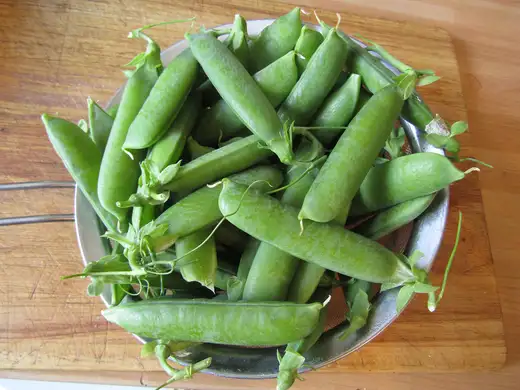
Home gardeners grow three kinds of pea. Shelling peas (also called English or garden peas) are grown for the seeds, which you pop out of an inedible pod. Snap peas have thick, crisp pods that you eat whole. Snow peas have flat pods that are picked before the seeds swell.
Within each type, plant habit decides how much support you need and how long you will pick. University of Maryland Extension describes bush (determinate) peas as staying under about 3 feet and ripening their crop all at once, while vining (indeterminate) peas can top 5 feet and bear over several weeks. The seed also tells you something: smooth, round seed belongs to starchy peas, and wrinkled seed to the sweeter, sugary types.
Most widely sold varieties do well across the country. Utah State University Extension lists Dual, Early Frosty, Green Arrow, Little Marvel, Perfection Dark Seeded and Sparkle among garden peas for Utah, and Dwarf Grey Sugar, Oregon Sugar Pod, Snowflake, Sugar Daddy, Sugar Sprint and Super Sugar Snap among snap and snow peas. For Florida, UF/IFAS recommends Wando, Green Arrow, Sugar Snap and Oregon Sugarpod II.
Plant early, because heat ends the crop
Peas grow best between about 65°F and 70°F, and Utah State says both soil and air need to stay below 80°F for good germination and growth. That ceiling is why timing matters so much. A planting that flowers in a hot, dry spell drops its blossoms, and the pods that do form turn stringy. Fusarium wilt, a soilborne disease, also becomes a problem once soil passes about 70°F, so getting the crop in early helps it outrun disease as well as heat.
The low end is forgiving. Peas germinate once soil reaches 40°F, though slowly: UC Cooperative Extension’s germination table shows peas taking about 36 days to emerge at 41°F, 13.5 days at 50°F and 7.5 days at 68°F. Utah State expects seedlings in 7-10 days in 55-65°F soil. Plant as soon as the ground can be worked; the dates for your zone above show the usual window.
In the warm-winter South and the low desert, peas are a winter crop. UF/IFAS lists January through March for North Florida and November through February for Central and South Florida. The University of Arizona’s Maricopa County calendar runs from mid-September through February, with September sowings maturing in 60-120 days and November sowings taking 120-150 days. Summer plantings there fail.
Fall peas are possible in colder areas but less dependable. Maryland Extension says fall peas often perform poorly because seed germinates badly in warm soil, plants struggle in heat and frost can arrive before the pods fill, and Utah State notes that fall yields are much lower than spring ones.
Soil and planting
Choose full sun (at least 6 hours, ideally 8-10) and well-drained soil rich in organic matter. Peas grow poorly in acid soil at pH 6.0 or below, so a soil test before planting is worth the trouble. Utah State suggests no more than 1 inch of well-made compost per 100 square feet, worked into the top 6 inches.
Sources differ on depth. Utah State plants ½-1 inch deep, UF/IFAS 1-1½ inches, and Purdue suggests 2 inches for fall sowings, when the deeper soil is cooler. In cold, wet spring soil, the shallower end makes sense. Space seed 1-3 inches apart. Maryland suggests wide rows about 18 inches apart, or double rows 8-10 inches apart, so the plants lean on each other. You need about 2-3 ounces of seed for 100 feet of row.
For an earlier start, Maryland suggests sprouting seed in a damp paper towel inside a perforated plastic bag and planting it as soon as roots show, taking care not to snap them. You can also sow single seeds in 2- to 3-inch pots of soilless mix at half the usual depth and transplant them like any seedling.
Support, water and feeding
Set up supports at planting time, before the tendrils start reaching. Utah State notes that taller varieties yield more and pick more easily on a trellis, wire cage or fence, and snap and snow peas climb on their own once a support is in place.
Water evenly. Utah State recommends letting the soil dry until about half its available water is used, then watering deeply. Overwatering promotes root rot. Water matters most once the plants flower: drought then causes aborted pods, smaller peas and stringy pods.
Feeding advice depends on the source. Utah State says peas fix nitrogen through root bacteria and need nothing more if fertilizer or compost went in at planting, warning that extra nitrogen delays flowering and reduces pod set. Maryland calls peas heavy nitrogen users that fix little. UF/IFAS takes a middle line: half the rate used for other vegetables. Follow a soil test rather than guessing.
Keep weeds down for the first 6 weeks with shallow hoeing, since peas have a fibrous root system near the surface. Floating row covers protect very early sowings from hard frost, and a mulch of straw or grass clippings keeps the soil cooler for late plantings.
Common problems
- Flower drop and stringy pods: heat above about 80°F or dry soil. Plant early, water from flowering on and mulch.
- Powdery mildew: a white coating on leaves and stems, worse in fall crops. Plant early-maturing or resistant varieties.
- Pea aphids: green to pink colonies near the shoot tips that spread pea enation mosaic virus. Hose them off, avoid overfertilizing and grow virus-resistant varieties.
- Fusarium wilt: downward-curling leaves and orange-yellow streaks inside the stem once soil passes about 70°F. Plant early and choose resistant varieties.
- Root rot and damping off: stunted plants with yellow lower leaves, caused by cold, wet or compacted soil. Improve drainage and do not overwater.
- Pea weevil: larvae tunnel into seeds in young pods. Early planting and early harvest limit exposure.
Harvest at the right stage
Pick by type. Snap peas are ready about 5-8 days after flowering, when the pods are full size and crisp and the seeds are still small. Snow peas should be picked while the pods are still flat. Shelling peas take about 18-21 days after flowering. Pick them when the pods are plump and well filled but before the peas turn starchy. Leave peas meant for drying on the vine until the pods turn yellow and dry.
Regular picking keeps snap peas flowering for 3-4 weeks. Shelling peas ripen over a shorter span, so check every day or two once the first pods fill. Peas lose quality fast, so eat them right away or chill them quickly. Maryland gives 32°F as ideal and suggests a vented plastic bag in the refrigerator.
Utah State suggests 15-20 feet of row per person for fresh eating, plus another 40-60 feet if you want to freeze or can.
Questions
How early can I plant peas?
As soon as the soil can be worked in spring and has reached at least 40°F, which in most areas is about 4-6 weeks before the last frost. Peas are hardy and tolerate heavy frosts, but seed sits slowly in very cold soil.
Do peas need a trellis?
Bush varieties under about 3 feet can stand on their own, especially in wide rows where the plants hold each other up. Tall vining types, including most snap and snow peas, produce more and are much easier to pick on a fence, cage or trellis.
Why are my pea flowers falling off?
Heat and dry soil. Pea flowers are very sensitive to temperatures above about 80°F, and in dry weather the plants shed them. Keep the soil moist from flowering on and mulch later plantings to keep the roots cool.
Should I fertilize peas?
Work fertilizer or compost in before planting according to a soil test, then go easy. Utah State says peas need nothing more if fertilizer or compost went in at planting, because extra nitrogen delays flowering and cuts pod set.
How many peas will a row produce?
Utah State estimates 2-3 pounds of shelled peas per 10 feet of row for garden peas, or 3-4 pounds of pods for snap and snow types. Maryland gives 3-5 pounds per 10-foot row.
Sources
- How to Grow Peas in Your Garden · Utah State University Extension
- Growing Green Peas in a Home Garden · University of Maryland Extension
- Florida Vegetable Gardening Guide (SP103/VH021) · University of Florida IFAS Extension
- Vegetable Planting Calendar for Maricopa County (AZ1005) · University of Arizona Cooperative Extension
- GN 154: Soil Temperature Conditions for Vegetable Seed Germination (Harrington emergence table) · UC Cooperative Extension, Sacramento County (UC ANR)
- The Fall Vegetable Garden (HO-66-W) · Purdue University Extension
- Fall Vegetable Gardening (SPES-801) · Virginia Cooperative Extension
- Growing Vegetables in Containers · University of Wisconsin-Madison Extension
- Easy Container Vegetables and How to Grow Them · NC State Extension, Onslow County