How to Care for a Peace Lily
Give a peace lily bright, indirect light, keep its mix evenly moist but never soggy, and keep it above 60°F. Feed it at quarter strength every six to eight weeks in spring and summer and repot only when roots fill the pot. Most problems, from brown tips to root rot, trace back to water, fertilizer salts or light.
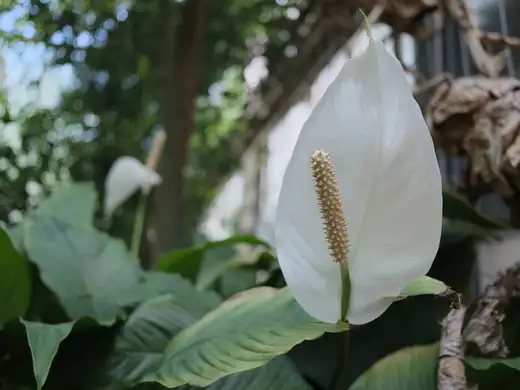

Peace Lilies at a glance
- Botanical name
- Spathiphyllum spp.
- Light
- bright indirect light; tolerates low light; no direct sun
- Hardiness zones
- 10b-12
- Containers
- Yes
Light
A peace lily does best in bright, indirect light: near a window that gets sun, but where the sun’s rays never land on the leaves. It will survive in a dim room, which is why it is so common in offices, but low light is the usual reason a healthy-looking plant stops blooming.
Direct sun is the bigger danger. Clemson Extension warns that the heat scorches the foliage, and NC State lists strong direct sun as one cause of brown leaf tips. An east window, or a spot a few feet back from a south or west window, is a good compromise.
Watering
Watering is where most peace lilies go wrong, in both directions. The goal is a mix that stays evenly moist but never soggy, with the surface allowed to dry a little before you water again.
- Check the mix with a finger. If the top feels slightly dry, water. If it still feels damp, wait.
- Water thoroughly until it runs from the drainage holes, then empty the saucer. Clemson is clear that a plant left standing in water will develop root rot.
- Use room-temperature water.
- Bottom watering works well, according to NC State: let the pot soak up water from a tray, then let it drain fully.
A peace lily that dries out too far will droop dramatically. Clemson notes that letting it dry too far leads to wilting and yellow leaves and edges. Root rot is harder to fix, so if you are unsure, err slightly dry rather than wet. Water less in winter, when cooler rooms slow growth.
Potting mix, pot and drainage
Use a potting mix rich in organic matter, such as a peat- or bark-based bagged mix. Clemson notes it grows in almost any well-drained mix, so drainage matters more than the brand. The pot must have drainage holes.
Peace lilies like to be slightly root-bound. Resist the urge to move one into a much bigger pot: extra soil around a small root ball stays wet for days and invites root rot.
Temperature and humidity
Aim for 68 to 85°F during the day, with nights about 10 degrees cooler. Clemson warns that cold damage can occur below 60°F, and NC State says growth slows considerably in the 40 to 60°F range. UF/IFAS lists a warmer preference of 75 to 85°F, and notes active growth falls off at or below 50°F. Keep plants away from heating and air-conditioning vents and from cold winter windows.
No source gives a target humidity, but NC State names low humidity as one cause of brown tips, another reason to keep it away from forced-air vents.
Feeding
Peace lilies are light feeders, and too much fertilizer is a common cause of brown tips and burned roots. Clemson recommends a balanced liquid houseplant fertilizer, such as 20-20-20, mixed at one-quarter strength every six to eight weeks in spring and summer. UF/IFAS recommends an even lighter routine: a low dose about three times a year. NC State advises flushing the soil with plain water between feedings to wash out built-up salts. Skip fertilizer in winter.
Repotting and dividing
Repot only when the plant tells you to: roots circling the surface or growing out of the drainage holes. Choose a pot just 1 to 2 inches wider than the old one. NC State suggests February or March; Clemson says any time is fine, though recovery is quicker during the growing season.
Peace lilies are propagated by division. When a clump has filled its pot, spring is the best time to split it. Slide it out of the pot, gently pull or cut the crown into sections that each have leaves and their own roots, and pot each in fresh mix at the same depth it grew before. Keep the divisions out of direct sun and evenly moist while they settle in.
Grooming
The broad leaves collect dust. Wipe them with a soft, damp cloth, which also removes some of the pests that hide on leaf undersides. Cut off spent flower stalks and yellowed leaves at the base. The white spathes fade to pale green as they age; NC State says they stay attractive for at least a month after turning, so there is no hurry to remove them.
Pests and problems
- Brown leaf tips or edges. Too much fertilizer or salt buildup, direct sun, underwatering or dry air. Cut back on feeding, flush the soil, and check the light and watering.
- Wilting, then yellow leaves and edges. The mix was allowed to dry out too far. Water more consistently.
- Yellowing, collapsing plant with wet soil. Root and stem rot from overwatering or an oversized pot. Clemson calls root and stem diseases the most common problem. Let the surface dry between waterings and never leave water in the saucer.
- Yellow between the veins, veins still green. Clemson links this to magnesium deficiency.
- No flowers. The plant is under a year old, or the light is too dim. Move it to brighter indirect light.
- Insects. NC State calls mealybugs the most common indoor pest; Clemson adds fungus gnats, spider mites and scale. Check under the leaves often, and let the surface dry between waterings to discourage gnats.
Toxicity
The ASPCA lists peace lily as toxic to dogs and cats. The plant contains insoluble calcium oxalate crystals, and eating it causes intense burning and irritation of the mouth, tongue and lips, drooling, vomiting and difficulty swallowing. NC State also flags it as a problem for children and horses. Despite the name, it is not a true lily.
Summering outdoors and warm-winter gardens
A peace lily can spend summer on a shaded porch, but it is a tropical plant. The University of Maryland Extension suggests putting houseplants out only once nights stay above 60°F and bringing them in when nights start dropping below that, which lines up with Clemson’s cold-damage warning. Keep it in full shade outdoors, check for insects before bringing it back in, and expect to water more often in summer heat.
In frost-free areas it can grow in the ground year-round. UF/IFAS rates it suitable for zones 10b-12, such as South Florida, in moist, well-drained soil amended with organic matter and no direct sun; NC State lists zones 11-12. It has no freeze tolerance, and UF/IFAS notes some cultivars can be injured at 35°F.
Questions
How often should I water a peace lily?
There is no fixed schedule. Water when the surface of the mix has dried slightly, then water until it drains, and empty the saucer. Indoors that usually means checking every few days in summer and less often in winter, when growth slows.
Why is my peace lily not flowering?
Clemson Extension says plants under a year old often do not bloom yet, and older plants usually fail to flower because the light is too dim. Move it to a brighter spot with indirect light, out of direct sun.
Why are my peace lily's leaf tips turning brown?
NC State lists direct sun, underwatering and low humidity as causes, and both NC State and Clemson say too much fertilizer or salt buildup burns tips and roots. Feed at quarter strength and flush the soil with plain water between feedings.
Is a peace lily poisonous to cats and dogs?
Yes. The ASPCA lists peace lily as toxic to dogs and cats. Its insoluble calcium oxalate crystals cause burning of the mouth, drooling, vomiting and trouble swallowing. Keep it away from pets and small children.
When should I repot a peace lily?
Only when roots circle the top of the pot or come out of the drainage holes. NC State suggests February or March; Clemson says any time works but plants recover faster during the growing season. Move up just 1 to 2 inches in pot size.
Sources
- Moving Indoor Plants Outside · University of Maryland Extension
- Spathiphyllum (Peace Lily) · North Carolina State University Extension (Extension Gardener Plant Toolbox)
- Peace Lily (HGIC factsheet) · Clemson Cooperative Extension Home & Garden Information Center
- Peace Lily · University of Florida IFAS Extension (Gardening Solutions)
- ENH1216/EP477: Florida Foliage House Plant Care: Spathiphyllum · University of Florida IFAS Extension (EDIS)
- Peace Lily (Toxic and Non-toxic Plants) · ASPCA Animal Poison Control Center