How to Care for a Monstera
Monstera needs bright light without hot direct summer sun, a fertile, well-drained mix, and a sturdy pole to climb. Water thoroughly, then wait until the top quarter to third of the mix is dry, and water less in winter. Plants kept in too little light never develop the holes and splits the plant is known for.
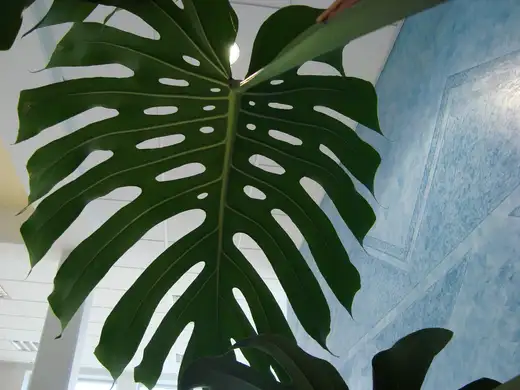

Monsteras at a glance
- Botanical name
- Monstera deliciosa
- Light
- bright light without direct sun in summer; light shade or filtered sun outdoors
- Hardiness zones
- 10-12
- Containers
- Yes
Monstera (Monstera deliciosa), often sold as split-leaf philodendron or Swiss cheese plant, is a climbing aroid from the forests of southern Mexico to Panama. Despite the nickname, NC State notes it is not a philodendron. In the wild it climbs trees with long aerial roots and can pass 70 feet; indoors it usually stays between 6 and 8 feet, though it is a big, heavy plant even then.
Light
Light decides whether a monstera looks the way you want. Young leaves are solid and heart-shaped; the splits and holes appear as the plant matures, and only if it gets enough light. The University of Wisconsin notes that plants under inadequate light do not develop perforations at all.
NC State recommends moderate to bright light with no direct sun. The University of Wisconsin is slightly more generous: bright light in summer and direct sun in winter, when the sun is weaker. In practice, a spot near a bright window, shielded from strong summer sun, satisfies both. Variegated cultivars need more light than all-green plants.
Watering
Water thoroughly until it runs out of the bottom, then let the top quarter to third of the mix dry before watering again. NC State gives that guideline; in a 12-inch-deep pot, that means the top 3 to 4 inches should feel dry. If the plant climbs a moss pole, wet the moss as well so the aerial roots can draw water from it.
The warning sign of overwatering is unusual: the University of Wisconsin says the leaves “sweat,” beading with water, when the mix stays too wet. Cut back immediately to head off root rot. Water less in winter, when growth slows, and empty the saucer so the pot never stands in water. Plants kept on the dry side simply grow more slowly.
Pot, Mix and Support
Use a fertile soilless potting mix with good drainage, and give the roots ample space; the University of Wisconsin notes that ample root room encourages larger leaves. The pot needs drainage holes.
Monstera needs sturdy support, or the heavy stems break. Sink a moss-covered pole or a piece of tree bark into the pot when you plant it, so the aerial roots can attach. The University of Wisconsin suggests sphagnum moss wrapped around a wooden slat and tied with fishing line or nylon thread.
Temperature and Humidity
NC State gives 60 to 85°F as the preferred range. Growth stops below about 50°F, and frost kills the plant. Keep it away from cold drafts and cold window glass in winter.
Monstera prefers medium to high humidity. The University of Wisconsin says leaf edges turn brown when the air is too dry. In heated homes, use a humidifier or set the pot on a tray of wet pebbles.
Feeding
Fertilize regularly from spring until fall, using a houseplant fertilizer according to the label, and stop in winter when growth slows.
Repotting and Pruning
Monstera is a vigorous grower, and the University of Wisconsin notes that container plants need frequent repotting to make room for the roots. NC State recommends doing any repotting or pruning in spring. Repot when roots fill the pot or push out of the drainage holes. Move up to a pot with room to grow and reset the support pole at the same time.
Prune in spring to control height or remove damaged leaves, and wipe dust off the big leaves regularly. Wear gloves; the sap can irritate skin.
Propagation
Monstera roots readily from stem cuttings, and the University of Wisconsin says it can be propagated any time of year:
- Tip cutting: cut the stem tip just below an aerial root and pot it directly.
- Stem sections: cut a vine into 1-foot pieces and press them halfway into moist rooting medium, then pot them up once they root.
- Layering: air layering or simple layering both work. Iowa State’s layering guide notes that early spring is the best time, and that new roots on a buried stem usually form in 6 to 12 weeks.
Pests and Problems
- Leaves beading with water – mix kept too wet; cut back watering to prevent root rot.
- Brown, crisp leaf edges – humidity too low; add a humidifier or pebble tray.
- New leaves with no holes or splits – not enough light, or the plant is still young.
- Pale, scorched patches – direct summer sun, or a sudden move outdoors.
- Broken stems – no support, or support too weak; add a sturdy pole.
- Aphids, mealybugs, scale or spider mites – the University of Wisconsin notes monstera has few indoor pests, but these can appear. Check leaf undersides and stems and treat early.
Toxicity
The ASPCA lists Monstera deliciosa as toxic to dogs and cats because of insoluble calcium oxalates, which cause intense mouth irritation, drooling, vomiting and difficulty swallowing. NC State and the University of Wisconsin note that all parts are irritating to people too, except fully ripe fruit, which indoor plants rarely produce. Unripe fruit contains enough oxalate crystals to cause immediate, painful throat irritation.
Summer Outdoors and South Florida Landscapes
Potted monstera can spend summer outside. The University of Wisconsin warns that it must be moved into brighter light gradually, or the leaves sunburn. Iowa State’s general guidance for houseplants is to wait until nights are reliably above 50°F, start in full shade and add light over 10 to 14 days, then bring plants in when nights dip toward 50°F again. Check for pests before bringing it indoors.
In south Florida, UF/IFAS describes monstera growing outdoors as a large understory vine in light shade and well-drained soil, including the rocky, alkaline soils of Miami-Dade County, where it can fruit. Leaves are damaged or killed at 30 to 32°F and stems at 26 to 28°F. UF/IFAS advises planting it 20 feet or more from trees, other plants and power poles and cutting it back regularly. However, the UF/IFAS invasive plant assessment rates monstera a high invasion risk and does not recommend planting it, so think twice before putting one in the ground.
Questions
Why doesn't my monstera have holes in its leaves?
Either it is still young or it is not getting enough light. Young leaves are solid, and the University of Wisconsin notes that plants in inadequate light do not develop the perforations even as they age.
How often should I water a monstera?
Soak the pot, then wait until the top quarter to third of the mix has dried before watering again (NC State's guideline). That is usually less often in winter, when growth slows.
Why are my monstera leaves dripping water?
The University of Wisconsin says leaves "sweat" when the mix is kept too moist. Cut back on watering right away to prevent root rot.
Is monstera toxic to cats and dogs?
Yes. The ASPCA lists Monstera deliciosa as toxic to dogs and cats because of insoluble calcium oxalates, which cause mouth irritation, drooling, vomiting and trouble swallowing.
Can I put my monstera outside for the summer?
Yes, but move it into brighter light gradually or the leaves sunburn. Start in shade and bring it back in well before nights turn cold; growth stops below about 50°F.
Sources
- How to Propagate by Air Layering and Simple Layering · Iowa State University Extension and Outreach
- Moving Indoor Plants Outside for the Summer · Iowa State University Extension and Outreach
- Garden Tips: Houseplants (Knox County Master Gardeners) · University of Illinois Extension
- Repotting houseplants · University of Illinois Extension
- Monstera deliciosa (Split-leaf Philodendron, Swiss Cheese Plant) · North Carolina State Extension Gardener Plant Toolbox
- Swiss-Cheese Plant, Monstera deliciosa · University of Wisconsin-Madison Division of Extension
- Monstera Growing in the Florida Home Landscape (HS1071/HS311) · University of Florida IFAS Extension (EDIS)
- Monstera deliciosa - Assessment of Non-Native Plants in Florida's Natural Areas · University of Florida IFAS
- Toxic and Non-toxic Plants: Swiss Cheese Plant · ASPCA Animal Poison Control