How to Grow Mint
Mint is one of the easiest herbs to grow and one of the hardest to keep in its place. Start it from nursery plants, divisions or cuttings (not seed), set it in rich, moist soil in sun or part shade after your last frost, and confine it in a pot or a buried container, because its runners root wherever they touch soil. Cut it back to about 1 inch above the ground two or three times a season, just before it blooms.

Your dates for mints
Set your ZIP code at the top of the page and we will work out when to plant mints where you live, from the frost records of the nearest NOAA weather station. Your ZIP code is remembered on this device only.
Mints at a glance
- Botanical name
- Mentha spp. (spearmint Mentha spicata, peppermint Mentha x piperita)
- Light
- full sun to partial shade (at least about 3 hours of sun for peppermint; light or part shade preferred in Florida)
- Frost tolerance
- Hardy: takes a hard frost
- Hardiness zones
- 4-9
- Planting depth
- 0.25 inches
- Spacing
- 12–18 inches apart, rows 18–24 inches apart
- Containers
- Yes, at least 3 gallons
When to plant mints
| Zone | Plant out |
|---|---|
| Zone 2a * | May 19 to Jun 2 |
| Zone 3a * | May 26 to Jun 9 |
| Zone 3b * | May 17 to 31 |
| Zone 4a | May 13 to 27 |
| Zone 4b | May 8 to 22 |
| Zone 5a | May 3 to 17 |
| Zone 5b | May 1 to 15 |
| Zone 6a | Apr 29 to May 13 |
| Zone 6b | Apr 23 to May 7 |
| Zone 7a | Apr 16 to 30 |
| Zone 7b | Apr 5 to 19 |
| Zone 8a | Mar 29 to Apr 12 |
| Zone 8b | Mar 17 to 31 |
| Zone 9a | Mar 2 to 16 |
| Zone 9b | Jan 31 to Feb 14 |
* Outside zones 4 to 9, the hardiness range our sources give for mints. Plants there may not survive the winter or get enough winter chill, and are usually grown as annuals or in pots.
Decide where it can spread before you plant
Mint’s habit drives every other decision. It spreads two ways: by rhizomes that run underground, and by square stems that root wherever they touch the soil (NC State). In open ground it outgrows most garden plants, and Utah State warns that once it is established it is very hard to get rid of. Illinois notes that mint can be propagated from root cuttings, which is another way of saying that root pieces left in the soil regrow.
That leaves three sensible options:
- A pot above ground. University of Illinois Extension recommends this as the surest method. Maryland suggests a container 12-16 inches across, trimming any runners that creep over the edge, and NC State gives the same 12-16 inch size for peppermint.
- A buried container. Penn State sinks a 3- to 5-gallon pot, with drainage holes or the bottom cut out, into the bed so the rim stands an inch or so above the soil; the raised lip forces surface runners up where you can see and cut them. Utah State wants more margin, with the container reaching 10-15 inches below ground and 3-4 inches above. Penn State expects a sunken pot to hold mint for a few years, and Illinois cautions that the method does not always work, because mint can escape over or under the rim. Check the rim every few weeks in summer.
- A bed of its own. Utah State suggests giving mint a separate bed, where it can run without crowding other herbs. NC State notes that its spreading habit can even be an advantage as a ground cover in moist spots.
Planting mint loose in a mixed herb bed and planning to pull the extras rarely works, because runners root quickly once they reach open soil.
Choosing a mint
There are around 19 species of Mentha and many crosses, according to UF/IFAS, which is why mint nurseries offer apple, orange, chocolate, pineapple and other flavors. Two cover most kitchen uses.
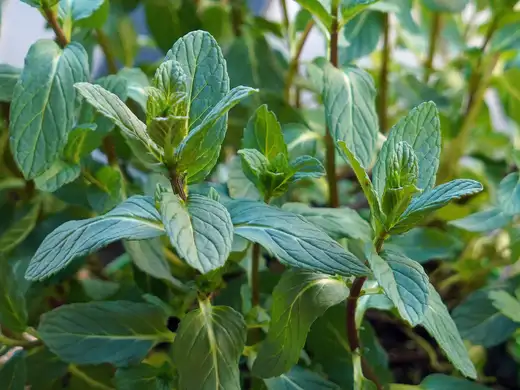
Spearmint (Mentha spicata) has bright green, nearly hairless, slightly crinkled leaves and a sweet scent. NC State calls it one of the best mints for flavor, and it is the classic for mint sauce, iced tea and lamb. It reaches 1-2 feet.
Peppermint (Mentha × piperita) is a natural cross between watermint and spearmint, with darker leaves, reddish stems and a sharper, warmer scent (Maryland). It grows 2 feet or more tall and rarely sets seed, so it can only be propagated by cuttings or divisions.
For regional picks: Utah State says peppermint, spearmint and woolly mints are very hardy in the cold areas of Utah, and that all varieties do well where Utah winters are milder. Its list of culinary types also includes red raripila mint, ginger mint, horsemint and pineapple mint, with the warning that variegated pineapple mint can scorch in full sun. University of Delaware Master Gardeners list spearmint, peppermint, chocolate and orange mint as successful in Delaware.
Taste before you buy. Utah State notes that flavor and scent vary greatly between varieties, and because mints cross freely, a pot labeled simply “mint” can be almost anything.
Why to skip seed
Mint seed is sold, but Utah State explains that mints hybridize readily, so seedlings often do not come true. Peppermint barely produces seed at all. Buy plants from a reputable nursery, take cuttings from a plant you like, or divide an established clump. UF/IFAS adds that runners can simply be cut off and replanted, which makes mint easy to share. Iowa State roots 4- to 6-inch stem cuttings of perennial herbs in perlite or sand in summer and plants them out once they have good roots.
If you do sow seed, Utah State plants it ¼ inch deep and thins the seedlings after they come up.
Planting
Plant early in the growing season (Utah State). Nursery plants go out once the danger of frost has passed (Penn State). Divisions are best made in spring before new growth begins, or early in fall (Utah State). Set transplants with their roots just below the soil surface, and keep them moist until they are established.
Light. Mint grows in full sun or partial shade. NC State says peppermint does surprisingly well in shade with as little as 3 hours of direct sun, though Maryland notes it is probably most productive in full sun. In hot climates shade becomes an asset; see the regional notes below.
Soil. Mint wants rich, moist soil. Utah State prefers it slightly acidic and amended with compost, and NC State gives a pH of 6.0-7.0 for peppermint. Unlike most Mediterranean herbs, mint does poorly in dry soil, yet it rots in waterlogged soil, so aim for moisture-holding but well-drained ground.
Spacing. Sources range widely: Texas A&M uses 8-10 inches, UF/IFAS about 12 inches, and Maryland and NC State 18 inches. UC Master Gardeners in Orange County space plants 18 inches apart in rows 24 inches apart, and Utah State keeps rows at least 2 feet apart. Mint fills in fast, so the wider spacing is plenty; one plant per pot is enough.
Water and fertilizer
Utah State recommends up to 1-2 inches of water a week, depending on heat, exposure and soil, and warns that overwatering promotes root and leaf diseases. Water at the soil with drip irrigation where possible. If you must water overhead, do it before midday so leaves dry before night, which helps prevent mint rust.
Mint needs very little feeding. Utah State’s rule is a single application of a slow-release complete fertilizer in early spring as growth resumes, about 1 teaspoon of 16-16-16 per plant worked into the soil. More fertilizer is counterproductive: heavy feeding and watering promote rust and lower the oil content that gives mint its flavor. Potted mint is the exception: University of Arizona Extension points out that soilless potting mixes may contain no nutrients, so container plants need regular feeding with a balanced fertilizer.
Harvesting and pruning
Pick leaves as soon as plants are 3-4 inches tall and well established (Utah State). The youngest leaves and stem tips have the best flavor, and Illinois notes that the more often you cut, the more new growth the plant makes.
For larger harvests, cut the whole plant back to about 1 inch above the soil just before it blooms. Utah State says each plant can be cut this way two or three times a season, and that it is very difficult to over-prune mint. Leaves for drying are best taken just as flowers begin to appear (Maryland, Illinois), because flowering lowers the oil content of the leaves. Sources differ slightly on timing during the day: Utah State picks late in the morning on dry, sunny days, while Iowa State recommends early morning once the dew has dried and before the heat builds. Either way, harvest dry foliage.
If you miss the window and plants flower, NC State suggests shearing off the flower spikes after bloom to push out fresh leafy growth.
Utah State estimates that one or two plants give enough fresh mint for daily use, with a few more if you want to dry it.
Dividing and renewing
As mint multiplies, Utah State says thinning or dividing may become essential to keep plants healthy, and Illinois suggests dividing every 3-4 years to keep them vigorous. Dig the clump in spring before growth starts or in early fall, cut it into sections with a sharp knife or spade, and replant the healthiest outer pieces in fresh soil.
Winter care
Before winter, Utah State cuts each plant to the ground to discourage pests and diseases, and recommends the same fall cutback for healthy plants where anthracnose has appeared. In cold climates, Penn State mulches perennial herbs with about 4 inches of straw, oak leaves or evergreen boughs after the ground freezes, and leaves the mulch on until growth starts in spring, which protects shallow roots from heaving during thaws.
Regional differences
Cold north and mountain West. Hardiness is rarely an issue: Utah State puts mint at about -20°F, and NC State rates spearmint for zones 4-9 and peppermint for zones 5-9. Plant in spring once frost is past, and mulch after the ground freezes.
Humid South and Florida. UF/IFAS says mint does well in Florida’s hot, humid weather if it gets moisture-retentive soil and light or part shade. Its state gardening calendars list mint for September planting statewide; the South Florida calendar adds April and July, when small plants do better than seed. Humidity raises the risk of rust, so give plants room, keep water off the leaves and avoid heavy fertilizing.
Arid West and desert Southwest. University of Arizona Extension lists mint for October-November or February-April planting in Tucson, and names fall as a good time to start cool-loving perennial herbs such as mint so roots establish before summer. Give it afternoon shade in summer; almost all herbs there benefit from it. Pots should be at least 14 inches across and may need water twice a day in midsummer. Mint’s need for steady moisture makes a large pot or a bed with afternoon shade the easiest choice.
Warm-winter zones 10-11. Mint keeps growing in South Florida even though hardiness ratings stop at zone 9; those ratings describe winter survival, not a heat limit. Plant small transplants rather than seed.
Common problems
- Mint rust. Small whitish, slightly raised spots on the undersides of leaves that turn orange to brown. Keep leaves dry overnight, use drip irrigation or water before midday, and do not overfeed (Utah State).
- Verticillium wilt. Leaves yellow from the edges, curl and die. Remove infected plants, plant mint in a new site, and avoid excess fertilizer.
- Anthracnose. Small water-soaked spots on leaves and stems. Remove diseased plants, rotate the planting area, and cut healthy plants to the ground in fall.
- Leaf spot. NC State lists it with rust as one of the two main diseases of spearmint; good spacing and dry foliage help with both.
- Aphids. Curled, yellowed or stunted leaves. Knock them off with a strong spray of water or use insecticidal soap.
- Flea beetles. Tiny shiny black beetles that chew small holes in leaves. Cover young plants with row covers in spring.
- Cutworms. Larvae that cut off stems at or below ground. Protect new transplants with a collar.
- Spider mites. Penn State notes they show up on herbs in hot, dry weather, and Delaware lists them among mint’s common pests.
Storing and preserving
Fresh sprigs keep about a week standing in water in the refrigerator (Utah State). Illinois gives 3-7 days for a bunch in a glass of water on the counter, or about a week dry and wrapped in plastic in the refrigerator.
Mint is a tender-leaf herb with a lot of moisture in its leaves, and UF/IFAS warns that it turns dark and moldy if dried somewhere humid or bright. Hang bundles upside down in a warm, dark, airy place, or spread leaves on a screen in the shade, until they are brittle, then store them in an airtight container for up to a year (Utah State). Individual leaves freeze poorly, so freeze chopped mint in water in ice cube trays instead.
Questions
How do I keep mint from spreading?
Grow it in a pot above ground, or sink a 3- to 5-gallon pot with the bottom removed or drainage holes into the bed so the rim sits at least an inch above the soil (Penn State). Utah State goes deeper, with containers 10-15 inches below and 3-4 inches above the surface. Trim runners that creep over the rim before they root.
Can you grow mint from seed?
You can, but the plants often do not match the variety on the packet because mints cross readily, and peppermint rarely sets seed at all. Utah State recommends buying plants, taking cuttings or dividing a mint whose flavor you already like.
Does mint come back every year?
Yes. Mint is a hardy perennial; Utah State says it is generally hardy to -20°F, and NC State rates spearmint for zones 4-9 and peppermint for zones 5-9. Cut it to the ground before winter and it regrows from its roots in spring.
Should I let mint flower?
Not if you are growing it for leaves. Utah State notes that blooming lowers the oil content of the leaves, so pinch flower spikes as they appear or cut the whole plant back just before it blooms.
Does mint grow in shade?
It tolerates part shade. NC State says peppermint needs only about 3 hours of sun a day, and UF/IFAS prefers light or part shade in Florida. Maryland notes peppermint is probably most productive in full sun.
Is mint safe for pets?
NC State lists spearmint and peppermint as having low-severity toxicity to cats, dogs and horses because of their essential oils; eating large amounts can cause vomiting and diarrhea.
Sources
- Growing Mint in a Home Garden · University of Maryland Extension
- Mint · University of Illinois Extension
- Mint (factsheet) · University of Delaware Cooperative Extension
- Growing, Harvesting, and Drying Herbs · Iowa State University Extension and Outreach
- How to Grow Mint in Your Garden · Utah State University Extension
- Mint · UF/IFAS Extension Gardening Solutions
- Mentha spicata (Spearmint) · NC State Extension Gardener Plant Toolbox
- Mentha x piperita (Peppermint) · NC State Extension Gardener Plant Toolbox
- ENH1190/EP451: North Florida Gardening Calendar · UF/IFAS Extension (EDIS)
- ENH1189/EP450: Central Florida Gardening Calendar · UF/IFAS Extension (EDIS)
- ENH1191/EP452: South Florida Gardening Calendar · UF/IFAS Extension (EDIS)
- Growing Herbs in Tucson (AZ2061) · University of Arizona Cooperative Extension
- Growing Herbs in the Garden · Penn State Extension
- Growing Herbs in Texas · Texas A&M AgriLife Extension
- Culinary Use and Culture of Herbs · UC Master Gardeners of Orange County (UC ANR)