How to Care for Lucky Bamboo
Lucky bamboo grows best in bright, indirect light, never direct sun. Grow it in a vase of water that covers the roots and at least an inch of stem, and change the water every week. Or grow it in well-drained potting soil watered when the top inch is dry. Feed it very lightly, keep it above about 65°F, and use chlorine-free water if your plant is grown in water.
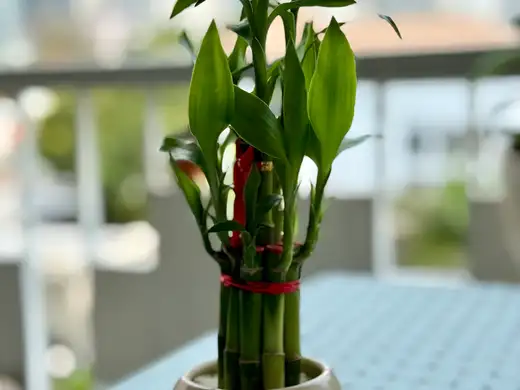

Lucky Bamboo at a glance
- Botanical name
- Dracaena sanderiana
- Light
- bright, indirect light indoors (east or north window); partial shade outdoors; direct sun browns the leaves
- Hardiness zones
- 10-12
- Containers
- Yes
When to repot and propagate lucky bamboo
What it is
Lucky bamboo is not a bamboo. It is Dracaena sanderiana, a tropical shrub in the asparagus family, native to west-central Africa even though it is closely tied to Chinese culture. The canes are often trained into braids or spirals, and the plant rarely flowers indoors. It is an undemanding plant, but it does have firm needs for light, water quality and warmth.
Light
Give it bright, indirect light. Clemson Extension suggests a room facing east or north. Direct sun scorches the leaves brown, so keep it back from a hot south or west window, or behind a sheer curtain.
Growing in water
Lucky bamboo is usually sold in water. Grown that way, it does well only if you look after the water.
- Water level: keep the roots and at least 1 inch of stem under water (Clemson).
- Change it weekly: pour out the old water and refill. NC State notes this also keeps mosquitoes from breeding in the vase.
- Water quality: NC State recommends chlorine-free water. A Michigan State University Extension volunteer, answering on Ask Extension, adds that dracaenas are sensitive to fluoride and salts, both of which can yellow the leaves. They suggest rain water or distilled water instead of city tap water.
- Pebbles or marbles: a layer in the bottom gives the roots something to grip, holds the canes upright and weighs down the vase so it doesn’t tip.
The Ask Extension answer also notes that cloudy water is a sign of bacteria, which can attack the plant. Change the water right away if it clouds, and rinse the vase and stones.
Growing in soil
Lucky bamboo also grows well in soil, and the same Ask Extension answer suggests it does better there with less upkeep. Clemson recommends a well-drained potting soil labeled for indoor or tropical plants, in a pot with a drainage hole. Water when the top inch of soil is dry, let it drain completely, and never leave water standing in the saucer. Overwatering in soil is the usual cause of yellow leaves and rotting stems. Tall canes may need a stake until the roots anchor them.
Temperature and humidity
This is a warm-climate plant. Clemson says it should be indoors before nights drop below 65°F, so keep it away from cold windows, doors and drafts in winter. No source gives a target humidity, but NC State links browning leaf tips to low humidity. A pebble tray under the pot can raise the humidity around it in a dry, heated house.
Feeding
Feed sparingly, and don’t overdo it.
- In water: Clemson suggests a liquid houseplant fertilizer at one-quarter of the label rate every other month.
- In soil: Clemson suggests houseplant fertilizer monthly during the growing season.
Propagation
Lucky bamboo is easy to start from cuttings. Cut a shoot of new growth off the main stem, strip off the lowest leaves, and stand it in water. Clemson says roots usually form in 2 to 3 weeks. Then keep it in water or plant it in soil. Illinois Extension notes that stem cuttings usually root best while plants are actively growing in spring or summer.
Pests and problems
- Yellow leaves and soft, rotting stems in soil: overwatering or poor drainage. Let the surface dry between waterings, use a draining pot, and empty the saucer.
- Yellow leaves in water: fluoride, chlorine or salts in tap water, stale water, or lack of nutrients. Change to rain or distilled water weekly and feed lightly.
- Brown leaf tips: low humidity, or chlorinated water for plants in a vase.
- Brown, scorched patches: too much direct sun. Move it to bright, indirect light.
- Spider mites, mealybugs, aphids, scale: wipe or pick them off, rinse the leaves, or treat with neem oil or insecticidal soap (Clemson). NC State reports no serious pests or diseases beyond these.
Pets and children
Keep lucky bamboo away from pets. The ASPCA has no separate entry for lucky bamboo, but its entry for dracaenas lists them as toxic to dogs and cats. Saponins in the plant can cause vomiting, sometimes with blood, depression, loss of appetite and drooling, and dilated pupils in cats. NC State rates the poison severity as low and says people should not eat the plant. NC State and Clemson both note that the sap can irritate skin.
Stalk numbers
In gift arrangements, the number of stalks carries meaning. Clemson lists one for good fortune, two for love, three for happiness, five for health and six for prosperity. The count doesn’t affect care.
Outdoors
Clemson says a pot can go outdoors in a shady spot after frost danger has passed in late spring, but it must come back in before nights fall below 65°F. In practice, nights need to stay above 65°F before it goes out. Only frost-free climates suit it outdoors year-round. Clemson lists zones 10 to 12, and NC State lists zone 10. Even there it is mainly a container plant for shade or bright indirect light.
Questions
How often should I change the water for lucky bamboo?
Change it every week. Clemson and NC State Extension both say weekly. Fresh water keeps it clear and stops mosquitoes from breeding in the vase.
Why are my lucky bamboo leaves turning yellow?
In soil, yellow leaves with rotting stems usually mean overwatering, so let the surface dry and make sure the pot drains. In water, yellowing can come from fluoride or chlorine in tap water or from lack of nutrients, so switch to rain or distilled water and feed very lightly.
Is lucky bamboo a real bamboo?
No. It is Dracaena sanderiana, a tropical shrub from West Africa in the asparagus family.
Is lucky bamboo toxic to cats and dogs?
Yes. The ASPCA lists dracaenas as toxic to dogs and cats. Saponins in the plant can cause vomiting, sometimes with blood, depression, loss of appetite and drooling, and dilated pupils in cats.
Can lucky bamboo grow in soil?
Yes. Plant it in a well-drained potting soil labeled for indoor or tropical plants, water it when the top inch is dry, and stake tall canes until the roots anchor them.
Sources
- Lucky Bamboo Illness? (Ask Extension #390446) · Ask Extension (answer by Michigan State University Extension)
- Cuttings · University of Illinois Extension
- Dracaena sanderiana (Lucky Bamboo) · North Carolina Extension Gardener Plant Toolbox, NC State University
- How To Grow and Care for Lucky Bamboo (Dracaena sanderiana) · Clemson Cooperative Extension, Home & Garden Information Center
- Ribbon Plant (Dracaena spp.) - Toxic and Non-Toxic Plants · ASPCA Animal Poison Control Center