How to Grow Kale
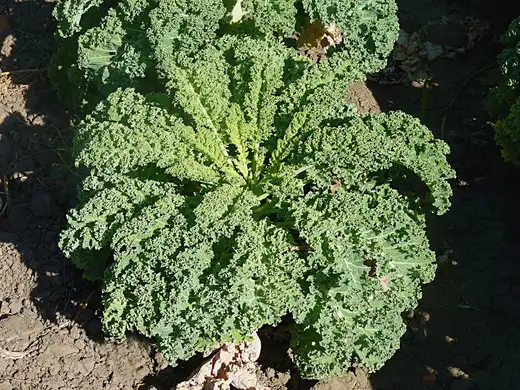
Kale is one of the easiest cool-season greens: sow seed or set out transplants about 4 to 5 weeks before your last spring frost, or plant again in late summer so the crop matures in cool fall weather. Plants are ready to pick in roughly 50 to 70 days and keep producing for months. Frost improves the flavor, and in mild areas kale can be picked straight through winter.

Your dates for kale
Set your ZIP code at the top of the page and we will work out when to plant kale where you live, from the frost records of the nearest NOAA weather station. Your ZIP code is remembered on this device only.
Kale at a glance
- Botanical name
- Brassica oleracea
- Light
- full sun; tolerates some shade
- Frost tolerance
- Hardy: takes a hard frost
- Germination
- 5–17 days
- Days to harvest
- 50–70 days from seed
- Planting depth
- 0.25 inches
- Spacing
- 8–18 inches apart, rows 18–24 inches apart
- Containers
- Yes
When to plant kale
| Zone | Start indoors | Plant out | Sow outdoors | Fall planting |
|---|---|---|---|---|
| Zone 2a | Mar 3 to 17 | Apr 14 to 21 | Apr 14 to 21 | Jul 4 to Aug 8 |
| Zone 3a | Mar 10 to 24 | Apr 21 to 28 | Apr 21 to 28 | Jul 13 to Aug 17 |
| Zone 3b | Mar 1 to 15 | Apr 12 to 19 | Apr 12 to 19 | Jul 23 to Aug 27 |
| Zone 4a | Feb 25 to Mar 11 | Apr 8 to 15 | Apr 8 to 15 | Jul 27 to Aug 31 |
| Zone 4b | Feb 20 to Mar 6 | Apr 3 to 10 | Apr 3 to 10 | Jul 30 to Sep 3 |
| Zone 5a | Feb 15 to Mar 1 | Mar 29 to Apr 5 | Mar 29 to Apr 5 | Aug 2 to Sep 6 |
| Zone 5b | Feb 13 to 27 | Mar 27 to Apr 3 | Mar 27 to Apr 3 | Aug 8 to Sep 12 |
| Zone 6a | Feb 11 to 25 | Mar 25 to Apr 1 | Mar 25 to Apr 1 | Aug 15 to Sep 19 |
| Zone 6b | Feb 5 to 19 | Mar 19 to 26 | Mar 19 to 26 | Aug 20 to Sep 24 |
| Zone 7a | Jan 29 to Feb 12 | Mar 12 to 19 | Mar 12 to 19 | Aug 23 to Sep 27 |
| Zone 7b | Jan 18 to Feb 1 | Mar 1 to 8 | Mar 1 to 8 | Aug 30 to Oct 4 |
| Zone 8a | Jan 11 to 25 | Feb 22 to Mar 1 | Feb 22 to Mar 1 | Sep 5 to Oct 10 |
| Zone 8b | Dec 30 to Jan 13 | Feb 10 to 17 | Feb 10 to 17 | Sep 11 to Oct 16 |
| Zone 9a | Dec 15 to 29 | Jan 26 to Feb 2 | Jan 26 to Feb 2 | Sep 24 to Oct 29 |
| Zone 9b | Nov 15 to 29 | Dec 27 to Jan 3 | Dec 27 to Jan 3 | Oct 7 to Nov 11 |
Spring dates before the last frost assume the soil has thawed and is dry enough to work. After a late or wet spring, wait for that even if the date has passed.
Why timing matters more than anything else
Kale grows best when daytime temperatures stay below about 75°F. Summer heat slows it down, lowers quality and turns the leaves bitter, while cold has the opposite effect: a few fall frosts make the leaves noticeably sweeter. That is why kale is planted twice a year in most of the country, once in early spring so it produces before the heat, and again in late summer so it matures as the weather cools.
For spring, Utah State University Extension sets transplants out 4 to 5 weeks before the last frost and sows seed at the same time. Young plants shrug off temperatures down to about 25°F, so this early start is safe. For fall, choose a fast variety and count back 50 to 75 days from a target harvest about 2 to 3 weeks after your first fall frost. The dates for your zone above already do this math. UConn’s Home & Garden Education Center starts its fall kale in early August in Connecticut.
Where winters are mild, kale is a fall-to-spring crop. UF/IFAS calls it a good source of greens from late fall through early spring in North and Central Florida, and calendars for the Phoenix low desert and Texas’s Lower Rio Grande Valley also schedule it from late summer into winter. In the Rio Grande Valley, Texas A&M starts seed in flats and sets plants out about 3 to 4 weeks later, no earlier than early October and preferably from mid-October on.
Soil and planting
Kale wants full sun but will take some shade, and it does best in fertile, well-drained soil with plenty of organic matter. UConn suggests a pH in the mid-6s. Test the soil and fertilize as the report directs before planting, since leafy greens need a steady supply of nitrogen.
Extension services differ on compost. Utah State caps it at 1 inch of well-composted material per 100 square feet, while the University of Arizona’s Yavapai County office suggests working in 2 to 4 inches. Utah gardeners should stay with the lower figure. Elsewhere, let a soil test guide you.
Sow seed ¼ to ½ inch deep. Seeds take 5 to 17 days to come up, depending on soil temperature. Thin when seedlings have 3 to 4 true leaves; the plants you pull can be replanted elsewhere in the bed. If you raise transplants, give them 5 to 6 weeks to reach 4 to 6 true leaves and a well-developed root system.
Recommended spacing varies widely. Utah State uses 12 inches between plants in rows 2 feet apart, UConn 6 to 12 inches depending on variety, UF/IFAS 8 to 12 inches and Texas A&M’s Rio Grande Valley guide 18 inches. Large varieties and long-standing fall plants need the wider spacing. For baby leaves, Maryland Extension notes that plants 2 to 4 inches apart can be cut repeatedly.
Watering, feeding and mulch
Water deeply and less often, aiming for even moisture and about 1 to 2 inches a week. Moisture swings are the main reason homegrown kale turns tough and strong-flavored, so drip irrigation and mulch both help.
About 4 weeks after transplanting or thinning, Utah State recommends side-dressing with ½ cup of a nitrogen fertilizer such as 21-0-0 per 10 feet of row. Place it about 6 inches from the plants and water it in.
Plastic mulch lets you plant earlier in spring and speeds the first harvest. Once days climb past about 80°F, switch to organic mulch such as straw or grass clippings, which keeps the soil cooler and holds water. Fabric row covers protect young plants from frost and keep egg-laying moths and butterflies off.
Varieties for your region
Extension services name different kales for their areas:
- Utah: Starbor, Red Russian and Scarlet, chosen for production, eating quality and cold hardiness (Utah State).
- Florida: Vates Dwarf Blue Curled, Tuscan (lacinato), Winterbor and Redbor (UF/IFAS).
- Lower Rio Grande Valley, Texas: Red Russian, Lacinato, Scarlet, Darkibor, Prizm and Winterbor (Texas A&M).
- Connecticut: UConn’s Home & Garden Education Center names Winterbor, Dwarf Siberian and White Russian among blue-green kales, Redbor and Red Russian among red ones, and Nero di Toscano among the lacinato types.
Ornamental kales are edible but not very tasty, according to both UF/IFAS and UConn. Grow them for fall color in window boxes rather than for the kitchen.
Pests and problems
- Cabbage caterpillars. Imported cabbageworms, cabbage loopers and cross-striped cabbageworms chew ragged holes. UConn rates the cross-striped cabbageworm worst because each plant can receive dozens of eggs. Spray Bt (Bacillus thuringiensis) at the first sign of feeding and then every other week, or grow the plants under netting so the adults cannot lay eggs. UConn adds that lacinato kale, with blistered rather than frilly leaves, is easier to spray thoroughly than curly types.
- Flea beetles. Tiny black beetles pit the leaves of seedlings and can thin out a stand. Cover the row at planting.
- Aphids. These are most common on mature plants and cluster under the leaves. Knock them off with a strong spray of water or use insecticidal soap.
- Bitter, tough leaves. These come from heat and uneven watering. Grow kale in the cool seasons and keep moisture steady.
In the low desert, the Maricopa County calendar advises holding fall plantings until whitefly numbers fall with cooler weather.
Harvest and storage
Start picking when the leaves reach full size, usually 50 to 70 days from seed, although Arizona’s Maricopa calendar allows 60 to 90 days. Strip the oldest, lowest leaves first and let the center keep growing. UF/IFAS advises taking no more than a third of the plant at once. Utah State suggests 5 to 10 feet of row per person for fresh eating, which yields about 3 to 5 pounds per 10 feet.
Kale keeps 2 to 3 weeks at about 32°F with high humidity. Many gardeners never store it at all, because plants left in the garden keep supplying leaves into winter. In Prescott, Arizona (zone 7b), the Yavapai County extension agent reports picking kale year-round, with growth simply slowing once winter arrives.
Questions
How cold can kale tolerate?
Utah State says young kale is not seriously hurt by temperatures down to about 25°F, and mature plants are very hardy. Maryland Extension puts kale's limit at about 15 to 20°F, and Nebraska Extension says hardy crops like kale are killed when temperatures drop near 20°F.
Why is my kale bitter?
Heat and uneven watering are the usual causes. Kale does best below about 75°F, and swings between wet and dry soil make leaves tough and off-flavored. Fall-grown kale picked after a few frosts tastes sweeter.
How do I harvest kale so it keeps growing?
Pick the oldest, lowest leaves once they reach full size and leave the young center leaves to grow. UF/IFAS advises taking no more than one-third of the plant at a time.
Can I grow kale in a container?
Yes. UW-Madison Extension lists kale among the vegetables that do well in containers, and N.C. Cooperative Extension suggests treating it like other leafy greens in a wide container 6 to 8 inches deep or a 5-gallon window box, with slightly wider spacing.
Does kale come back the next year?
Kale is a biennial, so it does not flower in its first year and keeps making leaves. Maryland Extension notes that if the winter is not too severe, kale will re-sprout from its stems in spring.
Sources
- Growing Leafy Greens in a Home Garden · University of Maryland Extension
- Growing Vegetables in Containers · University of Wisconsin-Madison Extension
- Easy Container Vegetables and How to Grow Them · N.C. Cooperative Extension, Onslow County Center
- Fall Vegetable Gardening (G1343) · University of Nebraska-Lincoln Extension
- How to Grow Kale in Your Garden · Utah State University Extension
- Hail Kale · UConn Home & Garden Education Center
- Backyard Gardener #172: Growing Kale · University of Arizona Cooperative Extension, Yavapai County
- Florida Vegetable Gardening Guide (SP 103/VH021) · UF/IFAS Extension
- Vegetable Planting Calendar for Maricopa County (AZ1005) · University of Arizona Cooperative Extension
- RGV Homeowner Vegetable Guide · Texas A&M AgriLife Extension Service