How to Care for a Jade Plant
Water a jade plant deeply, then wait until the soil is dry before watering again, and keep it on the dry side in winter. Give it at least four hours of direct sun, ideally in a south window, in a cactus mix and a pot with a drainage hole. The mistake to avoid is overwatering, which causes leaf drop and stem rot.
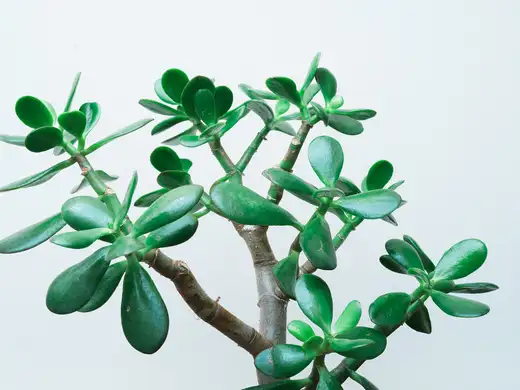

Jade Plants at a glance
- Botanical name
- Crassula ovata (syn. Crassula argentea)
- Light
- full to partial sun; 4+ hours of direct sun (south window)
- Hardiness zones
- 11-12
- Containers
- Yes
Jade plant is a succulent shrub from South Africa and Mozambique, where it grows to about 6 feet and can live up to 100 years. It stores water in its thick leaves, stems and roots, which is why it shrugs off neglect, dry indoor air and a crowded pot. The one thing it won’t tolerate is constant moisture.
Light
Jade plant needs sun to stay compact and colorful. Penn State recommends four or more hours of direct sun a day, which usually means a south-facing window. NC State suggests a sunny spot that also gets some afternoon shade.
It will survive in bright, indirect light, but Wisconsin Extension notes that it grows deep green, with stems that droop, and Penn State adds that the leaves turn pale and lose their red edges. If you don’t have a sunny window, Penn State suggests a full-spectrum grow light kept close to the plant for about 12 hours a day, then switched off so the plant gets a dark period. A light that is too far away makes the stems stretch toward it.
Watering
Overwatering is the real danger. Constantly wet soil makes the leaves drop and the stem rot, so the goal is a deep drink followed by a real dry spell.
In spring and summer, when the plant is growing, water thoroughly until water runs out the drainage hole, then let the soil dry before watering again. Penn State says to wait until the soil is completely dry; Wisconsin Extension allows a little more water during active growth and says the soil should dry slightly between waterings. Either way, push a finger into the soil before you water, and never leave the pot sitting in water.
In winter the plant is semi-dormant. Water much less and keep the soil on the dry side. Don’t stop entirely, though: Wisconsin Extension warns that drought causes stunting, spotted leaves, leaf drop and eventually death.
Pot and potting mix
Use a cactus or succulent mix, or improve regular potting mix with extra perlite or sharp sand, as Wisconsin Extension suggests. The pot must have a drainage hole. Unglazed clay or terracotta is ideal because it lets the soil dry faster than plastic or glazed pots. Don’t add gravel to the bottom of the pot. N.C. Cooperative Extension explains that a gravel layer actually slows drainage.
Temperature and humidity
Jade plant is comfortable in normal room temperatures and humidity. NC State recommends average to cool indoor temperatures, and Wisconsin Extension says it tolerates a wide range of temperature and humidity. It may survive a light frost, but freezing kills it.
Feeding
Jade plant needs very little fertilizer. Penn State recommends a balanced liquid houseplant fertilizer just two or three times in spring and summer, and warns that overfeeding makes plants leggy. Wisconsin Extension suggests feeding about every two months during growth, or using a diluted fertilizer more often. After repotting, Penn State says to wait four months before feeding.
Repotting
Jade plants are happy root-bound and can stay in the same pot for years. Repot every two to three years, or sooner if the plant gets so top-heavy it tips over. The best time is as new growth starts in spring. To keep the plant the same size, prune the roots and return it to the same pot. Otherwise move it to a pot no more than 2 inches wider. Water sparingly until it settles in.
Pruning
Prune in spring to keep the plant compact and to build a thicker trunk that can hold up the heavy branches. With a clean, sharp blade, cut just above one of the rings on the stem or back to a side branch. The cuts heal over in a few days and new growth appears within a few weeks. Penn State also suggests pinching growing tips about 1/8 inch above a leaf pair to keep the plant bushy. Remove broken or crossing branches and damaged leaves. Jade plant’s tolerance for pruning and small pots is why it makes a good succulent bonsai.
Propagation
Jade plant is one of the easiest houseplants to propagate from stem or leaf cuttings, and pruning gives you plenty of material.
- Take a stem cutting or a whole leaf.
- Let it dry for a few days so the cut surface seals over and is less likely to rot.
- Set the cut end into fairly dry, well-drained mix.
- Once it has rooted and starts growing, care for it like a mature plant.
Wisconsin Extension says cuttings root most easily in summer but can be taken any time, and that seed can be sown in spring or summer.
Getting it to flower
Jade plant blooms in response to long nights and rarely flowers indoors. To try, Wisconsin Extension suggests withholding water in fall, keeping the plant around 55°F, especially at night, and keeping it away from lamps so the natural short days trigger buds. Several weeks of this cool, dry, dark treatment, followed by normal watering, should produce clusters of small white to pink star-shaped flowers.
Pests and problems
- Leaf drop, soft or rotting stem: overwatering or poor drainage. Let the soil dry, repot into cactus mix if it stays wet, and water less.
- White cottony tufts where leaves meet stems: mealybugs, the most common pest. Wipe them off with a cotton swab dipped in rubbing alcohol, repeating for days or weeks until none are left. Use insecticides cautiously, because they can damage the succulent leaves.
- Stretched, drooping, deep green or pale growth: not enough light.
- Fine stippling or webbing, sticky leaves, small bumps: spider mites, aphids or scale, which NC State lists as occasional pests.
- Tiny white or black dots on the leaves: these are normal pores called hydathodes, not disease, according to Penn State.
Pets and children
The ASPCA lists jade plant as toxic to dogs, cats and horses. Eating it can cause vomiting, depression and incoordination; the toxic compound is unknown. Keep it where pets can’t chew it.
Summering outdoors and warm-winter growing
In zones 11-12, jade plant can be grown outdoors as a landscape shrub, and it is used that way in mild climates. NC State recommends partial shade for outdoor plants.
Elsewhere, a summer outdoors improves its vigor. Colorado State advises waiting until frost danger has passed and nights stay above 50°F. Harden it off by placing it in shade for a few days, then gradually giving it more sun. After that, Colorado State says jade can take full sun. Penn State and Wisconsin Extension both warn that a plant moved straight into outdoor sun will sunburn.
Bring it back in before the first frost. Iowa State recommends moving houseplants indoors once nights dip consistently to around 50°F. Nebraska Extension advises checking succulents for mealybugs before bringing them in. Iowa State adds rinsing the foliage and keeping the plant apart from other houseplants for 3 to 4 weeks. Back indoors, return it to its sunniest window and cut watering sharply.
Questions
How often should I water a jade plant?
There is no fixed schedule. Water deeply when the soil has dried out, which happens more often in spring and summer, and much less often in winter, when the plant is semi-dormant. Never let the pot sit in water.
Why is my jade plant dropping leaves?
Most often overwatering or soil that drains poorly, which can also rot the stem. Extremely dry soil causes leaf drop too, and a few lower leaves fall off naturally as the plant ages.
Why is my jade plant leggy and drooping?
It needs more light. Stems stretch and droop and the leaves lose their red edges when the plant gets less than about four hours of direct sun. Move it to a south window or add a grow light.
How do I get my jade plant to flower?
In fall, cut back on water, keep it at about 55°F at night and keep it away from lamps so the shortening days can trigger buds. Several weeks of these cool, dry, dark nights, followed by normal watering, should bring flowers.
Is a jade plant toxic to cats and dogs?
Yes. The ASPCA lists jade plant as toxic to dogs, cats and horses, causing vomiting, depression and incoordination.
Sources
- Moving Houseplants Outdoors (PlantTalk 1332) · Colorado State University Extension, PlantTalk Colorado
- How and when do I bring my houseplants back indoors before winter? · Iowa State University Extension and Outreach, Yard and Garden
- Bringing Houseplants Indoors · Nebraska Extension in Lancaster County
- How to Repot a Houseplant · N.C. Cooperative Extension, Wayne County Center
- Crassula ovata (Jade Plant) · NC State Extension, North Carolina Extension Gardener Plant Toolbox
- Jade Plant, A No Fuss Houseplant · Penn State Extension
- Jade Plant, Crassula ovata · University of Wisconsin-Madison Extension, Wisconsin Horticulture
- Toxic and Non-toxic Plants: Jade Plant · ASPCA Animal Poison Control Center