How to Grow Hydrangeas
Plant hydrangeas in fall or early spring where they get morning sun and afternoon shade, in moist, well-drained soil rich in organic matter, and give them about an inch of water a week. The single most important thing is knowing which type you have: bigleaf and oakleaf hydrangeas bloom on last year's stems and should only be pruned right after flowering, while panicle and smooth hydrangeas bloom on new growth and are cut back in late winter.

Your dates for hydrangeas
Set your ZIP code at the top of the page and we will work out when to plant hydrangeas where you live, from the frost records of the nearest NOAA weather station. Your ZIP code is remembered on this device only.
Hydrangeas at a glance
- Botanical name
- Hydrangea spp. (H. macrophylla, H. quercifolia, H. paniculata, H. arborescens)
- Light
- morning sun with afternoon shade for most types; panicle hydrangea takes the most sun
- Frost tolerance
- Hardy: takes a hard frost
- Hardiness zones
- 3-11 depending on species: panicle 3-8, oakleaf 5-9, bigleaf 6-11 (NCSU Plant Toolbox)
When to plant hydrangeas
| Zone | Fall planting |
|---|---|
| Zone 2a * | Jul 11 to 25 |
| Zone 3a | Jul 20 to Aug 3 |
| Zone 3b | Jul 30 to Aug 13 |
| Zone 4a | Aug 3 to 17 |
| Zone 4b | Aug 6 to 20 |
| Zone 5a | Aug 9 to 23 |
| Zone 5b | Aug 15 to 29 |
| Zone 6a | Aug 22 to Sep 5 |
| Zone 6b | Aug 27 to Sep 10 |
| Zone 7a | Aug 30 to Sep 13 |
| Zone 7b | Sep 6 to 20 |
| Zone 8a | Sep 12 to 26 |
| Zone 8b | Sep 18 to Oct 2 |
| Zone 9a | Oct 1 to 15 |
| Zone 9b | Oct 14 to 28 |
* Outside zones 3 to 11, the hardiness range our sources give for hydrangeas. Plants there may not survive the winter or get enough winter chill, and are usually grown as annuals or in pots.
Know which hydrangea you have
Almost every hydrangea question, from pruning to flower color to “why didn’t it bloom,” depends on the species. The five common garden hydrangeas behave very differently.
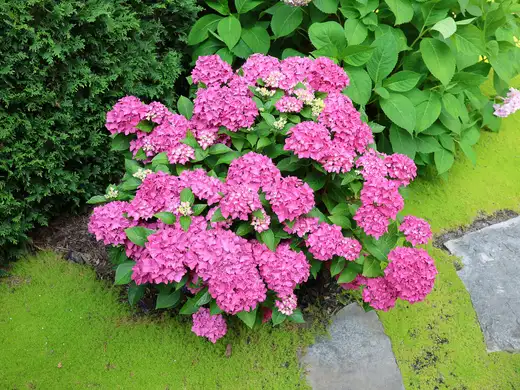
Bigleaf hydrangea (Hydrangea macrophylla, also called French hydrangea, mophead or lacecap) is the classic pink or blue shrub, usually 3 to 6 feet tall. It is the only common type whose color you can change with soil pH, and the most cold-sensitive. Alabama Extension explains that its flower buds have a weak dormancy, so a warm spell in winter wakes them and a later freeze kills them. It blooms on old wood (stems that grew the previous summer). Mountain hydrangea (H. serrata) is a smaller relative with mostly lacecap flowers and similar needs.
Oakleaf hydrangea (H. quercifolia) is native to the Southeast, grows 6 feet or more tall and at least as wide, and has big lobed leaves that turn red, orange and maroon in fall, plus peeling bark for winter. It tolerates sun and heat better than bigleaf, but University of Tennessee Extension calls it the least water-loving hydrangea: it rots in soggy soil. It also blooms on old wood.
Panicle hydrangea (H. paniculata, PeeGee) is the toughest and most cold-hardy. It carries cone-shaped white flowers that often age to pink or green, takes more sun and drier soil than other species, and can be trained as a small tree. Older types reach 10 to 20 feet, but many newer cultivars stay 3 to 5 feet. It blooms on new wood.
Smooth hydrangea (H. arborescens) is native to the eastern US. ‘Annabelle’, with white flower heads up to a foot across, is the best-known cultivar. Plants form clumps about 4 feet by 4 feet, and the heavy heads can flop. It blooms on new wood.
Climbing hydrangea (H. anomala subsp. petiolaris) is a slow-starting vine that clings to walls and trees with aerial roots and has white lacecap flowers in early summer.
Hardiness ratings vary a little by source. Roughly: panicle hydrangea grows in zones 3 or 4 to 8, smooth hydrangea 3 to 9, oakleaf about 5 to 9, and bigleaf about 6 to 9. NC State rates bigleaf to zone 11 and Oregon State says some bigleaf types tolerate zone 5 or even 4. In cold areas, bigleaf plants often survive while their flower buds do not, which is why reblooming types matter there.
Reblooming bigleaf hydrangeas
Reblooming (remontant) bigleaf cultivars flower on both old and new wood, so they still bloom after a hard winter or a badly timed pruning. ‘Endless Summer’ was the first widely sold, and Oregon State credits it with sparking new interest in hydrangeas. University of Tennessee Extension lists ‘Blushing Bride’, ‘David Ramsey’, ‘Decatur Blue’, Endless Summer, ‘Mini Penny’, ‘Nantucket Blue’, ‘Oak Hill’ and ‘Penny Mac’ among the top reblooming mopheads in trials, with Twist-n-Shout as the reblooming lacecap. Tennessee notes that some rebloom more strongly than others, and that cutting off the first flush of flowers and feeding the plant helps the weaker ones bloom again.
Where to plant hydrangeas
Most hydrangeas want morning sun and afternoon shade, or light, dappled shade all day. Too much shade cuts flowering; too much hot sun makes the big leaves wilt and scorch. Tennessee says hydrangeas bloom best with three to four hours of morning sun. Panicle hydrangea is the exception and needs at least six hours of sun to flower well.
Avoid hot, dry, exposed sites for bigleaf, oakleaf and smooth types (Alabama, Clemson). Also avoid planting right under a large tree: Alabama points out that big trees drink so much water that a new shrub can’t compete.
Hydrangeas grow best in moist but well-drained soil with plenty of organic matter. In heavy clay, Alabama suggests building a slightly raised bed amended with compost rather than digging single holes.
Regional notes:
- Upper Midwest, northern Plains and other cold areas (zones 3-5): Panicle and smooth hydrangeas are the reliable bloomers because they flower on new wood. Oregon State recommends them for its cold, dry central and eastern regions, with shelter from wind and good winter drainage.
- Mid-Atlantic, Ohio Valley and upper South: All types grow, but late freezes after a warm spell can kill bigleaf buds. Alabama suggests planting bigleaf on north- or east-facing slopes, where buds are less likely to wake early, and choosing rebloomers.
- Southeast and Gulf Coast: Afternoon shade is a must for bigleaf and smooth hydrangeas. UF/IFAS lists French hydrangeas as best for North and Central Florida, where winters are still cool enough.
- Pacific Northwest: Bigleaf and mountain hydrangeas thrive west of the Cascades and on the coast, and the naturally acidic soils there often produce blue flowers (Oregon State).
- Hot inland West: Oregon State recommends heat-tolerant oakleaf and panicle hydrangeas for hot southern valleys, with bigleaf only in protected, part-shade spots. Alkaline soil and water make blue flowers hard to get.
When to plant
Fall and spring are the best seasons. Alabama prefers fall because the shrub has several months to build roots before it has to bloom; Clemson rates spring and fall equally. In fall, aim to plant about six to eight weeks before your average first frost so roots establish before the ground freezes, as the dates for your zone above show. Hydrangeas bought in bloom in summer can still be planted, but their large leaves lose water fast, so they need extra watering until fall.
How to plant a hydrangea
- Test the soil first if flower color matters. Adjusting pH is easiest before planting (Oregon State).
- Dig wide, not deep. Make the hole two to three times as wide as the root ball (Clemson) but no deeper than the ball. Alabama digs 2 feet wider than the root ball.
- Plant at grade. The top of the root ball should sit at the same level it grew in the pot, not lower. UF/IFAS warns that planting too deeply stresses the roots.
- Loosen circling roots on pot-bound plants.
- Backfill with the native soil, firming as you go. Oregon State mixes in organic matter; Clemson uses the soil from the hole alone.
- Water thoroughly and mulch 2 to 3 inches deep, keeping mulch an inch away from the stems.
For spacing, go by the mature size on the plant tag: a smooth hydrangea needs about 4 feet, an oakleaf at least 6. Tennessee notes that crowding plants together invites powdery mildew and leaf spots.
Watering, mulch and feeding
Hydrangeas are thirsty. Keep a new plant evenly moist through its first year. After that, Tennessee and Alabama recommend about 1 inch of water a week from rain or irrigation, more in sun or wind. In South Carolina’s summer heat, Clemson suggests deep watering twice a week in sandy soil. Drip or soaker hoses keep the leaves dry and help prevent leaf diseases; if you use sprinklers, water early in the morning.
Don’t overdo it. A bigleaf hydrangea can wilt at midday on a hot, windy day even in moist soil, because the leaves lose water faster than the roots can take it up. Check the soil before watering again: overwatering causes root problems, and oakleaf hydrangea in particular can die quickly in waterlogged ground.
Feed lightly, based on a soil test. Clemson uses a balanced 10-10-10 fertilizer at 2 cups per 100 square feet in March, May and July for bigleaf hydrangeas; Alabama splits the soil-test recommendation into March, May and June for bigleaf, April and June for panicle and oakleaf, and a single late-winter feeding for smooth hydrangea. Too much nitrogen gives lush leaves and few flowers.
How to prune hydrangeas
Pruning at the wrong time is the most avoidable reason for a hydrangea without flowers. Alabama notes that next year’s flower buds start forming in August on old-wood types.
Bigleaf, mountain and oakleaf hydrangeas (old wood): Prune right after flowering, and finish by the end of July (Tennessee) or August 1 (Clemson, NC State). Prune lightly. Remove dead stems, and on mature plants take a few of the oldest stems, no more than about a third, down to the base to keep the plant vigorous. Never cut the whole plant back in fall or spring, or you remove the flower buds. Oakleaf hydrangea is best left in its natural shape.
Smooth hydrangea (new wood): Cut back in late winter or early spring, by early March in Tennessee. Alabama cuts stems to 6 to 12 inches, or to half their height; the height is a matter of preference. Alabama adds that pruning again after the first flowers can bring a second, later bloom.
Panicle hydrangea (new wood): Pruning is optional. Cutting stems back hard in late winter, to about two buds, gives a tidier plant with larger flowers (Tennessee).
Reblooming bigleaf types: Prune lightly right after the first flush of flowers.
Severe pruning to shrink an overgrown hydrangea only works for a season or two before it grows back. Choose a cultivar whose mature size fits the spot.
Changing bigleaf flower color
Bigleaf and mountain hydrangea flowers are blue when the plant takes up aluminum and pink when it can’t. Soil pH controls how much aluminum is available: Clemson gives pH 5.0 to 5.5 for blue and 6.0 or higher for pink, and Oregon State adds that flowers are often purple in between. White cultivars stay white, and panicle, oakleaf and smooth hydrangeas don’t change color at all.
- For blue: lower the pH with sulfur or aluminum sulfate as new growth emerges in spring (Clemson), and use a fertilizer low in phosphorus, because phosphorus ties up aluminum (Alabama, Tennessee). Alabama’s trial rate is 1/2 cup of wettable sulfur per 10 square feet watered in, or a drench of 1 tablespoon of aluminum sulfate per gallon of water in March, April and May. Tennessee warns not to let pH fall below 4.0, which damages roots.
- For pink: raise the pH with lime. Alabama uses 1 cup of dolomitic lime per 10 square feet and applies it in fall for pink flowers the next year, since raising pH is slow.
Test the soil before and about every two years after (Tennessee). UF/IFAS notes that color can take two or three bloom cycles to change fully. In alkaline Western soils or with hard irrigation water, keeping a hydrangea blue may be unrealistic outside a container.
Hydrangeas in containers
Compact cultivars grow well in large pots, and Oregon State suggests containers for bigleaf and mountain hydrangeas in cold inland areas so the plants can spend winter in an unheated garage, protecting the flower buds. Remember that a container plant depends entirely on you for the inch or more of water a week hydrangeas need. Gift hydrangeas from florists are usually poor garden plants: Tennessee notes their flower buds are not winter-hardy.
Common problems
- No flowers: pruning at the wrong time, winter or late-freeze damage to buds, too much shade or too much nitrogen. Clemson names winter injury as the most common cause in South Carolina.
- Powdery mildew and leaf spots: Tennessee calls powdery mildew the most common disease. Cercospora leaf spot and anthracnose are also common on bigleaf types. Space plants for air flow, keep leaves dry and rake up fallen leaves. The spots look bad but rarely threaten the plant.
- Root rot: poorly drained or overwatered soil, especially with oakleaf hydrangea.
- Wilting: midday wilting on hot, windy days is common in bigleaf hydrangeas even in moist soil (Tennessee). Check the soil before watering; if plants wilt every afternoon, they may need more shade.
- Insects: aphids, spider mites, Japanese beetles, rose chafers and hydrangea leaftiers occur but are rarely serious.
- Deer: UF/IFAS calls deer the bigger problem where they are common.
- Herbicide damage: hydrangeas are sensitive, so use weed killers carefully nearby.
Keep hydrangeas away from pets and children who might chew them: NC State notes bigleaf hydrangea contains cyanogenic glycosides and is mildly toxic if eaten in quantity.
Propagating hydrangeas
Clemson propagates bigleaf hydrangeas by layering: bend a low, flexible stem into a shallow trench, remove a 1-inch ring of bark where it will be buried, cover it with soil and leave 6 to 12 inches of tip exposed until it roots. Old, established clumps can also be divided with a shovel in early spring.
Questions
Why is my hydrangea not blooming?
The usual causes are pruning a bigleaf or oakleaf hydrangea at the wrong time (removing next year's buds), winter cold or late freezes killing the buds, too much shade, or too much nitrogen fertilizer. Clemson names winter injury as the most common cause.
When should I prune hydrangeas?
Bigleaf and oakleaf hydrangeas right after they flower, and no later than the end of July or August 1. Panicle and smooth hydrangeas in late winter or early spring, by early March in Tennessee, before new growth starts.
How do I make my hydrangea blue?
Only bigleaf and mountain hydrangeas change color. Lower the soil pH to about 5.0-5.5 with sulfur or aluminum sulfate, starting as new growth emerges in spring, and use a low-phosphorus fertilizer. Expect it to take two or three bloom cycles.
How much sun do hydrangeas need?
Most do best with morning sun and afternoon shade. Panicle hydrangea is the exception: it needs at least six hours of sun to flower well, and oakleaf handles more sun and heat than bigleaf.
How often should I water hydrangeas?
About 1 inch a week from rain or irrigation, applied as one deep soaking. In sandy Southern soils during summer heat, Clemson suggests deep watering twice a week. Wilting at midday in hot weather doesn't always mean the soil is dry, so check before watering again.
Can hydrangeas grow in pots?
Yes, especially compact cultivars. Oregon State suggests large containers for bigleaf and mountain hydrangeas in cold inland areas, moved into an unheated garage for winter to protect the flower buds.
Sources
- A Tennessee Landscape Contractor's Guide to Hydrangeas (W 304) · University of Tennessee Extension
- Hydrangeas · Alabama Cooperative Extension System
- Hydrangeas bring beauty and variety to Oregon gardens · Oregon State University Extension Service
- Hydrangea (HGIC factsheet) · Clemson Cooperative Extension Home & Garden Information Center
- Pruning Hydrangeas · Clemson Cooperative Extension Home & Garden Information Center
- Hydrangea · UF/IFAS Gardening Solutions
- Hydrangea macrophylla (Extension Gardener Plant Toolbox) · North Carolina State University Extension
- Hydrangea paniculata (Extension Gardener Plant Toolbox) · North Carolina State University Extension
- Hydrangea quercifolia (Extension Gardener Plant Toolbox) · North Carolina State University Extension
- Establishing perennials in the early fall · University of Illinois Extension