How to Care for a Hoya (Wax Plant)
Hoya needs the brightest indirect light you can give it, a chunky, fast-draining mix, and a wet-dry watering cycle. Soak it, then let the mix dry most of the way before watering again. Keep it slightly pot-bound, feed lightly in spring and summer, and never cut off the old flower spurs, because new blooms come from them.
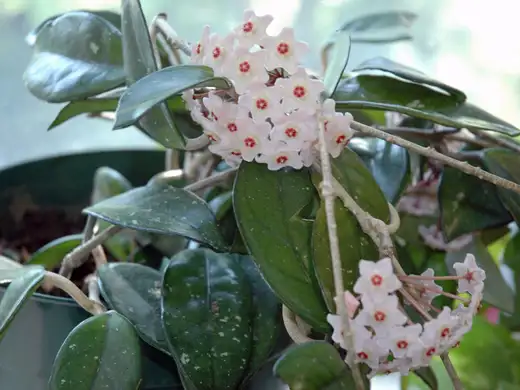

Hoyas at a glance
- Botanical name
- Hoya carnosa
- Light
- bright, indirect light year-round; strong direct sun can scorch or redden leaves
- Containers
- Yes
When to repot and propagate hoyas
Light
Light controls whether a hoya flowers. Iowa State Extension recommends bright, indirect light, often from the brightest window in the house. It should be bright enough to read by and to cast a shadow, but not direct sun on the leaves. Strong direct sun can scorch the leaves or turn them red. Too little light gives long, thin stems with few leaves and no flowers. UF/IFAS agrees that a lack of light is usually the reason a hoya won’t bloom.
Watering
In the wild, hoya grows on tree branches, where its roots dry quickly between rains. Copy that with a wet-dry cycle. Water thoroughly, so the whole root ball is moist and water runs out the drainage holes. Then let the mix dry substantially before watering again. Sources differ on how dry. UF/IFAS says to let the top third to half of the soil dry out completely. Iowa State says to let the mix dry almost completely.
Push a finger into the mix or lift the pot to judge it. A dry pot is noticeably lighter. In bright, warm months you’ll water more often. In winter, when growth slows, UF/IFAS says to water very sparingly. NC State adds that cold water can shock the plant, so use room-temperature water. Water the soil rather than the leaves. Iowa State links leaf spots to foliage that stays wet without good air movement.
Overwatering is what kills hoyas. Iowa State calls overwatering in a poorly draining mix the quickest path to root decline. Underwatering is less common. It shows as wrinkled or soft leaves that firm up after a good drink. NC State notes that soil kept either too wet or too dry can make leaves drop.
Potting mix, pot and drainage
Use a chunky, airy mix that drains fast but holds some moisture. Iowa State suggests potting soil combined with orchid bark and perlite or pumice. The pot needs drainage holes. Keep it small: hoyas bloom best slightly pot-bound, and a large pot holds water around the roots for too long. A hanging basket shows off the trailing vines. A trellis, hoop or moss pole encourages fuller growth and more places for flowers to form.
Temperature and humidity
Iowa State puts the best indoor range at 65 to 80°F and says hoya does not tolerate temperatures below 55°F, so keep it away from cold windows in winter. Slightly cooler nights than days help buds form.
Average indoor humidity is fine. Iowa State considers 40 to 60 percent ideal. NC State says the plant enjoys high humidity from a pebble tray or humidifier, which helps in a dry, heated house.
Feeding
Feed lightly and regularly in spring and summer. Iowa State recommends an all-purpose fertilizer at one-quarter to one-half strength, skipping every second or third watering, or a slow-release fertilizer at the label rate. Don’t feed in winter. The rest helps the plant flower the following season.
Flowering and the spur rule
The clusters of waxy, star-shaped flowers form on short stalks called peduncles, or spurs. The same spur blooms again and again for years. When flowers fade, let them drop on their own and leave the spur alone. Cutting spurs off removes future flowers.
Be patient with young plants. NC State says most hoyas don’t flower until they are 2 or 3 years old. Blooms can appear in spring, summer or fall. Once buds form, keep care steady. Iowa State warns that moving the plant, changing the watering pattern or a temperature swing can make buds drop.
Repotting
Repot only when the plant has clearly outgrown its pot, or when the mix has broken down and no longer drains. Don’t repot while it is in bud or bloom. Move up just one size, no more than 2 inches wider than the old pot, and use fresh, airy mix.
Pruning
Hoya rarely needs pruning. If you do need to shorten long vines, NC State suggests early spring, before fast growth starts. Avoid the flower spurs. The cut stems leak a milky sap, a trait of its family, the dogbane family that includes milkweed and oleander. UF/IFAS warns not to let sap from cut stems drip onto furniture.
Propagation
Stem cuttings are the reliable method. Take a piece with one or two nodes and strip the lowest leaves. Set the node in water, moist sphagnum or a light propagation mix, in warmth and bright indirect light. Roots usually form within a few weeks. Then pot the cutting into a small container of well-draining mix.
A leaf without a node will root but never grow a vine. Iowa State notes this is why the single heart-shaped Hoya kerrii leaves sold around Valentine’s Day often stay unchanged for years.
Pests and problems
- Healthy growth, no flowers: too little light, too big a pot, too little summer feeding, a young plant or spurs cut off. Fix the light first.
- Buds drop: a sudden change in watering, temperature or location. Keep conditions steady.
- Yellow leaves, wet soil: overwatering or a mix that drains poorly. Lengthen the dry period and repot into a chunkier mix.
- Stalled growth: low light, cool rooms or old, compacted mix.
- White cotton in leaf joints: mealybugs, the most common pest. Treat with horticultural soap or a labeled insecticide.
- Immobile bumps and sticky residue: scale.
- Stippled leaves, fine webbing: spider mites, usually in very dry air.
- Small flies around the pot: fungus gnats, drawn to mix kept too wet.
Inspect new plants closely before setting them next to others. Catching pests early makes them much easier to control.
Pets and children
The ASPCA lists wax plant as non-toxic to dogs and cats, and NC State also lists it as non-toxic to horses.
Outdoors
A hoya can spend summer outside on a partly shaded patio, out of direct sun. NC State says to bring it back in when nights fall below 50°F. In frost-free areas such as south Florida, UF/IFAS says it can grow outdoors year-round where temperatures stay above 45°F, in a spot shaded from harsh direct sun, which burns the leaves. A hanging basket under a porch roof or a tree canopy works well.
Questions
How often should I water a hoya?
Water thoroughly, then wait until the mix has dried out most of the way. UF/IFAS gives the top third to half of the pot, and Iowa State says almost completely. That means more often in bright summer months and very sparingly in winter.
Why won't my hoya bloom?
Usually it needs more light. An oversized pot, too little feeding in summer, and a plant younger than 2 or 3 years are other common reasons. Also check that nobody has been cutting off the old flower spurs.
Should I cut off dead hoya flowers?
No. Let the spent flowers fall on their own and leave the short spur they grew from. The plant reblooms from the same spurs for years.
Is hoya safe for cats and dogs?
Yes. The ASPCA lists wax plant as non-toxic to dogs and cats, and NC State Extension also lists it as non-toxic to horses. The milky sap can stain furniture, though.
Why are my hoya leaves turning yellow?
Yellow leaves with soil that stays wet usually mean overwatering or a mix that drains poorly. Let it dry further between waterings and repot into a chunkier, faster-draining mix if needed.
Sources
- Hoya carnosa (Wax Plant) · NC State Extension Gardener Plant Toolbox
- All About Hoyas · Iowa State University Extension and Outreach, Yard and Garden
- Hoya · University of Florida IFAS Gardening Solutions
- Toxic and Non-toxic Plants: Wax Plant · ASPCA Animal Poison Control