How to Grow Hostas
Hostas grow best in part to full shade, with protection from afternoon sun, in moist, well-drained soil rich in organic matter. Plant or divide them in spring as the shoots emerge, or in early fall, with the crown at or just above soil level. Give them about an inch of water a week and watch for slugs, the most common pest.

Your dates for hostas
Set your ZIP code at the top of the page and we will work out when to plant hostas where you live, from the frost records of the nearest NOAA weather station. Your ZIP code is remembered on this device only.
Hostas at a glance
- Botanical name
- Hosta spp.
- Light
- part shade to full shade; afternoon shade is best even for sun-tolerant cultivars, and plants tolerate about 4 hours of sun or less
- Frost tolerance
- Hardy: takes a hard frost
- Hardiness zones
- 3-9
- Planting depth
- 0 inches
- Spacing
- 12–36 inches apart
- Containers
- Yes
When to plant hostas
| Zone | Fall planting |
|---|---|
| Zone 2a * | Jul 11 to Aug 8 |
| Zone 3a | Jul 20 to Aug 17 |
| Zone 3b | Jul 30 to Aug 27 |
| Zone 4a | Aug 3 to 31 |
| Zone 4b | Aug 6 to Sep 3 |
| Zone 5a | Aug 9 to Sep 6 |
| Zone 5b | Aug 15 to Sep 12 |
| Zone 6a | Aug 22 to Sep 19 |
| Zone 6b | Aug 27 to Sep 24 |
| Zone 7a | Aug 30 to Sep 27 |
| Zone 7b | Sep 6 to Oct 4 |
| Zone 8a | Sep 12 to Oct 10 |
| Zone 8b | Sep 18 to Oct 16 |
| Zone 9a | Oct 1 to 29 |
| Zone 9b | Oct 14 to Nov 11 |
* Outside zones 3 to 9, the hardiness range our sources give for hostas. Plants there may not survive the winter or get enough winter chill, and are usually grown as annuals or in pots.
Light: shade, but not deep gloom
Hostas are the classic shade perennial, but they still need some light. SDSU Extension describes them as tolerating about four hours of sun a day or less, and filtered light under trees or morning sun suits most of them. Clemson says that even the cultivars sold as sun-tolerant do best with afternoon shade.
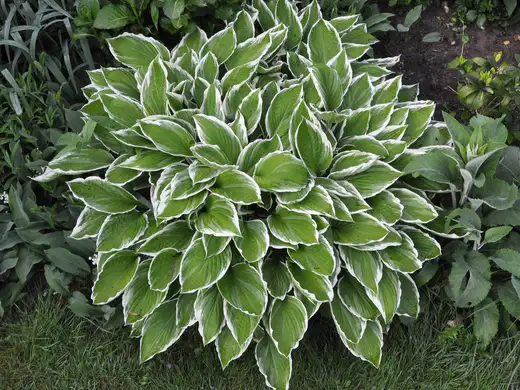
Leaf color tells you how much light a hosta wants. Blue-leaved types keep their waxy blue color only in moderate to deep shade, and in full sun the leaves fade and may scorch. Variegated and gold types, on the other hand, often need a bit more light to keep their white and gold markings bright. In the South, NC State advises full or dappled shade so the colors stay vivid and the leaves do not burn.
Soil and spacing
Plant hostas in well-drained soil with plenty of organic matter. NC State says they are intolerant of soggy soil, especially in winter, and SDSU links crown rot to too much water. Slightly acid to neutral soil suits them, and the UF/IFAS Leon County Master Gardeners note they will also grow in alkaline soil if it is rich and moist.
Sizes range from miniatures a few inches across to giants about 4 feet tall with leaves around 20 inches long, so check the label for mature width. Clemson spaces plants 1 to 3 feet apart. Keep them away from the base of large trees where you can, since tree roots compete hard for water.
How to plant hostas
Hostas are sold as potted plants or as bare-root divisions. SDSU calls spring the best planting time, though they can go in through the growing season with care. See when to plant hostas for spring and fall timing.
Potted plants. Dig a hole about 12 inches deep and half again as wide as the pot. Loosen any circling roots, set the plant with the top of the root ball level with the soil, firm the soil and water well.
Bare-root divisions. Set the crown, where the roots meet the shoots, at the soil surface or slightly above it. Spread the roots, firm the soil and water. SDSU recommends getting bare-root divisions in during spring or early summer before the weather turns hot.
Water new plants thoroughly and often until they are established.
Water and fertilizer
Big, soft leaves need steady moisture. Clemson recommends an inch or more of water a week when rain falls short, and more in hot weather, in sun or near tree roots. SDSU prefers deep, less frequent watering to frequent light sprinkles. Hostas that dry out too long brown along the leaf edges.
Feed once in early spring after growth starts, with a balanced slow-release fertilizer or a layer of compost. Avoid heavy rates. If you use granules, keep them out of the leaf cups, where they can burn the leaves.
Dividing hostas
Hostas rarely need division and often do best left alone for years. Divide when you want more plants or a clump develops a dead center. Iowa State’s preferred time is spring, as the bullet-shaped shoots are just emerging:
- Dig the whole clump, or slice a section off one side with a sharp spade.
- Cut it into pieces, each with at least two or three shoots and a good share of roots.
- Replant right away at the same depth and water well.
Divisions made in late summer should get several inches of straw or pine needles in late fall to keep freeze-thaw cycles from heaving them out of the ground.
Common problems
- Slugs and snails: the most common pest, chewing ragged holes in the leaves. Use beer traps, a ring of sand or diatomaceous earth, or labeled baits used with care around pets. Fall cleanup also helps.
- Deer, rabbits and voles: deer and rabbits eat the leaves, and voles eat the roots. Repellents or tall fencing help with deer.
- Foliar nematodes: yellow to brown patches between the leaf veins. Clemson suggests buying plants in late summer or fall, when symptoms show, and skipping any with that pattern.
- Hosta virus X and other viruses: mottling, ring spots or puckered, distorted leaves. There is no cure, so dig and destroy infected plants. Viruses spread through sap on tools, so clean them between plants.
- Anthracnose, leaf spot and crown rot: remove spotted leaves, and avoid wet, poorly drained sites.
- Sun scorch: browned leaves after trees come down or during drought. Water well and restore some shade.
Hostas in the South and warm-winter areas
Hostas are rated to about zone 9 and need a winter dormancy, so they fade out where winters are too mild. Clemson recommends the plantain lily, Hosta plantaginea, for the South: it is the most heat- and sun-tolerant species, does not need a long dormancy, grows well on the South Carolina coast and has fragrant white flowers in late summer. Clemson also lists ‘Royal Standard’, ‘Honeybells’, ‘Francee’ and ‘Sum and Substance’ among cultivars suited to South Carolina.
In Florida, hostas are mainly a North Florida plant. For warmer parts of the state, UF/IFAS Charlotte County points to SunHosta, a low-chill cultivar rated for zones 4 to 10, and suggests morning sun with afternoon or dappled shade. On sandy soils, the UF/IFAS Leon County Master Gardeners find hostas do better in pots of rich mix, which also keeps armadillos from digging them up.
Questions
How much sun can hostas take?
SDSU Extension says hostas tolerate about four hours of sun a day or less, and Clemson says even sun-tolerant cultivars do best with afternoon shade. Blue-leaved types need the most shade to keep their color.
When is the best time to divide hostas?
Early spring, as the pointed shoots are just coming up and before the leaves unfurl. Iowa State says you can divide any time from spring to late summer, and Clemson also lists early fall.
How do I keep slugs off my hostas?
Clemson's most popular remedy is a shallow saucer of beer, which traps and drowns them. SDSU adds a ring of sand or diatomaceous earth around the plant, or labeled baits. Thick-leaved cultivars such as 'Sum and Substance' resist slug damage.
Can hostas grow in Florida?
Standard hostas are mostly a North Florida plant. UF/IFAS suggests the low-chill SunHosta for warmer parts of the state, and on sandy soils the Leon County Master Gardeners grow hostas in pots.
Are hostas poisonous to pets?
Yes. NC State lists all parts of the plant as toxic to cats, dogs and horses.
Sources
- Hosta (HGIC factsheet) · Clemson Cooperative Extension Home & Garden Information Center
- Hosta: A Shade-loving Perennial · South Dakota State University Extension
- When is the best time to divide hostas? · Iowa State University Extension and Outreach
- How to Divide and Transplant Perennials · Iowa State University Extension and Outreach
- Dividing Perennials in the Fall · South Dakota State University Extension
- Planting Perennials This Fall · University of Vermont Extension
- Hosta (Extension Gardener Plant Toolbox) · North Carolina State University Extension
- Craving Hosta Plants in Florida? Never Say Never · UF/IFAS Extension Charlotte County
- Hosta · UF/IFAS Extension Leon County
- Establishing perennials in the early fall · University of Illinois Extension