How to Grow Green Beans
Green beans are one of the easiest vegetables to grow from seed: sow them directly in the garden once frost danger has passed and the soil is above 60°F, and most bush varieties are ready in 50-60 days. The two things that trip gardeners up are planting into cold soil, where seed rots, and letting plants go dry or overheat at flowering, which makes them drop blossoms.
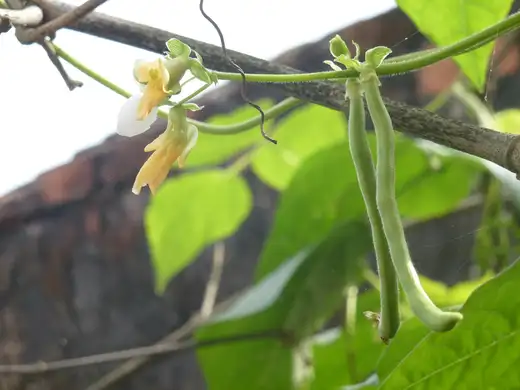

Your dates for green beans
Set your ZIP code at the top of the page and we will work out when to plant green beans where you live, from the frost records of the nearest NOAA weather station. Your ZIP code is remembered on this device only.
Green Beans at a glance
- Botanical name
- Phaseolus vulgaris
- Light
- full sun (6+ hours, 8-10 preferred)
- Frost tolerance
- Tender: killed by frost
- Soil temperature to plant
- At least 60°F (best 75–85°F)
- Germination
- 6–10 days
- Days to harvest
- 50–70 days from seed
- Planting depth
- 1 inch
- Spacing
- 2–6 inches apart, rows 18–36 inches apart
- Succession sowing
- Every 2 weeks
- Containers
- Yes, at least 2 gallons
When to plant green beans
| Zone | Sow outdoors | Fall planting |
|---|---|---|
| Zone 2a | Jun 17 to Jul 1 | — |
| Zone 3a | Jun 11 to 25 | — |
| Zone 3b | Jun 8 to 22 | — |
| Zone 4a | Jun 2 to 16 | — |
| Zone 4b | May 28 to Jun 11 | — |
| Zone 5a | May 23 to Jun 6 | — |
| Zone 5b | May 23 to Jun 6 | — |
| Zone 6a | May 19 to Jun 2 | — |
| Zone 6b | May 12 to 26 | — |
| Zone 7a | May 5 to 19 | — |
| Zone 7b | Apr 26 to May 10 | Aug 9 to 16 |
| Zone 8a | Apr 12 to 26 | Aug 15 to 22 |
| Zone 8b | Mar 31 to Apr 14 | Aug 21 to 28 |
| Zone 9a | Mar 14 to 28 | Sep 3 to 10 |
| Zone 9b | Mar 8 to 22 | Sep 16 to 23 |
Bush, pole or half-runner
Green beans, also called snap beans, are the immature pods of the common bean. Many are actually yellow (wax beans) or purple; University of Maryland Extension points out that “green beans” refers to the unripe pod, not the color.
Bush beans are compact, need no support and are ready in about 50-60 days. They bear for about 2-3 weeks, which allows two to four pickings. Pole beans climb, take about 50-70 days (UF/IFAS) and keep bearing for 5-6 weeks or longer if picked. Utah State estimates 10-12 pounds per 10 feet of row for pole beans against 7-10 pounds for bush beans. Half-runners sit in between, with runners about 3 feet long, and Maryland notes they are usually grown like bush beans, though a trellis can raise their yield.
For varieties, Utah State lists Blue Lake, Greencrop, Gold Crop, Kinghorn Wax, Royal Burgundy, Slenderette, Strike and Tendercrop as bush beans for Utah, and Blue Lake types, Kentucky Wonder and Romano as pole beans. UF/IFAS recommends Bush Blue Lake, Contender, Roma II, Provider and Cherokee Wax (bush) and McCaslan, Kentucky Wonder, Blue Lake and Rattlesnake (pole) for Florida, and advises rust-resistant varieties. In Hawaii, the University of Hawaii bred the pole beans ‘Hawaiian Wonder’ for rust resistance and ‘Manoa Wonder’ and ‘Poamoho’ for root-knot nematode resistance.
Wait for warm soil
Beans are frost-tender, and their seed rots in cold, wet ground. Utah State says germination drops sharply below 60°F soil. The difference is easy to see in UC Cooperative Extension’s germination table: snap beans take about 16 days to emerge at 59°F, 11 days at 68°F and 6-8 days at 77-86°F. A soil thermometer at planting depth settles the question better than the calendar.
Sources differ on how early to push it. Maryland says to wait until frost danger has passed. Utah State allows sowing from about a week before the frost-free date, or 2-3 weeks before it under plastic mulch or fabric row covers. The dates for your zone above show the usual window, and the companion page on when to plant green beans covers succession and fall sowings in detail.
In the hot South and the low desert, beans have two seasons rather than one: late winter to spring and late summer to early fall, skipping midsummer. Frost-free South Florida can sow from September right through April.
Planting
Choose full sun and well-drained soil with plenty of organic matter. UH CTAHR gives pH 6.0-6.8 as the best range. A soil test tells you whether lime or fertilizer is needed.
Recommended depths vary: Maryland ¼-½ inch, Utah State 1 inch, and UF/IFAS and UH CTAHR 1-1½ inches. In heavy clay, pay attention to depth: Utah State notes that a soil crust can keep seedlings from breaking through.
Spacing depends on type. Sow bush beans 2-4 inches apart in rows 18-30 inches apart. Sow pole beans 4-12 inches apart along a trellis, with 24-40 inches between rows. Maryland notes that coating seed with a bean inoculant (nitrogen-fixing bacteria) may raise yields on ground where beans have not grown before, and suggests covering new sowings with row covers if birds pull up the seedlings.
Pole beans need a sturdy support 6-8 feet tall that can stand up to summer storms. Maryland notes that they climb vertical supports but will not weave themselves through horizontal wires, so use poles, tripods, netting or strings. UH CTAHR says most pole varieties start vining 2-3 weeks after emerging, so have the trellis in place by then. UF/IFAS also notes that pole beans can be grown with sweet corn, using the stalks as support.
Water and feeding
Keep the soil evenly moist, especially once flowering starts. Utah State says water needs peak during flowering and pod sizing, and drought then causes dropped flowers, smaller pods and stringy beans. Heat above about 95°F with dry soil does the same. Do not overwater, though: Utah State warns that wet soil promotes root rot and slows growth. A mulch of straw or grass clippings holds moisture and suppresses weeds. Hoe shallowly to protect the roots.
Beans have low fertilizer needs. Utah State says nothing extra is needed if fertilizer and compost were worked in at planting, and Maryland says side-dressing is usually unnecessary. UF/IFAS recommends half the usual vegetable rate. UH CTAHR, writing for Hawaii’s often phosphorus-poor soils, does suggest a second feeding when plants begin to flower. Wherever you are, too much nitrogen delays flowering and gives leafy plants with fewer pods.
Common problems
- Mexican bean beetle: copper beetles with black spots that look like large lady beetles. Look for yellow egg clusters under the leaves and act while plants are small; Utah State notes larger flowering plants tolerate feeding with little loss.
- Bean rust: a fungal disease best prevented by growing rust-resistant varieties (UF/IFAS, UH CTAHR).
- Bacterial blight: water-soaked spots that spread on leaves, stems and pods in damp weather. Water the soil, not the foliage, and let it dry between waterings.
- Root rot and damping off: seedlings darken, wilt and die after planting in cold, wet soil. Wait for 60°F soil.
- Root-knot nematodes: common in warm, sandy soils. Rotate crops and use resistant pole varieties where available.
Utah State notes that moving beans to a new spot each year controls most diseases.
Harvest
Pods are ready about 7-14 days after flowering. Pick when they are full size, firm and crisp, and snap cleanly when bent. Maryland says the seeds inside should be about a quarter of full size and should not make the pod bulge. Pick every few days; regular picking keeps plants flowering.
Use beans soon after picking, or store them in a perforated plastic bag in the refrigerator for up to a week. They freeze well. Maryland suggests trimming, blanching for one minute in boiling water, cooling in ice water and draining well before freezing.
Questions
Should I grow bush beans or pole beans?
Bush beans need no support and crop sooner, but bear for only about 2-3 weeks. Pole beans need a 6- to 8-foot trellis and take a little longer, but bear for 5-6 weeks or more and yield more per foot of row.
Do green beans need fertilizer?
Very little. Beans fix nitrogen with the help of root bacteria, and extra nitrogen gives leafy plants with fewer pods. UF/IFAS suggests half the rate used for other vegetables.
Why are my bean flowers falling off?
Usually heat or dry soil. Utah State says temperatures above about 95°F combined with dry conditions make plants shed their flowers. Keep the soil evenly moist and mulched while the plants bloom.
How often should I pick green beans?
Every few days once pods reach size. Pick while the seeds are still small and the pods snap cleanly, and the plants keep flowering longer.
Why are my beans stringy?
Heat or water stress while the pods are forming toughens the fibers. Some heirloom varieties are also naturally stringy, which is where the name "string bean" comes from.
Sources
- How to Grow Beans in Your Garden · Utah State University Extension
- Growing Beans in a Home Garden · University of Maryland Extension
- Florida Vegetable Gardening Guide (SP103/VH021) · University of Florida IFAS Extension
- Vegetable Planting Calendar for Maricopa County (AZ1005) · University of Arizona Cooperative Extension
- Home Garden Beans (HGV-8) · University of Hawaii CTAHR
- GN 154: Soil Temperature Conditions for Vegetable Seed Germination (Harrington emergence table) · UC Cooperative Extension, Sacramento County (UC ANR)
- The Fall Vegetable Garden (HO-66-W) · Purdue University Extension
- Fall Vegetable Gardening (SPES-801) · Virginia Cooperative Extension
- Vegetable Gardening in Containers · Texas A&M AgriLife Extension
- Growing Vegetables in Containers · University of Wisconsin-Madison Extension