How to Care for a Fiddle-Leaf Fig
A fiddle-leaf fig wants bright, indirect light, a spot away from heating and cooling vents, and soil that stays evenly moist but never soggy. Check the soil before every watering: both too much and too little water make it drop leaves, and it is especially sensitive to overwatering.

Fiddle-Leaf Figs at a glance
- Botanical name
- Ficus lyrata
- Light
- bright indirect light or partial shade indoors; shield from afternoon sun; outdoors full sun to partial shade
- Hardiness zones
- 10-11
- Containers
- Yes
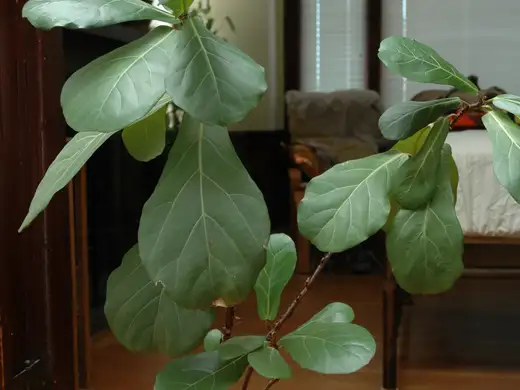
Fiddle-leaf fig (Ficus lyrata) is a tropical tree from West and Central Africa, named for its leathery, lyre-shaped leaves, usually 8 to 15 inches long and occasionally 18. In the wild it reaches 60 to 100 feet; indoors, NC State says it grows 2 to 10 feet tall. It has a reputation as a fussy plant, but most of its problems come down to three things: water, light and temperature swings.
Light
Give it bright, indirect light or partial shade, with protection from afternoon sun. NC State notes that too much direct sun scorches the leaves. It is a large, coarse plant that suits a big room.
Turn the pot a quarter turn each time you water so all sides get light and the plant grows evenly instead of leaning toward the window; University of Illinois Extension recommends this for houseplants generally.
Watering
This is where most fiddle-leaf figs go wrong. NC State describes it as sensitive to overwatering, yet both too much and too little water cause leaf drop. The goal is soil that stays moist but well drained, never waterlogged and never bone dry.
- Check before you water. A Penn State Master Gardener checks by pushing a finger about 2 inches into the mix, or with a moisture meter. If it is still damp at that depth, wait.
- Water thoroughly. When it is time, water until it drains out of the bottom, then let the pot drain. University of Illinois Extension notes that this also flushes out fertilizer salts.
- Empty the saucer. Standing water keeps the root ball soggy and leads to root rot.
- Don’t let it dry out completely. The same Penn State column warns that soil dry enough to pull away from the pot lets water run down the sides without wetting the root ball.
Plants in brighter light, and plants outdoors in summer, dry out faster and need water more often.
Pot and Mix
NC State says it prefers moist, well-drained, loamy and somewhat acidic soil. Use a good-quality, fast-draining potting mix in a pot with several drainage holes. If you slip it into a decorative pot without holes, raise the inner pot so it never sits in drained water.
Temperature and Humidity
NC State says the plant performs best above 55°F and in medium humidity. Most homes are warm enough; the bigger danger is fluctuation. Keep the plant away from heating and cooling vents and drafty doors, because NC State links swings in room temperature to brown spots on the leaves.
Feeding
No extension source gives a feeding schedule specific to fiddle-leaf fig. General houseplant guidance from University of Illinois Extension is to use a water-soluble fertilizer according to the label from about March through September, when plants are actively growing, and not in winter. Fertilizer will not fix poor light or bad watering and can make those problems worse.
Repotting
No extension source sets a repotting interval for fiddle-leaf fig. Use the general signs: roots growing out of the drainage holes or circling the root ball, roots filling the pot, or a plant that wilts between normal waterings. University of Illinois Extension recommends repotting houseplants in spring or early summer, while they are actively growing.
When you move it to a larger pot, cut or untangle roots that circle the root ball. UF/IFAS gives the same advice for planting it out, because circling roots make the tree unstable as it grows.
Pruning and Cleaning
NC State says it can be pruned as needed, to control height or shape. Wear gloves when you prune or take cuttings, because the milky sap can irritate skin. The big leaves collect dust, so wipe both sides with a damp cloth every few months.
Propagation
Fiddle-leaf fig is propagated by stem cuttings or by layering. Iowa State recommends air layering for houseplants with lanky stems that don’t bend, which describes an overgrown fig well. Its method for fiddle-leaf fig and rubber tree: choose a point 12 to 18 inches below a shoot tip, remove a 1-inch ring of bark, dust it with rooting hormone, wrap it in moist sphagnum moss and seal it in clear plastic. Roots usually show in several weeks, sometimes several months. Cut below the new roots and pot it up. The parent plant usually branches below the cut. Iowa State calls early spring the ideal time to do this.
Pests and Problems
- Leaves dropping – too much or too little water. Check soil moisture before watering and adjust.
- Brown spots – fluctuating temperatures from nearby heating or cooling vents. Move the plant.
- Scorched, bleached patches – too much direct sun. Move it to bright, indirect light.
- Brown spots on a plant whose soil stays wet – possible root rot from overwatering or poor drainage. Check the roots and repot into fresh mix if they are soft and dark.
- Sticky leaves, bumps on stems, webbing or speckling – scale, aphids, mealybugs, thrips or spider mites, the pests NC State says to monitor for indoors. Check stems and leaf undersides regularly.
Toxicity
NC State lists fiddle-leaf fig as toxic to people, cats and dogs if eaten. It contains calcium oxalates that cause mouth irritation, drooling and vomiting, and the sap can irritate skin. The ASPCA has no separate entry for Ficus lyrata, but its entry for figs (Ficus species) lists them as toxic to dogs, cats and horses.
Summer Outdoors and Warm-Winter Areas
NC State says a potted fiddle-leaf fig can spend summer on a sheltered deck or patio and come back indoors as temperatures fall in autumn. Start it in shade and move it gradually into filtered light, keeping it out of direct sun so the leaves do not burn. Iowa State advises bringing houseplants back in when nights begin to dip to around 50°F; with NC State’s 55°F minimum, it is safer to move it in sooner. Check it closely for insects first. Iowa State notes that some houseplants, weeping fig among them, drop leaves after the move to dimmer indoor light; new leaves replace them.
In zones 10b to 11 (UF/IFAS; NC State lists 10 to 12), it can be planted out as a specimen or shade tree, usually 15 to 25 feet tall in landscapes. It grows in full sun or partial shade on most well-drained soils, needs regular water, and has moderate tolerance of salt spray. Large trees can split in strong winds, so UF/IFAS recommends early structural pruning and a sheltered spot such as a courtyard. UF/IFAS does not consider it an invasive problem in Florida.
Questions
Why is my fiddle-leaf fig dropping leaves?
NC State lists too much or too little water as the cause of leaf drop, so check the soil before watering. Plants moved from a bright patio back indoors may also shed some leaves as they adjust.
What causes brown spots on fiddle-leaf fig leaves?
NC State links brown spots to fluctuating room temperatures near heating or cooling vents. Dark spots on a plant in wet soil can also point to root rot, so check the roots.
How much light does a fiddle-leaf fig need?
Bright, indirect light or partial shade, with protection from hot afternoon sun, which scorches the leaves.
Is fiddle-leaf fig toxic to pets?
Yes. NC State lists it as toxic to people, cats and dogs if eaten, causing mouth irritation, drooling and vomiting, and its milky sap can irritate skin.
Sources
- How to Propagate by Air Layering and Simple Layering · Iowa State University Extension and Outreach
- How and when do I bring my houseplants back indoors before winter? · Iowa State University Extension and Outreach
- Repotting houseplants · University of Illinois Extension
- Ficus lyrata (Fiddle-leaf Fig, Banjo Fig) · North Carolina State Extension Gardener Plant Toolbox
- Ficus lyrata: Fiddleleaf Fig (ENH413/ST254) · University of Florida IFAS Extension (EDIS)
- Fiddle Leaf Fig (Ficus lyrata) · Penn State Extension, Adams County Master Gardeners
- Ficus lyrata - Assessment of Non-Native Plants in Florida's Natural Areas · University of Florida IFAS
- Garden Tips: Houseplants (Knox County Master Gardeners) · University of Illinois Extension
- Toxic and Non-toxic Plants: Weeping Fig (Ficus sp.) · ASPCA Animal Poison Control