How to Care for Dieffenbachia (Dumb Cane)
Dieffenbachia grows best in bright, filtered light at 60 to 75°F. Water it thoroughly, then let the top inch of soil dry before watering again. Overwatering rots the roots and cane bases faster than any other mistake. When a cane gets tall and bare, cut it back to about 6 inches and it will resprout. Wear gloves when you do, because the sap is toxic and irritating to people and pets.
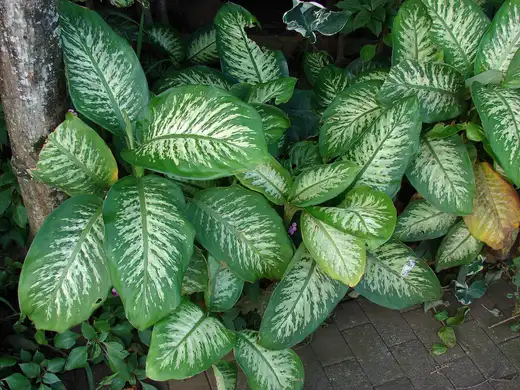

Dieffenbachias at a glance
- Botanical name
- Dieffenbachia seguine
- Light
- bright, filtered or indirect light; tolerates low light but grows slowly there
- Hardiness zones
- 10-11
- Containers
- Yes
When to repot and propagate dieffenbachias
Light
Dieffenbachia does best in bright, filtered light from spring through fall. In winter, when the sun is weaker, Clemson Extension says bright light and even some direct sun are fine. It tolerates low light, but there it grows slowly and gets leggy. If new growth has stalled, more light is the first fix to try. The plant leans toward its light source, so UF/IFAS suggests a quarter turn every few days to keep it growing evenly.
Watering
Overwatering kills more dieffenbachias than anything else. Illinois Extension notes that it is often overwatered, and that the roots and the base of the canes then rot quickly.
Water thoroughly, until water runs out of the drainage holes. Then wait until the top inch of soil is dry to the touch before watering again. Push a finger into the soil rather than going by the calendar. A plant in a bright, warm room in summer dries out much faster than the same plant in winter. Empty the saucer after watering, because a pot left standing in water keeps the roots wet.
Underwatering shows up as drooping leaves, which perk up after a good soak. UF/IFAS links brown leaf tips to uneven watering. A regular wet-then-dry rhythm prevents them.
Potting mix and pot
Any good, well-drained potting mix works. NC State prefers a loose, fertile mix high in organic matter. The pot must have a drainage hole. A heavy, slow-draining mix in a pot without drainage is the classic recipe for cane rot.
Temperature and humidity
Clemson and UF/IFAS both put the ideal range at 60 to 75°F. Keep the plant away from cold drafts, exterior doors and winter windows. UF/IFAS says leaves that droop and fall without yellowing first mean the plant is too cold, and it should stay where temperatures don’t drop below 55°F. Clemson also warns against sudden large temperature changes.
Sources differ on humidity. NC State and UF/IFAS say it prefers relatively high humidity, while Illinois Extension lists low humidity as acceptable. Average indoor humidity is fine, but a pebble tray in a dry winter house won’t hurt.
Feeding
Clemson recommends feeding from March through September with a foliage houseplant fertilizer. Use a liquid at half strength every 2 to 4 weeks, or a time-release product at the label rate. Stop feeding over winter. Too much fertilizer burns the leaf margins.
Repotting
Repot only when the plant needs it, and do it in early spring. That is also the time to cut back tall, bare canes, so the two jobs can be done together.
Pruning and propagation
As dieffenbachia ages, it sheds lower leaves and becomes a tall, bare cane with a tuft of leaves on top. Removing yellowing lower leaves is normal upkeep. To rejuvenate a leggy plant, Clemson says to cut the stems back to about 6 inches. New growth sprouts below the cut.
The pieces you remove can all become new plants. Spring or early summer is the best time.
- Tip cuttings: root the leafy top in sand or water (Illinois Extension).
- Cane cuttings: cut the bare cane into 2- to 3-inch sections, each with at least two nodes. Stand them upright, or lay them on their sides half-buried, in moist rooting mix. Roots grow from the buried nodes and shoots from the exposed ones.
- Air layering: for a very tall plant, Illinois Extension describes making an upward slanting cut one-third to halfway through the stem, propping it open, dusting it with rooting hormone, and wrapping it in a fist-sized ball of moist sphagnum covered in clear plastic. Roots show through the plastic after 3 to 4 months. Then cut below them and pot the top.
NC State also lists division and root cuttings.
Pests and problems
- Mushy cane base, wilting despite wet soil: root and cane rot from overwatering or slow-draining mix. Let the top inch dry between waterings. Cut off and root a healthy top if the base is lost.
- Leaves drop without yellowing: too cold. Move it to a spot that stays above 55°F.
- Brown, curled leaf edges: too much fertilizer. Flush the soil with clean water and feed at the label rate or less.
- Brown leaf tips: uneven watering. Water on a steadier schedule.
- Cottony masses on stems and leaf undersides: mealybugs. Treat with a labeled product.
- Pale, stippled leaves with fine webbing: spider mites. Isolate the plant and hose it off outdoors. Use a labeled miticide if the mites return.
- Also watch for: aphids, scale, whiteflies and fungus gnats, plus leaf spot diseases (NC State).
Toxicity: handle with care
Dieffenbachia is one of the more dangerous common houseplants. Its tissues contain needle-like calcium oxalate crystals. The ASPCA lists it as toxic to dogs and cats, with intense burning and irritation of the mouth, drooling, vomiting and difficulty swallowing. NC State rates its poison severity as high. It warns that sap in the eyes can damage the cornea, that the sap can cause skin irritation, and that the plant may be fatal to pets and livestock. The common name refers to the way chewing it numbs and swells the mouth and throat and can make speaking hard. Clemson warns that throat swelling can threaten breathing and needs immediate medical care.
Wear gloves when pruning or taking cuttings, keep the sap away from your eyes and any cuts, and wash your hands afterward. Place the plant where toddlers and pets can’t chew it.
Outdoors
Don’t plant dieffenbachia in the ground in Florida or other frost-free areas. UF/IFAS has predicted it will become invasive in Florida and no longer recommends it, even though UF/IFAS bred cultivars such as ‘Tropic Honey’ and ‘Starry Nights’. Keep it as a container plant.
Questions
How often should I water a dieffenbachia?
Water when the top inch of soil is dry to the touch. Soak the pot until water drains out, and never leave the pot standing in water. It will need water more often in a warm, bright room in summer than in winter.
Why are the bottom leaves of my dieffenbachia turning yellow?
Losing a few of the lowest leaves is normal as the plant grows, so just remove them. If many leaves yellow at once and the soil stays wet, suspect overwatering and root rot.
Is dieffenbachia poisonous to cats, dogs and children?
Yes. Chewing it causes intense burning of the mouth, drooling, vomiting and trouble swallowing in pets, according to the ASPCA. Clemson Extension warns that throat swelling in people needs immediate medical care. Keep it out of reach and wash your hands after handling it.
Can I cut the top off a leggy dieffenbachia?
Yes. Cut the cane back to about 6 inches and new growth will sprout below the cut. Root the top in water or sand, and cut the bare cane into short pieces to start more plants.
Why are the leaf edges brown and curled?
Too much fertilizer is the usual cause. Flush the pot with plenty of clean water to wash out the excess salts, then feed less, at the label rate or below.
Sources
- Cuttings · University of Illinois Extension
- Air Layering · University of Illinois Extension
- Dieffenbachia seguine (Dumbcane) · NC State Extension Gardener Plant Toolbox
- Dieffenbachia (HGIC 1503) · Clemson Cooperative Extension Home & Garden Information Center
- Dieffenbachia · University of Florida IFAS Gardening Solutions
- Dieffenbachia · University of Illinois Extension
- Toxic and Non-toxic Plants: Dumbcane · ASPCA Animal Poison Control