How to Grow Dahlias
Plant dahlia tubers around your last frost date once the soil has warmed, laid flat with the eye up about 4 to 6 inches deep, in full sun and rich, well-drained soil. Set a stake at planting time and don't water until shoots appear. Dahlias bloom from midsummer until frost; in most of the country you dig and store the tubers each fall.

Your dates for dahlias
Set your ZIP code at the top of the page and we will work out when to plant dahlias where you live, from the frost records of the nearest NOAA weather station. Your ZIP code is remembered on this device only.
Dahlias at a glance
- Botanical name
- Dahlia spp. (garden hybrids)
- Light
- full sun (6-8 hours); light afternoon shade helps in hot climates
- Frost tolerance
- Tender: killed by frost
- Hardiness zones
- 7-10
- Planting depth
- 4 inches
- Spacing
- 12–48 inches apart, rows 24–36 inches apart
- Containers
- Yes
When to plant dahlias
| Zone | Sow outdoors |
|---|---|
| Zone 2a | May 5 to 26 |
| Zone 3a | May 12 to Jun 2 |
| Zone 3b | May 3 to 24 |
| Zone 4a | Apr 29 to May 20 |
| Zone 4b | Apr 24 to May 15 |
| Zone 5a | Apr 19 to May 10 |
| Zone 5b | Apr 17 to May 8 |
| Zone 6a | Apr 15 to May 6 |
| Zone 6b | Apr 9 to 30 |
| Zone 7a | Apr 2 to 23 |
| Zone 7b | Mar 22 to Apr 12 |
| Zone 8a | Mar 15 to Apr 5 |
| Zone 8b | Mar 3 to 24 |
| Zone 9a | Feb 16 to Mar 9 |
| Zone 9b | Jan 17 to Feb 7 |
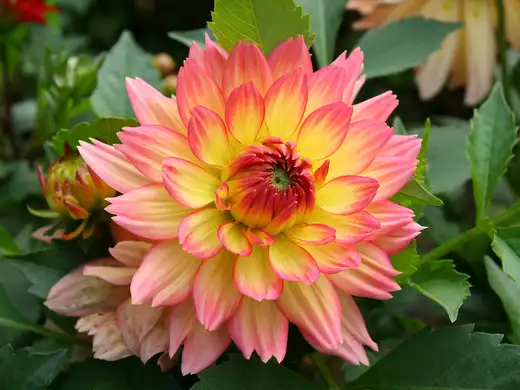
Dahlias give more flower for the space than almost anything else in a summer garden, with blooms from about 1 inch to 15 inches across on plants 1 to 7 feet tall. In return they ask for more work than most bulbs: good soil, staking, regular water and, in most of the country, digging and storing the tubers each fall.
Where dahlias grow best
Climate matters. UGA Extension finds they grow to perfection in the cool, moist summers of the north Georgia mountains and do well in the Piedmont, but struggle in the hot Coastal Plain. UF/IFAS says they don’t tolerate high summer heat, so they may not suit the southernmost areas. Florida gardeners plant them in fall for winter and spring flowers instead (see when to plant dahlias).
Pick a spot with at least six to eight hours of sun. In hot climates, light afternoon shade helps. The soil must drain; dahlias won’t grow where water stands. UGA digs a hole about 24 inches wide and 18 inches deep and mixes one-third organic matter such as well-rotted manure, peat moss or pine bark into the soil it removed.
How to plant dahlia tubers
Plant once the soil has warmed, around your last frost date; the dates for your zone above show the window. Tubers rot in cold, wet ground, so it’s better to plant when the soil is slightly dry than wet.
- Check the eye. Each tuber must have at least one eye, a growth bud at the crown end where it joined last year’s stem. A tuber without an eye won’t grow.
- Set the stake first. For tall varieties, drive a stake into the hole before planting so you don’t spear the tuber later. UGA uses stakes at least 6 feet long, driven a foot into the ground.
- Depth. Lay the tuber flat with the eye up, usually 4 to 6 inches deep (UGA; WSU digs 5 to 6). Illinois plants tall varieties 6 to 7 inches deep and short ones 2 to 3; UF/IFAS goes 6 to 10 inches for most.
- Spacing. Sources vary with plant size. UGA gives most varieties at least 3 to 4 feet. WSU plants 18 to 24 inches apart with 2 to 3 feet between rows. UF/IFAS spaces large varieties 2½ feet apart, pompons 2 feet and dwarfs 12 to 18 inches.
- Cover and wait. WSU generally holds off watering until shoots appear.
For earlier flowers, start tubers in pots indoors. Iowa State pots them in early April in 8-inch pots, half filled with potting mix, with 1 to 2 more inches of mix on top. Move them to a sunny window when growth appears, harden them off for several days, and plant out after frost danger.
Water and feeding
Once growing, dahlias need a lot of water. UGA gives each plant a deep soaking once a week; light sprinkles don’t reach the roots. Mulch with pine straw, shredded bark or grass clippings to hold moisture. Without mulch, water twice a week in dry spells. WSU waters more often in hot weather.
Go easy on nitrogen, which grows leaves at the expense of flowers. WSU uses a 10-20-20 fertilizer worked into the soil before planting. UGA feeds a balanced fertilizer such as 8-8-8 monthly, 1/8 to 1/4 cup per plant, rising to 1/2 cup for very large plants.
Pinching, disbudding and staking
- Pinch out the growing tip when the plant has three or four pairs of leaves, about a foot tall, so it branches.
- Disbud for big flowers. When buds at a stem tip are pea-size, keep the center bud and remove the two beside it. Skip this if you prefer more, smaller flowers.
- Deadhead spent flowers to keep new ones coming.
- Tie stems to the stake as the plant grows. UGA starts when plants are about a foot tall and adds ties about once a month.
UGA also lets only one shoot grow from each tuber; the extra shoots can be rooted as cuttings.
Cutting dahlias
Cut in the early morning or evening, never in afternoon heat. Cut only fully open flowers, since dahlias don’t open further in a vase. UGA puts them in warm water right away. Keep arrangements in a cool room and change the water daily or every other day.
Digging and storing tubers
Where the ground freezes, dig dahlias in fall:
- Wait until frost blackens the plants. Cut stems back to about 4 to 6 inches. WSU and Colorado State then wait a week or two so the tubers mature before digging.
- Dig carefully, starting at least a foot from the stem; Illinois notes the roots spread wide and shallow.
- Rinse off soil and let the clumps dry for a day or a few days in a shady, airy place.
- Store in vermiculite, peat, sand or sawdust at about 35 to 50°F. Check monthly. Mist shriveled tubers lightly and discard any that rot.
Divide clumps in spring when the eyes have swollen and are easy to see. UGA divides every year, because single-tuber plants are more vigorous than clumps.
Problems
- Slugs and snails. They can strip young plants overnight. Hand-pick at night or early morning, or trap them.
- Aphids. Curl leaves and spread dahlia mosaic virus. Knock them off with a strong spray of water.
- Earwigs and rabbits. Chew new shoots. Remove hiding places and fence young plants.
- Botrytis and powdery mildew. Worse in cloudy weather and late in the season. Remove infected parts.
- Stem and tuber rot. Caused by heavy, wet soil. Improve drainage and don’t crowd plants.
Questions
Should I water dahlia tubers after planting?
Generally not until shoots come up. The tuber holds what it needs to sprout, and tubers sitting in cold, wet soil rot. Once plants are growing, soak them deeply about once a week.
Why is my dahlia tuber not sprouting?
Either it rotted in cold, wet soil, or it has no eye. New growth comes only from buds at the crown where the tuber joined the old stem. A tuber broken off without part of the crown won't sprout.
Should I pinch dahlias?
Yes, for bushier plants with more flowers. Pinch out the growing tip when the plant has three or four pairs of leaves, or is about a foot tall.
Can I leave dahlias in the ground over winter?
In zones 9 and 10, yes. Elsewhere it's a gamble: UGA warns that a severe winter can kill them all in Georgia. WSU leaves some in the ground in western Washington where the soil drains well through winter, covered with straw or mulch.
When should I cut dahlias for a vase?
In the cool of the morning or evening, and only when the flower is fully open, because dahlias don't keep opening after they're cut. Change the vase water daily or every other day.
Sources
- When should I start dahlias indoors? · Iowa State University Extension and Outreach
- Bulbs: Summer Flowering (PlantTalk Colorado 1013) · Colorado State University Extension
- Dahlias (Circular 576) · University of Georgia Cooperative Extension
- Growing Dahlias · Washington State University Extension, Thurston County Master Gardener Program
- Plant of the Week: Dahlias · University of Illinois Extension
- Dahlia spp. Dahlia (FPS169) · UF/IFAS Extension
- Dahlias · UF/IFAS Gardening Solutions
- North Florida Gardening Calendar (ENH1190/EP451) · UF/IFAS Extension