How to Grow Cucumbers
Sow cucumber seeds 1 inch deep, straight into the garden, once the soil has warmed to at least 60°F, usually 1 to 3 weeks after your last frost. Give them full sun, 1 to 2 inches of water a week and a 6-foot trellis if you can, and you will pick your first fruit in 50 to 70 days. After that, harvest every 2 to 3 days, because every overgrown cucumber left on the vine slows the plant down.

Your dates for cucumbers
Set your ZIP code at the top of the page and we will work out when to plant cucumbers where you live, from the frost records of the nearest NOAA weather station. Your ZIP code is remembered on this device only.
Cucumbers at a glance
- Botanical name
- Cucumis sativus
- Light
- full sun
- Frost tolerance
- Tender: killed by frost
- Soil temperature to plant
- At least 60°F (best 65–90°F)
- Germination
- 5–10 days
- Days to harvest
- 50–70 days from seed
- Planting depth
- 1 inch
- Spacing
- 12–18 inches apart, rows 36–60 inches apart
- Containers
- Yes, at least 1 gallon
When to plant cucumbers
| Zone | Start indoors | Plant out | Sow outdoors | Fall planting |
|---|---|---|---|---|
| Zone 2a | May 20 to Jun 3 | Jun 17 to Jul 1 | Jun 17 to Jul 1 | — |
| Zone 3a | May 14 to 28 | Jun 11 to 25 | Jun 11 to 25 | — |
| Zone 3b | May 11 to 25 | Jun 8 to 22 | Jun 8 to 22 | — |
| Zone 4a | May 5 to 19 | Jun 2 to 16 | Jun 2 to 16 | — |
| Zone 4b | Apr 30 to May 14 | May 28 to Jun 11 | May 28 to Jun 11 | — |
| Zone 5a | Apr 25 to May 9 | May 23 to Jun 6 | May 23 to Jun 6 | — |
| Zone 5b | Apr 25 to May 9 | May 23 to Jun 6 | May 23 to Jun 6 | — |
| Zone 6a | Apr 21 to May 5 | May 19 to Jun 2 | May 19 to Jun 2 | — |
| Zone 6b | Apr 14 to 28 | May 12 to 26 | May 12 to 26 | — |
| Zone 7a | Apr 7 to 21 | May 5 to 19 | May 5 to 19 | — |
| Zone 7b | Mar 29 to Apr 12 | Apr 26 to May 10 | Apr 26 to May 10 | Aug 2 to 16 |
| Zone 8a | Mar 15 to 29 | Apr 12 to 26 | Apr 12 to 26 | Aug 8 to 22 |
| Zone 8b | Mar 3 to 17 | Mar 31 to Apr 14 | Mar 31 to Apr 14 | Aug 14 to 28 |
| Zone 9a | Feb 14 to 28 | Mar 14 to 28 | Mar 14 to 28 | Aug 27 to Sep 10 |
| Zone 9b | Feb 8 to 22 | Mar 8 to 22 | Mar 8 to 22 | Sep 9 to 23 |
When to plant cucumbersWhen to harvest cucumbers
Start with warm soil
Cucumbers are among the most cold-sensitive plants in the vegetable garden. Clemson notes that seeds will not sprout at all in soil below 50°F, and the plants grow best when temperatures run 75 to 85°F. Extension services set the planting threshold a little differently: Colorado State, NC State and Iowa State say 60°F, Utah State 65°F and Clemson 70°F. In practice, 60°F at seed depth is the minimum and 65 to 70°F gives fast, even emergence in 5 to 10 days. A cheap soil thermometer read in mid-morning settles the question better than the calendar.
That soil temperature usually arrives 1 to 3 weeks after the average last frost, which is why the dates for your zone above start after the frost date rather than on it. If a cold, wet spell follows a warm week, wait; Colorado State advises delaying planting further whenever the weather turns chilly.
Direct sow or transplant?
Direct seeding is the standard method because cucumber roots do not tolerate disturbance. Sow seeds 1 inch deep. Iowa State’s method is to plant 4 to 5 seeds per hill and thin to the best 2 or 3 when they have one or two true leaves; Utah State drops 4 to 6 seeds every 12 to 18 inches and thins to two. Snip the extras off at the soil line with scissors rather than pulling them, so you do not tear the roots of the seedlings you keep.
Transplants make sense in short-season areas such as the northern Plains, northern New England and high-elevation valleys of the Mountain West, or wherever you want a jump on the first picking. Utah State says transplants bear about two weeks before seeded plants. Start seeds in peat pots, peat pellets or other containers that go into the ground whole. Iowa State starts them only 2 to 3 weeks before planting out and sets them in the garden at the one- or two-true-leaf stage; Utah State allows 4 to 6 weeks and wants 2 to 3 mature leaves. Either way, do not let them get root-bound. Harden them off outdoors for a few days before planting.
Spacing, hills and trellises
How far apart to plant depends mostly on whether the vines climb or sprawl.
- On the ground: Iowa State spaces hills 3 to 5 feet apart in rows 4 to 5 feet apart; for single plants in a row, sow 6 inches apart and thin to 15 to 18 inches. Bush varieties need only about 3 feet each way.
- On a trellis: Clemson sows 4 to 5 seeds per foot in rows 3 feet apart and thins to 9 to 12 inches apart once seedlings are 4 to 5 inches tall.
A trellis is worth the effort. Clemson’s design is about 6 feet tall, with a wire at the top and bottom and plastic twine tied between them at each plant. Lifting the vines off the soil keeps fruit clean, lets leaves dry faster after rain or dew, saves space and makes it easy to spot fruit before it overgrows. Fruit hanging from a trellis also grows straighter; Utah State notes that long burpless types grow curved when they lie on the ground. Cucumbers climb with tendrils and will cling to a fence or netting on their own once you guide the first few runners.
Soil and fertilizer
Cucumbers want full sun and a loose, well-drained soil. Clemson recommends a pH of 6.0 to 6.5. A soil test is the only reliable way to know what to add, but without one, Iowa State suggests working 1 to 2 pounds of an all-purpose fertilizer such as 10-10-10 into each 100 square feet before planting. If you prefer compost, Utah State caps it at about 1 inch of finished compost per 100 square feet.
NC State calls cucumbers heavy feeders, and they need a second feeding when the vines start to run. Utah State side-dresses each plant with 3 to 4 tablespoons of 21-0-0 (ammonium sulfate), scattered around the plant and watered in, and stresses doing it before flowering. Clemson’s rate is 1 pound of 34-0-0 or 2 pounds of calcium nitrate per 100 feet of row, placed 4 to 6 inches from the plants.
Watering and mulch
Steady moisture is the single biggest factor in fruit quality. Drought-stressed plants make bitter fruit and fruit with pointed, shriveled or misshapen ends. Aim for 1 to 2 inches of water a week, more in hot weather once the vines cover the ground. Colorado State recommends a thorough soaking every 5 to 7 days over a light daily sprinkle, and Clemson wants the moisture to reach at least 6 inches deep. Drip irrigation or a soaker hose is ideal because it keeps the leaves dry; if you must water overhead, do it in the morning.
A good field test from Colorado State: some wilting in the heat of the afternoon is normal, but plants that are wilted in the morning are short of water.
Black plastic mulch laid before planting warms the soil, holds moisture and blocks weeds. Utah State says plastic plus row covers lets you plant 2 to 3 weeks before the last frost date. Hold off on organic mulches such as straw, grass clippings or pine straw until the soil reaches about 75°F; applied earlier, they keep the soil cold and slow the plants down. Once summer arrives, organic mulch keeps fruit clean and soil moisture even.
Flowers, bees and fruit set
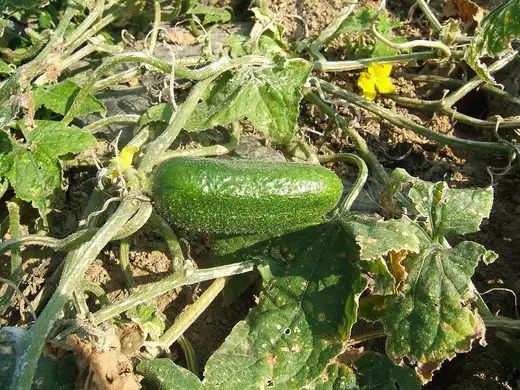
Cucumber plants carry separate male and female flowers. Female flowers are borne singly and have a small, swollen cucumber behind the petals; male flowers come in clusters on thin stems. The first 10 to 20 flowers are usually all male, so a burst of blossoms that drop without fruit is normal. Female flowers follow soon after, and fruit set picks up as their numbers increase.
Bees carry pollen from male to female flowers, and a poorly pollinated cucumber grows lopsided or tapered at the blossom end. Cool, rainy or windy weather keeps bees home, and insecticides sprayed during the day can kill them. If you must spray, choose a product with low bee toxicity and apply it early in the morning or in the evening. Clemson’s fix for poor set is to hand-pollinate in the morning by rubbing pollen from a male flower onto the center of a female flower.
Two plant types change this picture:
- Gynoecious hybrids produce mostly female flowers and often outyield standard varieties. Seed packets include a few seeds of a regular variety, sometimes dyed a different color, to supply pollen. Plant them all.
- Parthenocarpic varieties set seedless fruit without pollination, which makes them useful where bees are scarce. Iowa State advises keeping them away from other cucumbers so stray pollen does not make them seedy.
Choosing varieties for your region
Cucumbers come as slicers (long, dark green, eaten fresh), picklers (short and blocky) and burpless types with mild, thin skin. Extension services recommend these for their areas:
- Midwest (Iowa State): slicers ‘Marketmore 76’ and ‘Fanfare’ (semi-bush); picklers ‘Calypso’ and ‘Fancipak M’; burpless ‘Diva’, ‘Sweet Slice’ and ‘Tasty Green’; bush types ‘Salad Bush’, ‘Spacemaster’ and ‘Bush Pickle’. Iowa State describes the snacking cucumber ‘Katrina’ as very heat tolerant.
- Southeast (Clemson, NC State): Clemson lists slicers ‘Straight Eight’, ‘Sweet Success’, ‘Diva’, ‘Sweet Slice’ and ‘Poinsett 76’ and picklers including ‘Calypso’, ‘County Fair’ and ‘Sumter’. NC State names ‘Straight 8’, ‘Poinsett’, ‘Tasty Green’ and ‘Gemini’ for slicing and ‘Gershwin’, ‘Supremo’, ‘Citadel’ and ‘Calypso’ for pickles.
- Florida (UF/IFAS): slicers ‘Sweet Success’, ‘Poinsett’, ‘Ashley’, ‘Marketmore 76’, ‘Straight Eight’ and ‘Spacemaster’; picklers ‘Eureka’, ‘Boston Pickling’ and ‘Suyo Long’.
- Intermountain West (Utah State): ‘Marketmore’, ‘Spacemaster’, ‘Sweet Success’, ‘SMR58’, ‘Armenian’ and ‘Boston Pickling’. Armenian cucumber also appears on the University of Arizona’s low-desert planting calendar.
If bitter fruit has been a problem, Iowa State reports that ‘Sweet Slice’, ‘Sweet Success’ and ‘Marketmore 76’ rarely turn bitter, and Clemson suggests ‘Diva’.
Regional timing and growing conditions
Cold North and high elevations. The season is short, so timing matters more than anywhere else. Use transplants or black plastic with row covers, pick fast-maturing varieties, and plan a midsummer sowing for a late crop. Colorado State notes that above 5,000 feet, cucumbers and summer squash are the most satisfactory vine crops because they mature quickly.
Humid South and Gulf Coast. Heat is not the problem; disease is. Clemson reports that cucumber diseases such as downy mildew, anthracnose and gummy stem blight are most troublesome from midsummer into fall in South Carolina. Plant spring crops as early as soil temperature allows so they finish before disease pressure peaks, trellis for airflow, and water at the base. A fall crop sown in August is common: Clemson’s fall window runs August 1 to September 30 in the Piedmont and through August on the coast.
Arid West and desert Southwest. In the Phoenix area, the University of Arizona schedules cucumbers in two windows, mid-February to mid-April and mid-August to mid-September, skipping the summer heat when fruit set suffers. Days to harvest stretch to 60 to 90 in the desert. Plants dry out fast in desert heat and wind, so drip irrigation under mulch is the most efficient way to keep moisture steady.
Warm-winter zones 9 to 11. Where frost is rare, cucumbers are a cool-season crop. UF/IFAS lists March to April and August to September in North Florida, and September through February in South Florida. Avoid fruit-setting during the hottest months.
Pests and diseases
Cucumber beetles are the most serious threat. The striped beetle is about 1/4 inch long, yellow with three black stripes; the spotted beetle is yellow-green with 12 black spots. Their chewing does some harm, but the real damage is bacterial wilt, which the beetles carry and spread as they feed. Infected plants first show single wilting leaves, then whole runners, then collapse. The University of Kentucky’s test: cut a wilted stem, press the cut ends together and slowly pull them apart. Sticky strands of sap point to bacterial wilt. There is no cure, so pull and bag infected plants; beetles are drawn to dying vines and carry the bacteria onward. The University of Vermont notes that cucumbers and muskmelons are highly susceptible, while squash and pumpkins tolerate the disease much better, and that young plants before the five-leaf stage suffer most.
Prevention is about the first few weeks. Cover seedlings or transplants with floating row cover as soon as they go in, seal the edges with soil, and remove it when flowers appear so bees can reach them. Iowa State observes that plantings made after mid-June in Iowa get less beetle damage because the spring adult population has passed.
Powdery mildew shows up as white patches on older leaves; Clemson notes it can appear whenever humidity is high and temperatures are cool. Grow resistant varieties, remove the first affected leaves, and avoid overhead and evening watering.
Angular leaf spot, a bacterial disease, makes angular dead patches on leaves and spots on fruit. Colorado State’s approach is to push new growth with nitrogen and water, remove crowding foliage, and spray a copper product; a vine that keeps about six healthy leaves at its tip stays productive.
Aphids curl leaves and spread mosaic viruses, which cause mottled, distorted leaves and fruit. Knock aphids off with a strong stream of water or use insecticidal soap, and pull severely infected plants.
Rotating cucurbits to a new spot each year and clearing out vines at the end of the season reduce disease and overwintering pests.
Fixing common fruit problems
- Bitter fruit: caused by drought, heat or temperature swings of more than 20°F. Water evenly, mulch, and choose low-bitterness varieties. Peel bitter fruit and trim the stem end.
- Crooked or pinched fruit: usually poor pollination; also low moisture or fertility. Remove misshapen fruit, side-dress, and keep the soil evenly moist.
- Lots of flowers, no fruit: early male flowers, bad weather for bees, or old fruit left on the vine.
- Yield suddenly drops: look for overgrown cucumbers hidden in the foliage. Mature fruit on the vine signals the plant to stop setting new ones.
- Small fruit that yellows and shrivels: the flower was not pollinated.
Harvest and storage
Cucumbers grow fast, usually reaching picking size 5 to 7 days after the flower opens. Pick picklers at 2 to 6 inches and slicers at 6 to 10 inches (Iowa State prefers 6 to 8 inches and 1 1/2 to 2 inches across), while they are still firm and evenly green. Yellowing skin, a swollen middle and hard seeds mean you waited too long. Check vines every 2 to 3 days. With regular picking, plants keep producing for about 4 to 6 weeks.
Handle the fruit gently, since it bruises easily. Cucumbers keep best at 50 to 55°F with high humidity, where they last 10 to 14 days. A standard refrigerator is colder than they like: Utah State warns that fruit breaks down quickly there, and Clemson puts refrigerator life at about a week. Keep them away from apples and other ripening fruit, which make them yellow.
Questions
Why are my cucumber plants flowering but not making fruit?
The first 10 to 20 flowers are usually male, and male flowers drop off without making fruit. Female flowers, which have a tiny cucumber at their base, appear soon after. If female flowers also fall off, you probably have too few bees, cool or rainy weather, or overgrown fruit still on the vine.
What makes cucumbers bitter?
Bitterness comes from compounds called cucurbitacins, which move into the fruit when the plant is stressed by drought, heat or day-to-night temperature swings of more than 20°F. The bitterness gathers at the stem end and just under the skin, so cutting off the end and peeling usually saves the fruit.
How often should I water cucumbers?
Give them 1 to 2 inches of water a week, applied as one or two deep soakings rather than daily sprinkles, and keep the leaves dry. Plants that droop in the afternoon heat are usually fine, but plants that are wilted in the morning need water right away.
Should I grow cucumbers on a trellis?
Yes, if you have room for one. Clemson Extension recommends a trellis about 6 feet tall; it saves space, keeps fruit clean and straight, cuts disease and makes picking easier. NC State notes that trellised plants often yield more and better fruit.
How many cucumber plants do I need?
Utah State suggests 2 to 3 plants per person for fresh eating, plus 3 to 5 more if you plan to make pickles. A 100-foot row produces roughly 75 to 100 pounds of fruit.
Do cucumbers cross-pollinate with squash or melons?
No. Cucumbers do not cross with squash, pumpkins, cantaloupes or watermelons, so growing them side by side does not make the fruit bitter or strange.
Sources
- Growing Cucumbers in the Home Garden · Iowa State University Extension and Outreach
- Harvesting and Storing Vine Crops · Iowa State University Extension and Outreach
- Reasons for Poor Fruiting of Vine Crops · Iowa State University Extension and Outreach
- ENTFACT-311: Cucumber Beetles · University of Kentucky Entomology
- The Striped Cucumber Beetle · University of Vermont Extension
- Cucumber (HGIC factsheet) · Clemson Cooperative Extension Home & Garden Information Center
- How to Grow Cucumber in Your Garden · Utah State University Extension
- When can I plant cucumbers in the garden? · Iowa State University Extension and Outreach
- Growing Cucumbers in the Home Garden · N.C. Cooperative Extension, Franklin County Center
- Vegetable Planting Guide (CMG GardenNotes #720) · Colorado State University Extension
- Cucumbers, Pumpkins, Squash, and Melons (Fact Sheet 7.609) · Colorado State University Extension
- Fall Vegetable Gardening (G1343) · University of Nebraska-Lincoln Extension
- Vegetable Gardening in Containers · Texas A&M AgriLife Extension
- Florida Vegetable Gardening Guide (VH021), Table 1 · University of Florida IFAS Extension (EDIS)
- Vegetable Planting Calendar for Maricopa County (AZ1005) · University of Arizona Cooperative Extension