How to Grow Cilantro
Cilantro is a cool-season herb. Sow it directly in the garden in early spring and again in late summer or fall, and plan on picking leaves for only a few weeks before heat and long days push it into flower. Small sowings every 2 to 3 weeks, a slow-bolting variety and a spot that stays cool are what keep fresh leaves coming. In zones 9 and 10, fall and winter are the main season.

Your dates for cilantro
Set your ZIP code at the top of the page and we will work out when to plant cilantro where you live, from the frost records of the nearest NOAA weather station. Your ZIP code is remembered on this device only.
Cilantro at a glance
- Botanical name
- Coriandrum sativum
- Light
- full sun; tolerates light or partial shade, which can slow bolting in warm weather
- Frost tolerance
- Half-hardy: takes a light frost
- Germination
- 21 days
- Days to harvest
- 45–80 days from seed
- Planting depth
- 0.5 inches
- Spacing
- 2–6 inches apart, rows 12–15 inches apart
- Succession sowing
- Every 3 weeks
- Containers
- Yes
When to plant cilantro
| Zone | Start indoors | Plant out | Sow outdoors |
|---|---|---|---|
| Zone 2a | Apr 7 to 21 | May 19 to 26 | Apr 21 to May 26 |
| Zone 3a | Apr 14 to 28 | May 26 to Jun 2 | Apr 28 to Jun 2 |
| Zone 3b | Apr 5 to 19 | May 17 to 24 | Apr 19 to May 24 |
| Zone 4a | Apr 1 to 15 | May 13 to 20 | Apr 15 to May 20 |
| Zone 4b | Mar 27 to Apr 10 | May 8 to 15 | Apr 10 to May 15 |
| Zone 5a | Mar 22 to Apr 5 | May 3 to 10 | Apr 5 to May 10 |
| Zone 5b | Mar 20 to Apr 3 | May 1 to 8 | Apr 3 to May 8 |
| Zone 6a | Mar 18 to Apr 1 | Apr 29 to May 6 | Apr 1 to May 6 |
| Zone 6b | Mar 12 to 26 | Apr 23 to 30 | Mar 26 to Apr 30 |
| Zone 7a | Mar 5 to 19 | Apr 16 to 23 | Mar 19 to Apr 23 |
| Zone 7b | Feb 22 to Mar 8 | Apr 5 to 12 | Mar 8 to Apr 12 |
| Zone 8a | Feb 15 to Mar 1 | Mar 29 to Apr 5 | Mar 1 to Apr 5 |
| Zone 8b | Feb 3 to 17 | Mar 17 to 24 | Feb 17 to Mar 24 |
| Zone 9a | Jan 19 to Feb 2 | Mar 2 to 9 | Feb 2 to Mar 9 |
| Zone 9b | Dec 20 to Jan 3 | Jan 31 to Feb 7 | Jan 3 to Feb 7 |
Why cilantro bolts, and how to plan around it
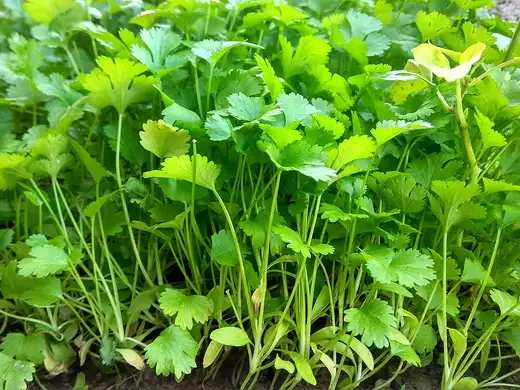
Cilantro has a short leafy phase. Young plants make a rosette of broad, flat leaves; then a flower stalk shoots up, the new leaves along it turn thin and ferny, and the flavor fades. Gardeners call this bolting. It is not a disease or a care mistake: it is the plant finishing its life cycle, and warm temperatures and long days speed it up.
Oregon State University’s vegetable breeders put numbers on how much the season matters. Cilantro sown in late June or early July in Oregon flowers and sets seed within 4 to 6 weeks, while plants growing in the cooler, shorter days of spring or fall keep producing leaves for several weeks or even months. UW-Madison Extension adds a caution: some varieties are sold as slow-bolting, but none of them hold up under high heat and long days.
So the whole growing strategy comes down to three habits:
- Grow it in the cool part of the year: early spring and late summer into fall in the North, fall through early spring in the South and the low desert.
- Sow small amounts every 2 to 3 weeks (UW-Madison) or every 3 to 4 weeks (Illinois Extension), so a new batch is ready as the last one bolts.
- Start with a slow-bolting leaf variety and give the plants conditions that keep the soil and roots cool.
When to plant cilantro
The dates for your zone above show the spring and fall windows. Extension services disagree about the spring start. UW-Madison says to sow in early spring, at the same time you sow lettuce. Illinois and Utah State recommend waiting until the danger of frost has passed. The earlier date gives you more weeks of cool weather before summer; the later one is safer if a hard freeze is still likely. Oregon State says to keep sowing from early spring through early summer and again in early autumn, and to skip the peak summer heat, when plants bolt before they produce much.
Fall is often the better season, because plants mature as days shorten and temperatures fall instead of rising. UW-Madison recommends sowing a fall leaf crop in mid-August in Wisconsin. Utah State says successive plantings can continue until late summer.
On frost, the sources split. UW-Madison says cilantro will not survive a hard freeze, Oregon State says mature plants tolerate light freezing, and the Galveston County office of Texas A&M AgriLife groups it with cool-season herbs that handle normal Gulf Coast winter freezes. The practical reading: a light frost rarely hurts established plants, but cover them when a hard freeze is forecast.
Regional timing
Cold North and mountain areas. Spring sowings run from early spring until about early summer, then pick up again in mid- to late summer for a fall crop. Utah State’s advice for cooler parts of Utah is to plant in early spring for leaves from summer into fall.
Pacific Northwest. Oregon State recommends early spring through early summer, then early autumn, and warns that sowings in late June or early July will mostly bolt.
Humid South and Gulf Coast. Cilantro is a fall-to-spring herb here. UF/IFAS says fall and winter are the best seasons in Florida, because plants flower quickly once days get long and warm, and suggests sowing every 2 to 3 weeks through fall, winter and spring. The Galveston County AgriLife office lists October as a good time to plant.
Arid West and desert Southwest. University of Arizona Extension in Tucson gives two windows, October to November and February to April, with protection on frosty nights. Its Yuma County calendar runs plantings from September through December, with harvest from January to April, but advises most gardeners to wait until October unless they can shade and water seedlings through the last hot days. In California’s Central Valley, UC Cooperative Extension Sacramento says to grow cilantro in spring or fall because it does not tolerate summer heat.
Warm-winter zones 9-10. Treat cilantro as a winter herb: sow from about September or October through winter and harvest until spring heat brings on flowers. Summer sowings bolt almost at once.
Site and soil
Full sun is the standard recommendation, but cilantro tolerates light shade, and in warm weather some shade helps. UC Cooperative Extension Sacramento recommends partial shade, and Oregon State suggests a cool or semi-shaded spot for leaf crops in the warm season. In the desert, the Tucson guide notes that “full sun” on a plant tag may mean half sun or dappled light in summer; an east-facing bed with morning sun and afternoon shade, or 30 to 40 percent shade cloth, protects plants.
The soil should be well drained and moderately fertile. Utah State recommends working 2 to 4 inches of well-composted organic matter per 25 square feet into the top 4 to 6 inches, leaving a loose seedbed. Desert gardeners dealing with caliche or sandy, low-organic soil often have better luck in raised beds or containers with a well-draining mix.
Sowing
Sow seed ¼ to ½ inch deep. Oregon State suggests 10 to 15 seeds per foot of row; spacing between rows ranges from about a foot (UW-Madison) to 15 inches (Utah State) to 18 to 24 inches (Oregon State). Oregon State gives a germination range of 55 to 68°F soil temperature, which is one reason early spring and early fall sowings do well. Be patient: Utah State says seed takes about 3 weeks to come up, so keep the seedbed evenly moist the whole time.
Thinning distances depend on what you want and whose advice you follow:
- Leaves: Utah State thins to 2 inches, UW-Madison to 3 to 6 inches, and UF/IFAS Gardening Solutions and Oregon State to 8 inches. Utah State specifically suggests growing plants close together as one way to slow bolting.
- Coriander seed: give plants more room, 8 to 10 inches (Utah State), 10 inches (Texas A&M AgriLife) or 12 inches (UW-Madison).
Cilantro does not transplant well because of its long taproot, so direct sowing is the default. If you buy transplants or start seed indoors (Utah State says 4 to 6 weeks ahead), use small cells or pots, set plants out after frost danger has passed, and move the root ball intact.
Varieties for leaves
For leaf production, choose a slow-bolting variety. Extension services name these:
- Wisconsin (UW-Madison): ‘Calypso’ (large rosettes, slower to flower than ‘Santo’), ‘Cruiser’ (upright and slow to bolt, good for bunching), ‘Leisure’, ‘Marino’, ‘Santo’ and ‘Slo Bolt’ (about 45 days from sowing). ‘Confetti’ has finely cut leaves and is best harvested small, as microgreens or baby greens.
- Illinois: ‘Leisure’ (heat tolerant, 28 to 40 days), ‘Marino’, ‘Santo’, and ‘Pot Cilantro 99057’, bred for growing in containers.
- Utah: for leaves, Utah State recommends the slow-bolting types ‘Slow Bolting’ and ‘Leisure’. Its broader list includes ‘Costa Rica’, ‘California Long Standing’, ‘Lemon’, ‘Delfino’ and ‘Moroccan’, and it notes that any variety works if you are growing for seed.
Watering, feeding and mulch
Keep the soil evenly moist from sowing through establishment. After that, advice varies a little by climate. UW-Madison says to keep plants evenly moist all season. Utah State says established plants need little water and warns that soggy soil and humid conditions hurt cilantro and can dilute its flavor, yet it also lists keeping plants well watered as a way to delay bolting. The common ground: never let cilantro dry out hard, and never let it sit in waterlogged soil. In the desert, the Tucson guide recommends deep, infrequent watering that wets the soil at least 12 inches down, rather than daily sprinkling.
Cilantro needs little fertilizer, and too much nitrogen reduces its flavor. Utah State’s rate is ¼ cup of a nitrogen fertilizer such as 21-0-0 per 25 square feet, applied once or twice a season. Container plants in soilless mixes need regular feeding, since many mixes contain few nutrients.
Mulch as soon as seedlings emerge. It holds moisture, keeps the soil cooler (another of Utah State’s anti-bolting measures) and limits weeds. If you cultivate, keep it shallow to avoid damaging roots.
Growing cilantro in containers
Cilantro grows well in deep pots. A UC Master Gardener herb chart gives 8 inches as the minimum soil depth, and in the desert the Tucson guide recommends pots at least 14 inches across, because smaller pots dry out and overheat quickly in sun. Sow directly in the container rather than transplanting. Indoors, Utah State advises keeping the soil below about 75°F, so keep pots away from heaters and windows that get hot.
Harvesting leaves
Start picking when plants are about 6 inches tall; Utah State says leaves can be cut at 4 to 6 inches. You can harvest in two ways:
- Cut-and-come-again: take the older outer leaves and let the center keep growing. UW-Madison notes this encourages new leaves, though the younger leaves have the stronger flavor. A Galveston County AgriLife guideline for herbs is to remove no more than a third of the foliage at one time.
- Whole-plant cutting: cut the whole plant as a bunch about an inch above the soil. It can regrow for a second cutting, after which it will likely bolt.
Harvest in the early morning or evening rather than in the heat of the day, as the Tucson guide advises. When a flower stalk appears, harvest heavily: the leaves that follow are lacy and less flavorful.
Fresh cilantro keeps about a week in the refrigerator, wrapped loosely or standing in a glass of water like a bouquet. Drying costs most of the flavor, so freeze extra leaves in a sealed bag instead.
Harvesting coriander seed and roots
Bolting plants are worth keeping if you want coriander. A seed crop needs a long season, at least 100 days according to UW-Madison; UF/IFAS says to look for seed about three months after planting. The green fruits turn reddish and then light brown as they dry, usually 2 to 3 weeks after flowering. Cut back on watering as the seeds near maturity.
Cut the stems when the seed heads are brown, before many seeds drop, and hang them in a warm, airy place inside a paper bag or over a cloth to catch what falls. Let the seed dry completely, since drying develops the flavor, then rub the husks to free the seeds. Stored in an airtight container in a cool, dark place, coriander keeps for months. Seed you save for planting can stay in the husks in a cool, dry spot.
Cilantro roots are used in Thai and Vietnamese cooking. UW-Madison recommends digging them in fall from plants that have not gone to seed.
Problems and fixes
Cilantro has few serious pests. The problems gardeners actually run into:
- Early bolting. The usual cause is sowing too late in spring or during summer. Resow in the cooler season, choose a slow-bolting variety, mulch, add afternoon shade in hot climates and keep plants from drying out.
- Seedlings dying or patchy stands. Damping off kills young seedlings; Utah State recommends crop rotation. Patchy stands also follow transplanting, because the taproot resents disturbance. Sow directly and keep the seedbed evenly moist for the full 3 weeks it can take to germinate.
- Bacterial leaf spot. UW-Madison reports it mainly in commercial plantings. The bacteria can travel on seed, and suppliers increasingly test for it, so buy quality seed and water at the soil rather than overhead.
- Aster yellows. Leafhoppers spread this disease. Infected plants turn yellow, grow tall and spindly and become sterile. Pull infected plants and control leafhoppers.
- Soggy, weak plants. Poor drainage and humid conditions hurt cilantro. Improve drainage or grow in raised beds or pots, and do not overwater established plants.
- Caterpillars on the leaves. NC State lists cilantro as a host for swallowtail butterfly larvae.
Letting cilantro flower
A few bolted plants earn their space. The small white or pale pink flower clusters draw beneficial insects: UW-Madison names syrphid (hover) flies and parasitic wasps, and University of Arizona Extension adds green lacewings and lady beetles. Plants left to drop seed will also come back on their own; both UW-Madison and Illinois note that cilantro reseeds readily, and NC State warns it can become weedy.
Why some people taste soap
Cilantro’s flavor splits people. Many taste it as bright and citrusy; others find it soapy. UW-Madison says there appears to be a genetic factor in whether a person likes it, and UF/IFAS points to compounds in the leaves called fatty aldehydes.
Questions
Why does my cilantro bolt so fast?
Cilantro flowers in response to warm temperatures and long days. Oregon State University notes that plants sown in midsummer can flower and set seed within 4 to 6 weeks, while spring and fall plantings grow leaves for weeks or months first. Sow in cool seasons, choose a slow-bolting variety and resow every few weeks.
Can you stop cilantro from bolting by cutting the flowers off?
Not for long. Once a plant has started to bolt, its new leaves are thin and lacy and the flavor declines. The reliable fix is a fresh sowing, timed for cooler weather.
How long does cilantro take to grow?
UW-Madison Extension puts the leaf harvest at 45 to 80 days from sowing, and Illinois Extension lists 'Leisure' at 28 to 40 days. Start picking when plants are about 6 inches tall. Coriander seed takes much longer, about 100 days or more.
Should I start cilantro indoors?
Usually not. Cilantro has a long taproot and transplants poorly, so most extension services recommend sowing it where it will grow. Utah State says you can start it indoors 4 to 6 weeks ahead if you disturb the roots as little as possible when you set it out.
Will cilantro grow back after cutting?
Often once. UW-Madison says a whole plant cut about an inch above the soil can regrow for a second cutting, and UC Cooperative Extension in Sacramento notes that it will probably go to seed after that second harvest.
Is cilantro the same plant as coriander?
Yes. Coriandrum sativum gives both: the leaves are cilantro and the dried seeds are the spice coriander. Let a few plants flower and you can harvest both from one sowing.
Sources
- How to grow cilantro for leaves — or coriander seeds · Oregon State University Extension Service
- Herbs and Spices in the Florida Garden (VH020/CIR570) · UF/IFAS Extension (EDIS)
- Cilantro · UF/IFAS Gardening Solutions
- Culinary Herbs to Plant This Fall · UF/IFAS Gardening Solutions
- Healthy Harvest: Florida Herbs (FCS3411/FY1554) · UF/IFAS Extension (EDIS)
- Osceola County, FL Planting Calendar for Herbs, Spices & Edible Flowers · UF/IFAS Extension Osceola County
- Planting and Harvesting Calendar for Gardeners in Yuma County (az1615) · University of Arizona Cooperative Extension
- Growing Herbs in Tucson (az2061) · University of Arizona Cooperative Extension
- Flavorful Herbs Are Easy to Grow (Oct. 3, 2018) · Texas A&M AgriLife Extension, Galveston County
- Culinary Herb Profiles (EHN 70) · UC Cooperative Extension Sacramento County
- Basic Herbs for a Kitchen Garden · UC Cooperative Extension Tulare/Kings Master Gardeners
- Cilantro / Coriander, Coriandrum sativum · University of Wisconsin-Madison Extension
- Cilantro/Coriander in the Garden · Utah State University Extension
- Cilantro · University of Illinois Extension
- Coriandrum sativum (Cilantro) · NC State Extension Gardener Plant Toolbox
- Indiana Vegetable Planting Calendar (HO-186-W) · Purdue University Extension
- Growing Herbs in Texas (E-561) · Texas A&M AgriLife Extension