How to Care for a Christmas Cactus
A Christmas cactus grows best in bright, indirect light, a fast-draining mix and a pot that is slightly too small. Water it thoroughly when the top inch of mix is dry. It forms flower buds in fall, after weeks of cool nights or long, uninterrupted darkness. Once buds appear, keep its conditions steady so they don't drop.
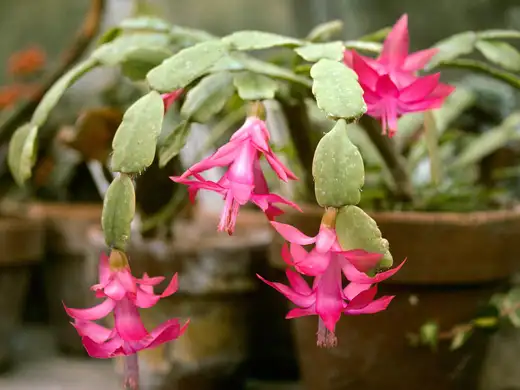

Christmas Cacti at a glance
- Botanical name
- Schlumbergera x buckleyi
- Light
- bright, indirect or filtered light; prolonged full sun bleaches and damages the stems
- Hardiness zones
- 10-12
- Containers
- Yes
When to repot and propagate christmas cacti
Know which cactus you have
Christmas cactus is a true cactus, but not a desert one. Its ancestors grow on tree branches and shady cliffs in the mountain forests of southeastern Brazil, at about 3,000 to 5,000 feet. That explains its needs: filtered light, regular water with sharp drainage, and cool nights but no frost. The flat green “leaves” are actually stem segments.
Many plants sold as Christmas cactus are actually Thanksgiving cactus or hybrids of the two. Christmas cactus (Schlumbergera x buckleyi) has rounded, scalloped stem edges, while Thanksgiving cactus (S. truncata) has pointed teeth and blooms earlier. Both need the same care.
Light
Give it bright, indirect light. UF/IFAS suggests a spot within about 6 feet of a south-, east- or west-facing window. UW-Madison Extension says a southern exposure works if direct sun reaches the plant for no more than a few hours in the morning. Long hours of strong sun bleach the stems, and Purdue notes that stems may redden or go limp from too much light. Too little light costs you flowers, because better-lit plants bloom more heavily.
Watering
Water thoroughly when the top inch of mix is dry, pouring from the top until it drains out the bottom, and empty the saucer. Spring through summer, while it is growing, keep the mix lightly and evenly moist. NC State suggests cutting back somewhat in mid-September as buds develop, and again after flowering, when the plant rests.
Both overwatering and underwatering cause problems. A soggy mix rots roots and stems, and that is how most of these plants die. Letting the plant get very dry makes it wilt and drop buds, because unlike desert cacti it is not built for long droughts. In a very fast-draining mix, frequent watering does no harm. In a heavier mix, let it dry a bit more between waterings.
Potting mix and pot
Use an airy, well-drained mix that is high in organic matter. NC State suggests peat moss with sand and perlite. UW-Madison cites a commercial grower’s mix of 60 percent peat moss and 40 percent perlite. Purdue suggests a packaged succulent mix, or two parts potting soil to one part clean sand or vermiculite. Peat breaks down over a few years and stops draining well, which is one reason to repot periodically.
Keep it in a pot that looks slightly too small. It blooms best when a bit root-bound, and an oversized pot stays wet too long. Hanging baskets suit its arching habit.
Temperature and humidity
UW-Madison puts its minimum at 55 to 60°F, and it cannot take frost. During the growing season it does well at 70 to 80°F. Penn State recommends winter days around 68°F with nights around 60°F. Flowers last longer when the plant is kept cool. UW-Madison says blooms last 2 to 3 weeks at about 70°F.
It likes fairly high humidity. Penn State suggests a light daily misting. Keep it away from heat vents, fireplaces and cold drafts.
Feeding
Fertilize during the April to September growing season. UF/IFAS says every one to two months, and NC State says monthly. Purdue suggests a blooming houseplant fertilizer used at the label rate. Don’t overdo it once buds are forming. Penn State lists overfeeding during bud development as one cause of poor flowering. The plant doesn’t need feeding while in bloom.
Getting it to bloom
Flower buds form in fall in response to long nights, cool nights or both. Lamps switched on in the evening are the most common reason a plant fails to bloom. Keep it in a room that goes dark at night from about mid-September or October until buds show, or give it cool nights near 55°F. Once buds appear, leave it where it is. Moving it to a spot with different light or temperature can make the buds abort. The timing and methods are covered in detail on the when-to page for this plant.
Repotting
Repot only after flowering ends, in late winter or early spring, and never while it is blooming. Penn State suggests every 3 to 4 years, and UW-Madison says at least every 4 to 5. Move up only slightly in pot size. Remove most of the old mix, check that the roots look healthy, and replant at the same depth. Penn State suggests keeping it in light shade for 2 to 3 days afterward. UW-Madison recommends watering somewhat less for about a month while new roots grow.
Propagation and pruning
Cuttings root easily. Twist off a piece with two to five segments and let it dry in the shade for 2 to 3 days. Then set it upright in moist perlite or a well-drained mix. UW-Madison reports rooting in 2 to 3 weeks, and Penn State says 3 to 8 weeks. Late spring through summer gives the best results. Pot three rooted cuttings together for a fuller plant sooner.
Pinching or trimming a few segments from each stem after flowering makes the plant branch, and more stem tips mean more flowers. UF/IFAS advises against pruning after midsummer, or you will remove stems that would have set buds.
Pests and problems
- Buds drop before opening: sudden changes in temperature or light, drafts, dry mix or low humidity. Keep conditions steady once buds form.
- No flowers: light at night in fall, nights too warm, too much fertilizer while buds form, root rot or drought stress.
- Limp, shriveled stems in moist mix, segments falling off: roots have died, usually from waterlogged or old, broken-down mix. Unpot and check the roots. Cut away dead roots and repot in fresh, fast-draining mix, and root a few cuttings as backup.
- Pale, bleached or reddish stems: too much direct sun. Move it to filtered light.
- Mealybugs, scale, spider mites, aphids: occasional pests. Treat with a houseplant insecticide labeled for the pest. Outdoors, keep pots off the ground, because slugs and snails like this plant.
Pets and children
The ASPCA lists Christmas cactus as non-toxic to dogs, cats and horses. NC State calls it safe for homes with pets or children.
Outdoors
It can spend the frost-free months outside in light shade, such as a shaded porch or hanging from a tree branch. UW-Madison cautions against the deep shade under large, dense trees. Put it out only after nights stay above its 55 to 60°F minimum. When you bring it back in, Purdue suggests easing the transition by bringing it indoors for a few more hours each day.
In the warmer parts of Florida, UF/IFAS says it can grow outdoors year-round if protected from freezing. NC State rates it for zones 10 to 12. Choose a spot with filtered light there too, because strong sun damages the stems.
Questions
How often should I water a Christmas cactus?
Water thoroughly whenever the top inch of mix feels dry, and let the excess drain away. It is a forest cactus, not a desert one, so don't let it go bone dry for long. Water a little less from mid-September and again after flowering.
Why is my Christmas cactus dropping its buds?
Bud drop follows sudden change: a move to a new spot, drafts, heat from a vent or fireplace, a big swing in temperature, or mix that dried out. Once buds form, keep the plant where it is and water it on a steady schedule.
Why won't my Christmas cactus bloom?
The most common cause is light at night in fall, from lamps in a room used in the evening. Nights that are too warm, too much fertilizer while buds develop, rotting roots and drought stress also prevent flowering.
Is Christmas cactus poisonous to cats and dogs?
No. The ASPCA lists Christmas cactus as non-toxic to dogs, cats and horses, and NC State Extension calls it safe for homes with pets and children.
How do I tell a Christmas cactus from a Thanksgiving cactus?
Look at the stem segments. Christmas cactus has rounded, scalloped edges, while Thanksgiving cactus has pointed, saw-like teeth. Thanksgiving cactus also blooms earlier in the season.
Sources
- Christmas Cactus FAQs · Purdue Extension, Indiana Yard and Garden
- Schlumbergera x buckleyi (Christmas Cactus) · NC State Extension Gardener Plant Toolbox
- Holiday Cacti Care · Penn State Extension
- Holiday Cactus · University of Wisconsin-Madison Extension
- Christmas Cactus · University of Florida IFAS Gardening Solutions
- Toxic and Non-toxic Plants: Christmas Cactus · ASPCA Animal Poison Control