How to Care for Calathea (Prayer Plant)
Keep calathea's potting mix evenly moist but never soggy, letting only the surface dry slightly between waterings, and use distilled water or rainwater, because fluoride in tap water causes brown spots. Give it medium to low indirect light with no direct sun, 65-80°F and 40-60 percent humidity or more. Most brown, crispy edges come from dry air or tap water.
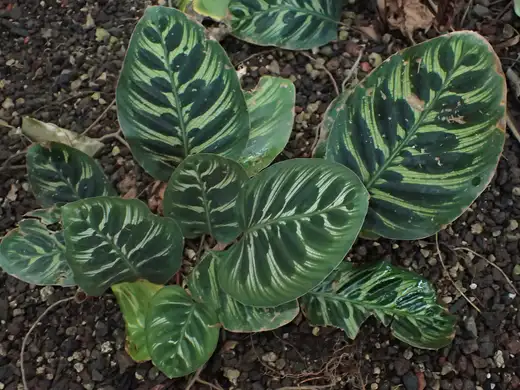

Calatheas at a glance
- Botanical name
- Goeppertia spp. (formerly Calathea; e.g. G. makoyana, G. orbifolia, G. ornata)
- Light
- medium to low indirect light; no direct sun
- Hardiness zones
- 11-12
- Containers
- Yes
Calatheas earn their space with patterned leaves: stripes, feathering, mottling and purple undersides. They also have a reputation for being fussy. They need steady moisture, humidity and warmth, and they react quickly to tap water, drafts and dry air. Many of the plants sold as Calathea have been reclassified into the genus Goeppertia, so you may see either name on the tag. Care is the same, though it varies a little between species.
Light
Calathea comes from warm, humid tropical forests in Central and South America and wants medium to low indirect light and no direct sun. Direct sun scorches the leaves; too little light fades the pattern. UF/IFAS gives numbers for indoor light: calathea tolerates as little as 75 foot-candles, but looks best at 150 to 200 foot-candles. That is far less light than a sunny windowsill, so a spot well back from a bright window suits it.
Watering
Watering mistakes cause most calathea problems, and they go both ways. Let it get too dry and the leaves curl, yellow and brown. Keep it soggy and the stems rot and the plant droops.
Aim for potting mix that stays evenly moist but never wet. Check it every few days. When the surface feels slightly dry, water thoroughly until water runs out of the drainage holes, then empty the saucer. Don’t wait for the pot to dry out the way you would with a succulent.
The water itself matters. NC State recommends distilled water or rainwater, and UF/IFAS identifies fluoride in water or fertilizer as the cause of dead spots near the leaf margins.
Water less in winter, when growth slows, but still don’t let the mix go bone dry.
Potting mix and pot
Use a rich potting mix that holds moisture but drains well. NC State recommends plenty of organic matter plus perlite to improve drainage. Commercial growers use soilless mixes of peat, pine bark, vermiculite or perlite at a pH around 6.0. Always use a pot with drainage holes.
Temperature and humidity
Keep calathea warm and steady. UF/IFAS recommends 65 to 80°F indoors; NC State gives a narrower 65 to 75°F. Either way, avoid cold drafts, heating vents and sudden swings. UF/IFAS warns that temperatures below 55°F can cause chilling injury.
Humidity is where most homes fall short, especially in winter. UF/IFAS says plants look best at 40 to 60 percent relative humidity, and NC State suggests about 60 percent for peacock plant (Goeppertia makoyana). To raise humidity, set the pot on a tray of wet pebbles or grow the plant in a bathroom or kitchen. Brown leaf edges and rolled leaves are the usual signs the air is too dry.
Feeding
Feed only during the growing season and stop in winter. NC State recommends a half-strength organic houseplant fertilizer, and for peacock plant a balanced fertilizer about every 4 weeks. Go easy: UF/IFAS links scorched leaf margins and tips to excess fertilizer and too-acidic mix, and leaf spotting with duller color to too much potassium.
Repotting
Repot every year or two, preferably in spring. That is also the time to divide a crowded clump.
Propagation
Calathea is propagated by division. When you repot in spring, ideally late spring, separate the rhizomes so each piece has at least one leaf, and plant the divisions in pots sized to fit them. NC State suggests dividing peacock plant every couple of years to keep it vigorous. Only a few species grow from seed, and commercial growers start almost all plants from tissue culture.
Grooming
Dust on the broad leaves slows photosynthesis. Wipe them gently with a soft, damp cloth as needed. Cut off leaves that are badly browned or yellowed at the base.
Pests and problems
- Brown, crispy edges or rolled leaves: humidity too low. Raise it with a pebble tray or a more humid room.
- Dead spots near the leaf margins: fluoride in water or fertilizer. Switch to distilled water or rainwater.
- Burned leaf tips and margins: too much fertilizer or overly acidic mix. Feed less often and at lower strength.
- Curling or yellow leaves: most often underwatering. UF/IFAS adds that yellowing can also come from overwatering, too much light or too little fertilizer, so check the soil first.
- Rotting stems and drooping: overwatering or cold. Let the mix dry slightly, move the plant somewhere warmer and repot into fresh mix if the roots are soft.
- Scorched, bleached patches: direct sun. Move the plant back from the window.
- Faded leaf pattern: too little light.
- Gray fuzzy mold: gray mold, a fungal disease. Cut off the infected parts and improve air flow.
- Aphids, scale, mealybugs and spider mites: check leaf undersides and stems regularly, and treat early.
Leaves that fold upward at night are not a problem. Calatheas are called prayer plants because their leaves rise and fold in the evening and open again at sunrise.
Pets and children
The ASPCA lists calathea as non-toxic to dogs, cats and horses, which makes it one of the safer choices for a home with pets.
Outdoors
Calathea is hardy only in zones 11-12. In tropical climates it can grow outdoors in a shaded spot, but in the US it is grown almost entirely as a houseplant. It isn’t a good candidate for a summer outdoors in frost areas: it dislikes drafts, sudden temperature changes and direct sun, and temperatures below 55°F can injure it.
Questions
Why are my calathea's leaf edges turning brown?
Usually dry air. Raise the humidity to at least 40-60 percent with a pebble tray or by moving the plant to a bathroom or kitchen. Dead spots near the leaf margins also come from fluoride in tap water, so switch to distilled water or rainwater.
Can I water calathea with tap water?
NC State recommends against it. Fluoride in tap water and in some fertilizers causes brown, dead spots on the leaves. Distilled water or rainwater is safer.
Why do calathea leaves curl?
Curled or rolled leaves usually mean the plant is too dry, either from underwatering or low humidity. Check the potting mix, and water if the surface is more than slightly dry.
Why do calathea leaves move at night?
It is normal. Calatheas are prayer plants: the leaves fold up in the evening and open again at sunrise, a response to changes in light and temperature called nyctinasty.
Is calathea safe for cats and dogs?
Yes. The ASPCA lists calathea as non-toxic to dogs, cats and horses.
Sources
- Goeppertia (Calathea, Prayer Plant) · NC State Extension, North Carolina Extension Gardener Plant Toolbox
- Goeppertia makoyana (Peacock Plant) · NC State Extension, North Carolina Extension Gardener Plant Toolbox
- Cultural Guidelines for Commercial Production of Interiorscape Calathea (ENH1030) · University of Florida IFAS Extension
- Toxic and Non-toxic Plants: Calathea · ASPCA Animal Poison Control Center