How to Care for Alocasia (Elephant Ear)
Give alocasia bright, indirect light indoors or dappled shade outdoors, keep the mix evenly moist but never waterlogged, and feed it about every two weeks while it is growing. Water much less in winter, when growth slows. The most common problems are soggy soil, which rots the roots, and spider mites, which alocasias are prone to.

Your dates for alocasias
Set your ZIP code at the top of the page and we will work out when to plant alocasias where you live, from the frost records of the nearest NOAA weather station. Your ZIP code is remembered on this device only.
Alocasias at a glance
- Botanical name
- Alocasia spp. (elephant's ear)
- Light
- bright indirect light indoors; partial or dappled shade outdoors
- Hardiness zones
- 8-11
- Spacing
- 36–60 inches apart
- Containers
- Yes
When to plant alocasias
| Zone | Plant out |
|---|---|
| Zone 2a | May 19 to Jun 2 |
| Zone 3a | May 26 to Jun 9 |
| Zone 3b | May 17 to 31 |
| Zone 4a | May 13 to 27 |
| Zone 4b | May 8 to 22 |
| Zone 5a | May 3 to 17 |
| Zone 5b | May 1 to 15 |
| Zone 6a | Apr 29 to May 13 |
| Zone 6b | Apr 23 to May 7 |
| Zone 7a | Apr 16 to 30 |
| Zone 7b | Apr 5 to 19 |
| Zone 8a | Mar 29 to Apr 12 |
| Zone 8b | Mar 17 to 31 |
| Zone 9a | Mar 2 to 16 |
| Zone 9b | Jan 31 to Feb 14 |
When to repot and propagate alocasias
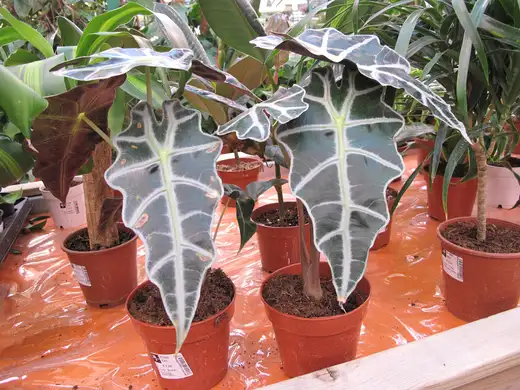
Alocasias are tuberous tropical perennials from the Arum family, grown for big arrow- or heart-shaped leaves that run 12 to 36 inches long on garden plants. Indoors they stay much smaller, and that is the plant most people are caring for: a warm-room foliage plant that grows fast when conditions suit it and sulks when they don’t.
Light
Indoors, put alocasia where it gets bright light that is not direct sun, such as near an east window or a few feet back from a brighter one. UF/IFAS specifies bright indirect light for houseplant use. Too little light is one of the three causes NC State gives for yellowing leaves, so a plant in a dim corner will slowly decline even if the watering is right.
Outdoors, the plant wants partial or dappled shade: a spot under high tree canopy, or one that gets direct sun for only part of the day.
Watering
Overwatering is what usually kills alocasia. The roots need steady moisture and air at the same time, and a mix that stays wet starves them of air until they rot. NC State links both root rot and leaf spots to overwatering.
While the plant is actively putting out leaves in spring and summer, keep the mix evenly moist. Water thoroughly until it runs out of the drainage holes, then empty the saucer so the pot never sits in water. Check again in a few days rather than watering on a fixed schedule; a warm, bright room or a summer patio dries the pot much faster than a cool room in March.
From fall through late winter, growth slows and the plant needs far less water. Nebraska Extension’s rule for houseplants in winter works well here: water when the top inch of mix feels dry, not on a calendar. Wisconsin Extension advises keeping elephant ears on the dry side while they are semi-dormant and returning to regular watering only when new growth starts in spring.
Don’t be misled by alocasia’s reputation as a wet-soil plant. UF/IFAS notes that many selections tolerate soggy ground in the landscape, but a pot indoors drains and dries very differently, and both NC State and UF/IFAS warn that overwatering causes root rot.
Potting mix and pot
Use a rich, moisture-holding potting mix that still drains freely, in a pot with drainage holes. Outdoors, NC State recommends slightly acidic, humus-rich, fertile soil that is moist but well drained. Skip the gravel layer in the bottom of the pot: N.C. Cooperative Extension points out that gravel actually slows drainage, because water won’t move into it until the soil above is saturated.
Temperature and humidity
Alocasia comes from the warm, rainy tropics of Asia and eastern Australia. NC State says it grows best where daytime temperatures run 68 to 77°F, and Illinois Extension describes it as liking warm, humid conditions. Wisconsin Extension notes that elephant ears falter when temperatures stay below 50°F for long. Keep plants away from cold drafts and heating vents, and run a humidifier if your winter air is very dry.
Feeding
Alocasias are heavy feeders. Illinois Extension recommends fertilizing every two weeks during active growth, and Wisconsin Extension calls for plenty of water and fertilizer, especially for container plants. Stop feeding when growth slows in fall and resume when new leaves appear in spring.
Repotting
NC State rates alocasia’s growth as rapid, so a healthy plant can outgrow its pot quickly. Repot in spring when roots poke out of the drainage holes, the pot dries out very fast or growth stalls even though you are feeding. Move up to a pot no more than 2 inches wider than the old one.
Propagation
Division is NC State’s recommended method. Many alocasias form offsets or small corms beside the main one; separate them when you repot and pot each in fresh mix. Wisconsin Extension notes that many newer cultivars are sold as tissue-cultured plants that have not yet formed corms, so a young plant may have nothing to divide for a while. Wear gloves, since the sap irritates skin.
Grooming
Alocasias keep producing new leaves through the growing season while older ones gradually die off. Cut the dead leaves off at the base to keep the plant tidy. Indoors, a plant often holds only a few leaves at a time.
Pests and problems
- Fine stippling, dull leaves or webbing: spider mites. NC State says alocasias are prone to them. Rinse the leaves, especially the undersides, and treat repeatedly until they are gone.
- White cottony clusters or small soft insects on new growth: mealybugs or aphids. Wipe or wash them off and keep checking.
- Yellowing leaves: overwatering, underwatering or too little light. Check the soil before you do anything else.
- Soft, collapsing stems and spotted leaves: root rot and leaf spots from overwatering. Let the mix dry partly, improve drainage and repot into fresh mix if the roots are brown and mushy.
- Torn leaves outdoors: wind. Move the plant to a sheltered spot.
Extension sources differ on how much trouble pests cause: UF/IFAS says pests rarely affect alocasia’s long-term health and calls spider mites and mealybugs a nuisance on some species, while NC State stresses spider mites more. Either way, check leaf undersides whenever you water.
Toxicity
The ASPCA lists alocasia as toxic to dogs, cats and horses. All parts contain insoluble calcium oxalate crystals, which cause mouth pain, swelling, drooling, vomiting and trouble swallowing. NC State and UF/IFAS add that it is poisonous to people and can cause contact dermatitis, so keep it out of reach of children and pets.
Growing alocasia outdoors
In the warmest parts of the country, alocasia is a landscape plant. UF/IFAS rates it for zones 8A through 11 and lists planting as year-round in Florida; freezes kill the foliage, but the plant regrows from the base in zone 8A and warmer. NC State is more cautious and rates it hardy only in zones 10-12. UF/IFAS suggests spacing garden plants 36 to 60 inches apart, in rich, moist soil and partial shade, sheltered from wind. NC State reports that some species have become invasive along the Gulf Coast, while UF/IFAS says alocasia is not known to be invasive in Florida.
In frost areas, grow it as a summer plant in a container or shady border. Before cold weather, bring potted plants indoors or lift the tubers and store them cool and dry until spring. Wisconsin Extension advises bringing plants you will keep as houseplants indoors before temperatures reach the 30s °F, cutting back all but the top two leaves and keeping them bright and at room temperature. Illinois Extension notes that tubers stored and replanted over several years can produce plants of remarkable size.
Questions
How often should I water an alocasia?
Often enough to keep the mix evenly moist while the plant is growing, but never so often that the pot stays soggy. In winter, let the top inch dry before watering, because the plant uses far less water when growth slows.
Why are my alocasia leaves turning yellow?
NC State lists three causes: too much water, too little water and too little light. Check the soil first; if it is wet and the plant sits in a saucer of water, root rot is the likely problem.
Is alocasia toxic to cats and dogs?
Yes. The ASPCA lists it as toxic to dogs, cats and horses. Its calcium oxalate crystals cause mouth pain and swelling, drooling, vomiting and trouble swallowing, and the sap can irritate human skin.
Can alocasia grow outside?
Yes. UF/IFAS rates it for zones 8A-11, where freezes kill the leaves but the plant regrows from the base; NC State rates it hardy only in zones 10-12. In colder areas it makes a summer patio or border plant that comes indoors or is lifted in fall.
How do I propagate alocasia?
Divide it. Separate the offsets or small corms that form beside the main plant, ideally in spring when you repot, and pot each one up in fresh, rich mix.
Why does my alocasia have spider mites?
NC State notes that alocasias are prone to them, so expect to see them sooner or later. Check leaf undersides for fine stippling or webbing and rinse or treat the plant promptly.
Sources
- Bringing Houseplants Indoors · Nebraska Extension in Lancaster County
- Elephant Ears (Colocasia, Alocasia, and Xanthosoma) · University of Wisconsin-Madison Extension, Wisconsin Horticulture
- Tender Perennials Need Indoor Protection · Purdue University, Purdue Yard and Garden
- How to Repot a Houseplant · N.C. Cooperative Extension, Wayne County Center
- Alocasia (Elephant's-Ear, Taro) · NC State Extension, North Carolina Extension Gardener Plant Toolbox
- Alocasia spp.: Elephant's Ear, Alocasia, Taro (FPS 33) · University of Florida IFAS Extension
- Alocasia · University of Illinois Extension
- Toxic and Non-toxic Plants: Alocasia · ASPCA Animal Poison Control Center