How to Care for African Violets
African violets bloom best in bright, indirect light at 65 to 75°F, with water given once the surface of the mix dries, ideally from below, and kept off the leaves. Feed every other week in spring and summer, keep the plant slightly root-bound in a light, fast-draining mix, and never let it sit in water.
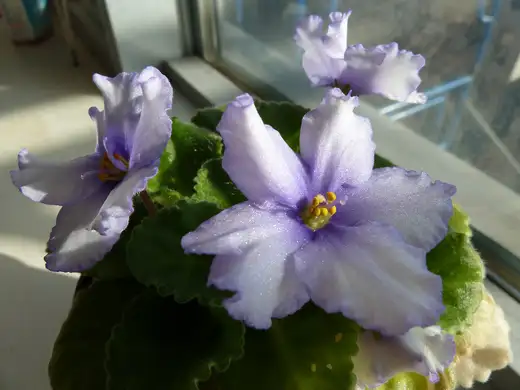

African Violets at a glance
- Botanical name
- Streptocarpus ionanthus (syn. Saintpaulia ionantha)
- Light
- bright, filtered or indirect light; no direct sun
- Hardiness zones
- 11-12
- Containers
- Yes
When to repot and propagate african violets
African violets come from the rainforests of Tanzania and Kenya, where they grow in warm, humid shade. Botanists now list the species as Streptocarpus ionanthus (formerly Saintpaulia ionantha), a member of the gesneriad family. There are thousands of cultivars in five size classes, from micro-miniature to large, in rosette and trailing forms. Given the right care they can bloom on and off all year, with each flower cluster lasting three to six weeks, according to South Dakota State University Extension.
Light
Light is what makes African violets bloom. Give them bright, filtered or indirect light without direct sun. University of Vermont Extension suggests an east or north windowsill; the Wisconsin 4-H guide says a plant in a south window needs a thin curtain against hot sun.
South Dakota State describes the signs on both sides:
- Too little light: leaves turn yellow, stems and leaves stretch, and the plant does not bloom.
- Too much light: brown, sunburned spots on leaves and flowers, leaves curling downward, and variegated leaves turning all green.
South Dakota State also says the plant does best with at least 8 hours of darkness each night. Under grow lights, Vermont Extension places the lights about 12 inches above standard plants and 8 inches above miniatures and semi-miniatures.
Watering
Overwatering is the number one problem, according to NC State, and crown and root rot are the result. Water thoroughly, but only once the surface of the mix has dried.
Bottom watering is the traditional method and the safest. Set the pot in a container with about an inch of water, as South Dakota State describes, and lift it out once the surface feels moist. Vermont Extension’s version is to fill the saucer and pour off whatever is left after 30 minutes. If you water from the top, pour under the leaves until water runs from the drainage holes, and empty the saucer.
Keep water off the leaves and use it at room temperature. NC State says wet foliage causes spots and rings, and that the plant does not tolerate very cold water. The Wisconsin 4-H guide adds that the ring spots from cold water splashed on the leaves do not harm the plant, but they spoil its looks.
Potting mix and pot
African violets need a light, fast-draining mix. A commercial African violet mix is simplest. Sources give several home recipes:
- NC State: 2 to 3 parts sphagnum peat, 2 parts vermiculite and 1 part perlite, with lime added to offset the acidity of peat, or coir in place of peat.
- South Dakota State: equal parts potting soil, peat and perlite.
- Vermont Extension: 2 parts potting soil to 1 part coarse perlite, or equal parts peat, perlite and vermiculite.
Pot size matters more than with most houseplants. South Dakota State says African violets do better slightly under-potted, and Vermont Extension suggests a pot about one-third the diameter of the leaf rosette. Set the crown above the soil surface, as NC State advises, so water does not collect around it.
Temperature and humidity
Sources agree on the low end and differ slightly on the ideal. NC State says 60 to 80°F is best; South Dakota State gives 65 to 75°F as ideal and says the plant adapts to 75 to 95°F if watered more often; Vermont Extension says 65 to 80°F. All warn about cold. NC State says nights below 60°F stunt the plant and recovery can be slow, and South Dakota State says temperatures below 50°F are fatal. Keep plants off cold windowsills in winter.
In the wild, humidity runs about 70 to 80%, but South Dakota State says plants adapt to 40 to 50% indoors. A tray of wet pebbles under the pot or a humidifier nearby gets you there.
Feeding
South Dakota State recommends a balanced, water-soluble fertilizer every other week during spring and summer, following label rates. Water thoroughly before you feed, so the fertilizer goes onto moist soil. Yellowing older leaves and slowing growth are signs the plant needs feeding. NC State notes that a fertile mix is necessary for steady reblooming.
Grooming
Remove dead or yellowed leaves to keep the rosette tidy. Vermont Extension also advises removing suckers, the secondary crowns that sometimes form between leaves, except on trailing types; tweezers work while they are small.
Repotting
Repot only when needed, moving up one pot size, as South Dakota State recommends; plants bloom better a little crowded. Fill fresh mix around the root ball and keep the crown above the soil line.
Propagation
Leaf cuttings are the standard method. Iowa State’s steps:
- Cut a firm, healthy leaf with a sharp knife, leaving 1 to 1½ inches of leaf stem (petiole).
- Insert the stem at a 45-degree angle in a moist 50:50 mix of vermiculite and coarse sand, and firm the mix around it.
- Water, let it drain, and cover the pot with a clear plastic bag.
- Keep it in bright, indirect light. Roots form in three to four weeks, and new leaves appear in six to eight weeks.
- Several small plants form at the base of each stem. Separate them and pot each one on its own.
Vermont Extension says the plantlets can be separated when they are about the size of a dime, and that a leaf can also be rooted in room-temperature water and potted once roots are more than a quarter inch long. A large sucker can also be removed and potted to make a copy of the parent plant. The Wisconsin 4-H guide says a plant takes about four months to bloom from a leaf cutting.
Pests and problems
- Mushy crown, wilting in wet soil: crown and root rot from overwatering or standing water. Let the surface dry between waterings and never leave the pot in water.
- Pale rings or spots on leaves: cold water or water left on the foliage.
- No flowers, leggy or yellow growth: too little light.
- Leaf stems dying where they touch the pot rim: South Dakota State says accumulated fertilizer salts kill leaf stems that rest on the container edge.
- Stunted, deformed leaves in the center: cyclamen mites. The Wisconsin 4-H guide advises discarding badly deformed plants.
- White cottony clusters: mealybugs. The 4-H guide suggests touching each one with a cotton swab dipped in alcohol.
- Other pests: NC State also lists thrips, vine weevil and glasshouse leafhoppers, and botrytis blight as a disease.
Pets and toxicity
African violets are safe around pets. The ASPCA lists them as non-toxic to dogs, cats and horses, and NC State agrees.
Outdoors
African violets are best treated as indoor plants everywhere. NC State lists hardiness zones 11 and 12 but describes the plant as rarely grown outdoors, and the Wisconsin 4-H guide says it should not be put outdoors in summer.
Questions
Why is my African violet not blooming?
Too little light is the usual reason. South Dakota State says it will not bloom without enough light and does best with at least 8 hours of darkness a night. Lack of fertilizer and an oversized pot can also hold it back.
Should I water African violets from the bottom?
It is the preferred method. Set the pot in about an inch of water until the surface turns moist, then lift it out and drain it. Never leave it standing in water.
What causes pale rings and spots on African violet leaves?
Water on the leaves, especially cold water. Water at the soil or from below with room-temperature water and the new leaves will come in clean.
Are African violets safe for cats and dogs?
Yes. The ASPCA lists African violet as non-toxic to dogs, cats and horses, and NC State also lists it as non-toxic.
How do I start a new African violet from a leaf?
Cut a firm, healthy leaf with 1 to 1½ inches of stem, insert the stem at a 45-degree angle in moist rooting mix, and cover with clear plastic in bright, indirect light. Roots form in 3 to 4 weeks and new leaves appear in 6 to 8 weeks.
What temperature is too cold for African violets?
Nights below 60°F stunt the plant, and NC State says recovery can take a long time. South Dakota State says temperatures below 50°F are fatal.
Sources
- Growing African Violets · University of Vermont Extension
- How can I propagate an African violet? · Iowa State University Extension and Outreach
- Propagating and Growing House Plants (4H328) · University of Wisconsin-Extension, Wisconsin 4-H
- Streptocarpus ionanthus (African Violet, Kenya Violet) · NC State Extension, North Carolina Extension Gardener Plant Toolbox
- African Violet: Houseplant How-To · South Dakota State University Extension
- Toxic and Non-toxic Plants: African Violet · ASPCA Animal Poison Control Center